
“This post contains affiliate links, and I will be compensated if you make a purchase after clicking on my links.”
At DogingtonPost, we know that a healthy heart is crucial for your dog’s overall well-being.
Dog heart health supplements can play a vital role in supporting your furry friend’s cardiovascular system. In this post, we’ll explore the most effective supplements and how to use them properly.
Let’s dive into the world of canine heart health and learn how to keep your pup’s ticker in top shape.
Understanding Canine Heart Health
Prevalent Canine Heart Conditions
Heart problems in dogs can be serious, but proper knowledge and care can help manage many issues effectively. Mitral valve disease is a common heart issue in dogs. A study found that 405 dogs were diagnosed with degenerative mitral valve disease (DMVD), and an additional 3,557 dogs had heart murmurs consistent with DMVD.
Dilated cardiomyopathy (DCM) presents another significant concern, especially for large breeds. The Morris Animal Foundation states that DCM affects about 0.5% to 1.1% of all dogs. Some breeds face a much higher risk; for instance, up to 50% of Doberman Pinschers may develop DCM in their lifetime.
Risk Factors for Canine Heart Disease
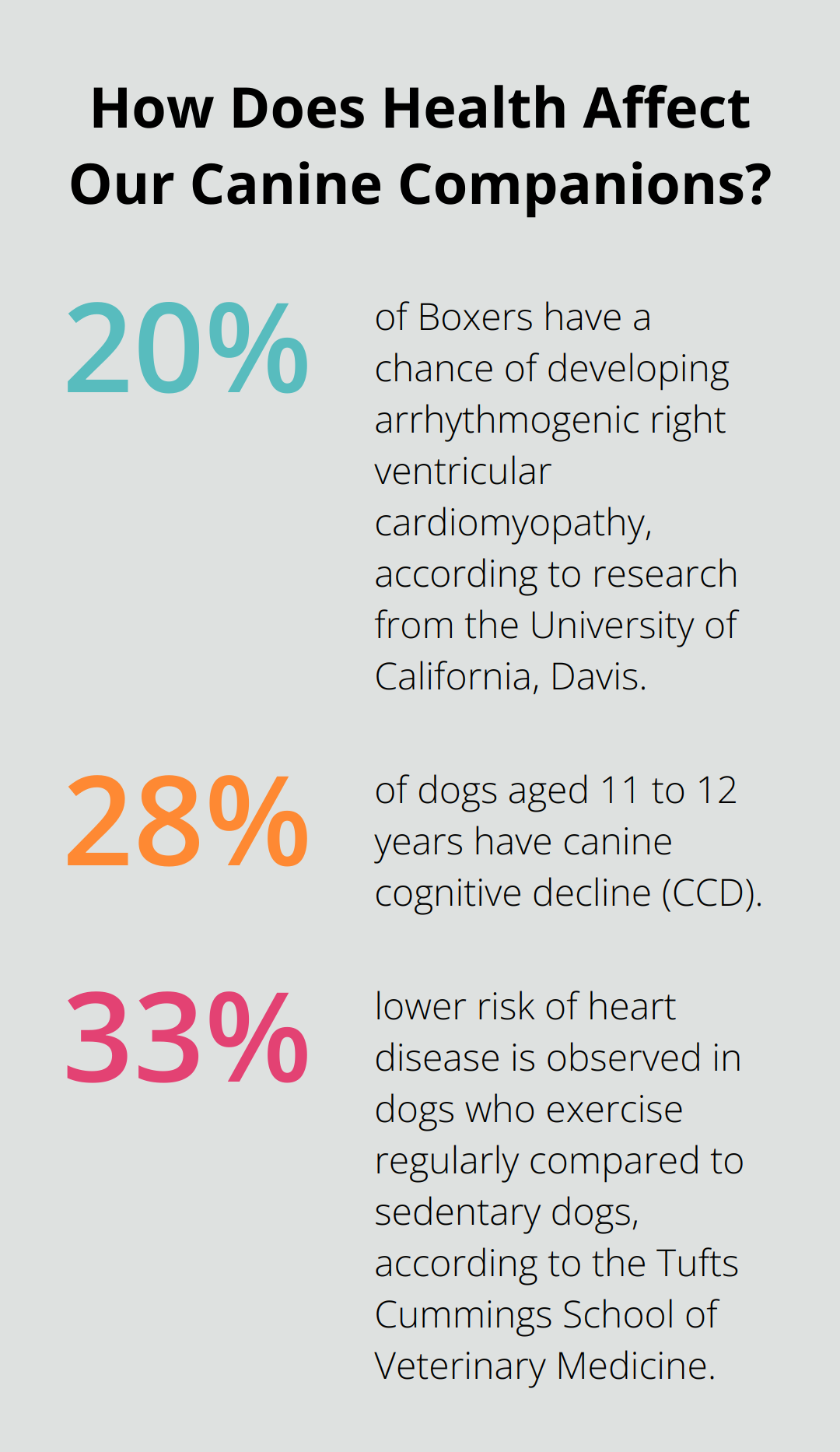
Age stands out as a major risk factor for heart disease in dogs. Canine cognitive decline (CCD) is present in 28% of dogs aged 11 to 12 years, with a prevalence that increases to 68% around 15 to 16 years old.
Obesity also increases the risk significantly. A study in the Journal of Veterinary Internal Medicine found that obese dogs have a 1.3 times higher risk of developing heart disease compared to dogs at a healthy weight.
Breed predisposition plays a significant role. For example, research from the University of California, Davis shows that Boxers have a 20% chance of developing arrhythmogenic right ventricular cardiomyopathy.
Preventive Care for Canine Heart Health
Regular veterinary check-ups form the cornerstone of preventive care. The American Animal Hospital Association recommends annual health exams for adult dogs and bi-annual exams for senior dogs to detect heart issues early.
Diet and exercise serve as key preventive measures. The Tufts Cummings School of Veterinary Medicine suggests that dogs who exercise regularly have a 33% lower risk of heart disease compared to sedentary dogs.
Dental care often gets overlooked but remains vital. The American Veterinary Dental College reports that dogs with severe periodontal disease have a 1.6 times higher risk of heart disease due to the spread of oral bacteria.
Regular health screenings, weight management, and proper nutrition form essential steps in supporting your dog’s heart health. These preventive measures can significantly reduce the risk of heart problems and set the stage for a discussion on essential supplements that can further boost your dog’s cardiovascular health.
Top Heart Health Supplements for Dogs
Supplements can support your dog’s heart health effectively. We have researched the most potent options to help you make informed decisions for your furry friend’s cardiovascular well-being.
Omega-3 Fatty Acids: The Heart’s Best Friend
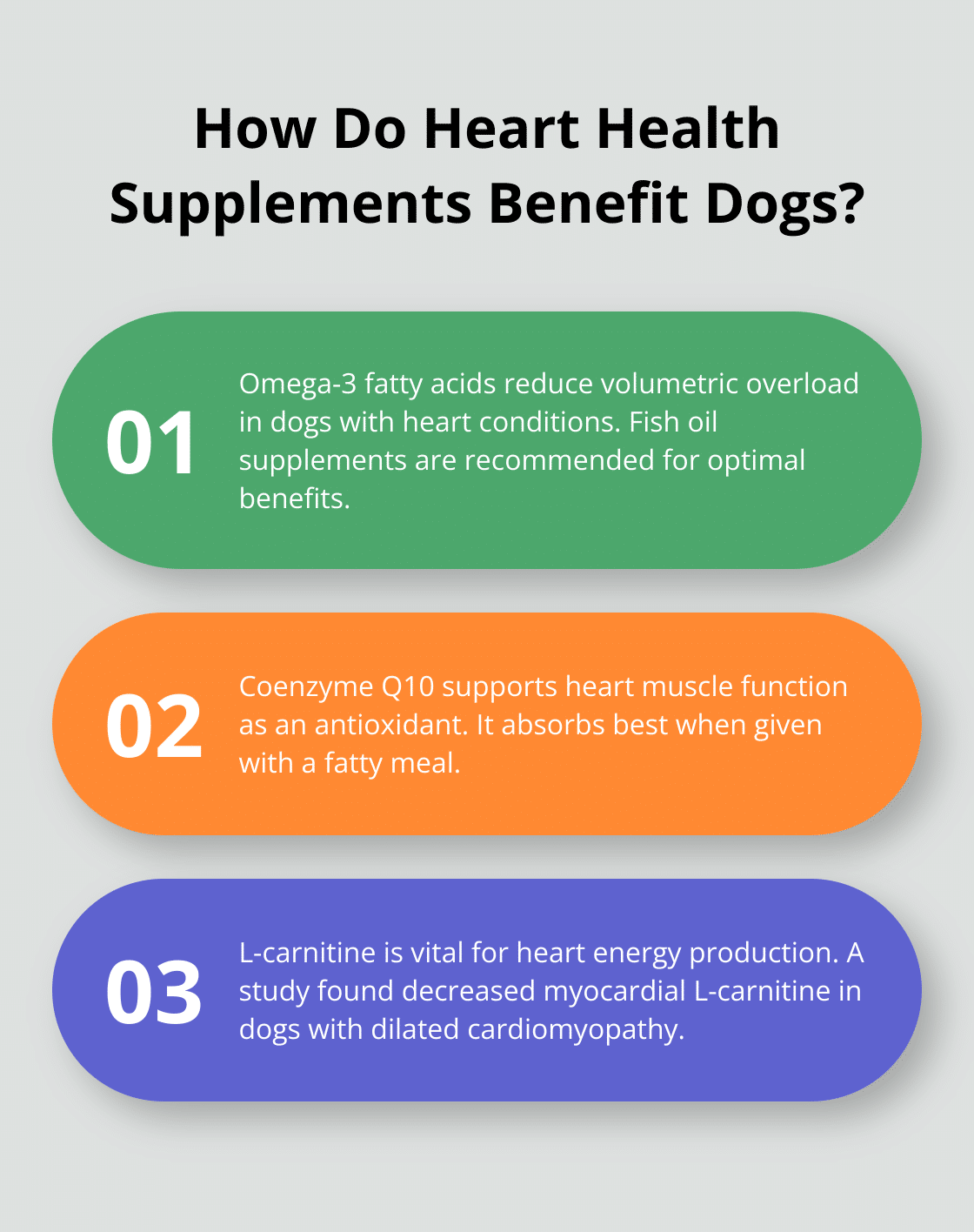
Omega-3 fatty acids, particularly EPA and DHA, act as powerhouses for canine heart health. A study found that omega-3 dietary supplementation reduces volumetric overload and has an antiarrhythmic effect in dogs with heart conditions.
For optimal benefits, choose fish oil supplements specifically formulated for dogs. However, consult your veterinarian for the right amount for your dog.
Coenzyme Q10: Energizing the Heart
Coenzyme Q10 (CoQ10) functions as a potent antioxidant that supports heart muscle function. While human studies show promising results, veterinary research continues to evolve. Nevertheless, many veterinary cardiologists recommend CoQ10 for dogs with heart conditions.
CoQ10 is fat-soluble, so it absorbs best when given with a meal containing some fat.
L-Carnitine: Fueling the Heart
L-carnitine plays a vital role in heart energy production. A study found that dilated cardiomyopathy in a family of dogs was associated with decreased myocardial L-carnitine concentrations, compared to control dogs.
L-carnitine comes in powder or tablet form and mixes easily with food.
Taurine: The Heart’s Protector
Taurine deficiency links to DCM in certain dog breeds. The Journal of Veterinary Cardiology reported that Cocker Spaniels with DCM showed significant improvement in heart function after taurine supplementation.
Taurine supplements usually cause no issues and can be given with meals.
These supplements do not replace veterinary care or prescribed medications. Always consult your veterinarian before starting any new supplement regimen. They can determine the right combination and dosage for your dog’s specific needs and monitor for any potential interactions with existing medications.
Regular blood tests and cardiac evaluations help track your dog’s progress and adjust the supplement plan as needed. With the right approach, these heart-healthy supplements can enhance your dog’s overall cardiac care strategy.
Now that we’ve covered the top heart health supplements for dogs, let’s explore how to administer these supplements effectively and safely to ensure your furry friend reaps the maximum benefits.
How to Give Heart Health Supplements to Your Dog
Determining the Right Dosage
Dosage plays a vital role in the effectiveness of heart health supplements for dogs. The American Veterinary Medical Association stresses the importance of tailored dosages based on your dog’s weight, age, and overall health condition.

For omega-3 fatty acids, a recommendation is to start with approximately a quarter of the maximum dose and then increase the dose slowly while monitoring for any side effects. L-carnitine supplementation dosages may vary, and it’s important to consult with a veterinarian for the appropriate amount for your dog.
Taurine dosages vary widely. A common recommendation includes 500-1000 mg for small dogs and up to 2500-3000 mg for large breeds, given twice daily. CoQ10 dosages usually fall between 30-90 mg per day for most dogs, depending on size.
Always start with the lower end of the dosage range and gradually increase as needed under veterinary supervision.
Incorporating Supplements into Meals
Mixing supplements with your dog’s food often proves the easiest and most effective method of administration. The Journal of Veterinary Internal Medicine reports that supplements given with food have better absorption rates and fewer gastrointestinal side effects.
For powdered supplements, sprinkle them over your dog’s regular food and mix well. If using liquid supplements (like fish oil), drizzle it over the food or mix it in thoroughly. Some dogs may be picky, so you might need to experiment with different mixing techniques or food types to find what works best.
Hide pill forms in treats or pill pockets designed for this purpose. The key lies in making the process as stress-free as possible for both you and your dog.
Timing and Frequency of Supplementation
Consistency stands as the cornerstone of effective heart health supplementation. Most supplements require daily administration, often split into morning and evening doses to maintain steady levels in the body.
The Journal of Veterinary Cardiology suggests that taurine and L-carnitine work most effectively when given twice daily. Omega-3 fatty acids can typically be given once daily with a meal.
Some supplements, like CoQ10, absorb best when given with a meal containing some fat. Creating a routine around meal times can help ensure you don’t forget doses.
It’s essential to follow your veterinarian’s recommendations for timing and frequency, as they may adjust these based on your dog’s specific heart condition and response to treatment.
Monitoring for Side Effects
While heart health supplements generally prove safe for dogs, it’s important to watch for potential side effects. Common side effects may include gastrointestinal upset (vomiting or diarrhea), changes in appetite, or allergic reactions.
If you notice any unusual symptoms or changes in your dog’s behavior after starting a new supplement, contact your veterinarian immediately. They may need to adjust the dosage or switch to a different supplement.
Integrating Supplements with Other Treatments
Heart health supplements should complement, not replace, prescribed medications or regular veterinary check-ups. Always keep your vet informed about any supplements you’re giving your dog to ensure they work well with other treatments and don’t interfere with medications.
Your veterinarian might recommend periodic blood tests or cardiac evaluations to monitor your dog’s progress and adjust the supplement plan as needed. This integrated approach helps ensure your dog receives the most comprehensive and effective heart health care possible.
Final Thoughts
Dog heart health supplements can significantly improve your furry friend’s cardiovascular well-being. Omega-3 fatty acids, Coenzyme Q10, L-carnitine, and taurine are key supplements that support canine heart health. However, every dog has unique health needs, so consulting with a veterinarian before starting any supplement regimen is essential.

A comprehensive approach to heart health combines supplements with a healthy lifestyle. Regular exercise, a balanced diet, and weight management all contribute to your dog’s cardiovascular health. These factors, when combined with appropriate supplements, create a robust strategy for maintaining your dog’s heart health.
We at DogingtonPost strive to provide you with the latest information on canine care (including nutrition tips and expert advice). Our goal is to support you in giving your furry companion the best possible life. A healthy heart leads to a happy dog, and with the right approach, you can help keep your four-legged friend’s heart in top shape for years to come.