

“This post contains affiliate links, and I will be compensated if you make a purchase after clicking on my links.”
At DogingtonPost, we know that maintaining your dog’s joint health is essential for their overall well-being and quality of life.
Joint problems can affect dogs of all ages and breeds, causing discomfort and limiting their mobility.
In this post, we’ll explore effective strategies to improve your dog’s joint health, from nutrition and exercise to lifestyle modifications.
By implementing these tips, you can help your furry friend stay active and pain-free for years to come.
Common Joint Issues in Dogs
Osteoarthritis: The Silent Culprit
Osteoarthritis affects about 20% of all dogs over 1 year of age, making it the most prevalent joint disease. This degenerative condition wears away the cartilage in joints, causing pain and stiffness. Large breeds (such as Labrador Retrievers and German Shepherds) face a higher risk, but dogs of all sizes and ages can develop this condition.

Hip Dysplasia: A Genetic Predisposition
Hip dysplasia, a hereditary condition, prevents proper hip joint development. Large and giant breeds suffer from this condition more frequently. The Orthopedic Foundation for Animals reports that up to 70% of some breeds may develop hip dysplasia. Early detection and management play a key role in maintaining a dog’s quality of life.
Cruciate Ligament Rupture: A Sudden Setback
Cruciate ligament ruptures (similar to ACL tears in humans) often occur in active dogs. These injuries can happen suddenly during play or exercise. Medium to large breeds face a higher risk. Knowledge of the genetic contribution to ACL rupture is more advanced in dogs than in humans, with ACL rupture having a polygenetic basis in dogs.
Factors Affecting Joint Health
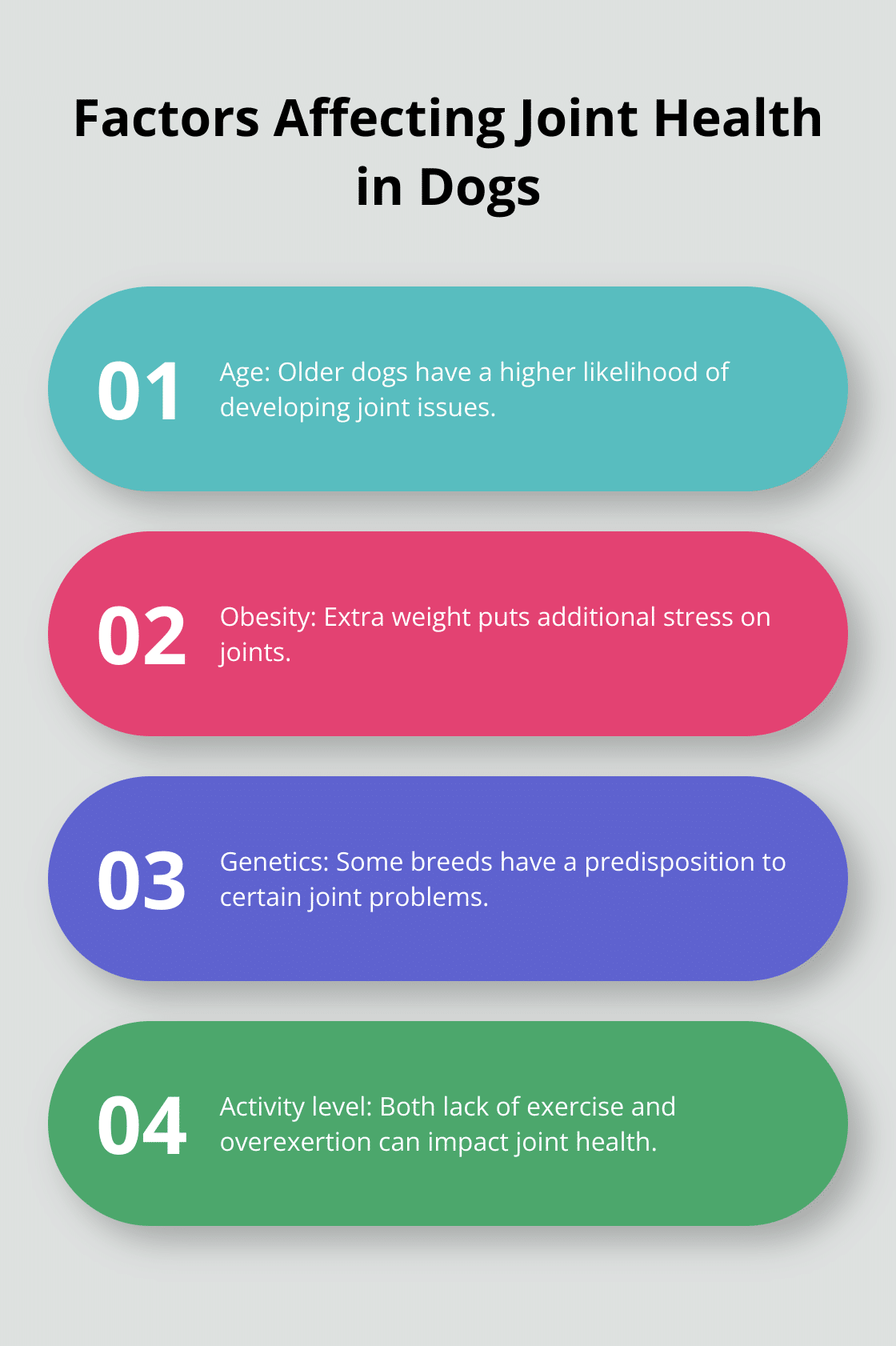
Several factors influence joint health in dogs:
- Age: Older dogs have a higher likelihood of developing joint issues.
- Obesity: Extra weight puts additional stress on joints. Studies show that overweight dogs are 2.3 times more likely to develop osteoarthritis.
- Genetics: Some breeds have a predisposition to certain joint problems.
- Activity level: Both lack of exercise and overexertion can impact joint health.
Recognizing Signs of Joint Problems
Early recognition of joint problems can lead to better outcomes. Watch for these signs:
- Limping
- Difficulty getting up or lying down
- Reluctance to jump or climb stairs
- Decreased activity levels
- Irritability when touched in certain areas
- Excessive licking of joints
If you notice any of these signs, consult with a veterinarian promptly. Regular check-ups, weight management, and appropriate exercise form the foundation of joint health maintenance in dogs. In the next section, we’ll explore how nutrition plays a vital role in supporting healthy joints.
What Should Dogs Eat for Healthy Joints?
The Power of Omega-3 Fatty Acids
Omega-3 fatty acids, particularly EPA and DHA, support joint health in dogs. These nutrients have been shown to reduce inflammatory processes in the body by inhibiting the production of inflammatory mediators.
Fish oil supplements or fish-based dog foods incorporate omega-3s into your dog’s diet. Cold-water fish (salmon, sardines, and mackerel) provide excellent sources of these beneficial fatty acids.
Antioxidants: Guardians of Joint Health
Antioxidants protect your dog’s joints from oxidative stress and inflammation. Vitamins C and E, along with beta-carotene and selenium, neutralize free radicals that contribute to joint damage.
Add antioxidant-rich foods to your dog’s diet, such as blueberries, spinach, and sweet potatoes. Many high-quality commercial dog foods now include these ingredients. However, introduce new foods gradually and in moderation to avoid digestive upset.
Glucosamine and Chondroitin: Building Blocks for Joints
Glucosamine and chondroitin are commonly used in dogs with osteoarthritis, but evidence around efficacy is mixed. While many veterinarians recommend these supplements, especially for older dogs or those prone to joint issues, more research is needed to conclusively determine their effectiveness.
Consult with your veterinarian for proper dosage if you consider glucosamine and chondroitin supplements. Individual needs may vary based on size, age, and existing health conditions.
Protein: The Foundation of Joint Health
High-quality protein sources supply essential amino acids for tissue repair and maintenance. Focus on providing your dog with lean meats and fish. These protein sources contribute to overall joint health and support muscle strength, which in turn helps protect joints.
Tailoring Diet to Individual Needs
A dog’s nutritional requirements for joint health vary based on factors like age, breed, and activity level. Regular veterinary check-ups help fine-tune your dog’s diet and supplement regimen.
As we move forward, let’s explore how exercise and lifestyle changes can complement a joint-healthy diet to keep your furry friend active and pain-free.
Here’s the modified chapter with the requested changes:
How Exercise and Lifestyle Changes Boost Your Dog’s Joint Health
Low-Impact Exercises for Joint-Friendly Fun
Exercise plays a vital role in maintaining your dog’s joint health. Swimming provides an excellent full-body workout without stressing the joints. Many veterinary clinics and pet rehabilitation centers offer hydrotherapy sessions for dogs.
Walking on soft surfaces (grass or sand) benefits dogs with joint issues. Start with short, 10-15 minute walks and increase the duration as your dog builds strength. Avoid hard surfaces like concrete or asphalt, which can harm joints.
Gentle play sessions that exclude jumping or quick turns help maintain muscle strength without overexertion. Activities such as nose work games or food puzzles offer mental stimulation while encouraging gentle movement.

Weight Management for Healthier Joints
Maintaining a healthy weight supports your dog’s joint health significantly. Excess weight puts stress on joints. A study suggests that obesity may be a risk factor for the development of osteoarthritis in dogs.
Consult your veterinarian to determine your dog’s ideal weight and create a tailored diet plan. Measure your dog’s food carefully and avoid overfeeding. Replace high-calorie treats with healthier options (small pieces of carrots or green beans).
Incorporate more frequent, shorter meals throughout the day to boost metabolism. This approach helps your dog burn calories more efficiently while preventing hunger that often leads to begging and overeating.
Creating a Joint-Friendly Home Environment
Simple home modifications improve your dog’s comfort and mobility. Place non-slip mats or rugs on slippery floors to provide better traction. This small change prevents falls and reduces strain on your dog’s joints when moving around the house.
Invest in an orthopedic dog bed that provides proper support for your dog’s joints. Look for beds with memory foam to provide support and relieve pressure points.
Use ramps or steps to help your dog access furniture or get in and out of the car. This significantly reduces the impact on their joints from jumping. Introduce these aids gradually, using positive reinforcement to encourage your dog to use them.
Regular Veterinary Check-ups
Schedule regular veterinary check-ups to monitor your dog’s joint health. Your vet can detect early signs of joint issues and recommend appropriate treatments or lifestyle changes. These check-ups also allow for adjustments to your dog’s exercise routine and diet as needed.
Massage and Physical Therapy
Consider incorporating massage and physical therapy into your dog’s routine. Gentle massage improves circulation and reduces muscle tension around joints. Physical therapy exercises (prescribed by a professional) can strengthen muscles supporting the joints and improve flexibility.
Final Thoughts
A holistic approach to dog joint health combines proper nutrition, appropriate exercise, and a supportive environment. Omega-3 fatty acids, antioxidants, and high-quality proteins form the foundation of good joint health. Low-impact exercises like swimming and gentle walks help maintain strong, flexible joints. Weight management reduces stress on your dog’s joints, which improves their comfort and mobility.
Non-slip surfaces and supportive bedding create a joint-friendly home environment for your canine companion. Regular veterinary check-ups allow for early detection and management of potential joint issues. These timely interventions can slow the progression of conditions like osteoarthritis (which affects about 20% of all dogs over 1 year of age).
DogingtonPost provides valuable information on dog joint health and other aspects of responsible dog ownership. You can improve your dog’s joint health through consistent, proactive care. Visit our comprehensive resource for dog lovers to learn more about keeping your four-legged friend happy, healthy, and active throughout their life.