
“This post contains affiliate links, and I will be compensated if you make a purchase after clicking on my links.”
At DogingtonPost, we’re excited to share insights on how to adopt dogs that failed government training. These exceptional canines, despite not completing their official duties, have incredible potential as loving companions.
Adopting a former government-trained dog offers a unique opportunity to give a second chance to a highly skilled and well-socialized animal. In this guide, we’ll walk you through the process, from understanding these special dogs to preparing your home for their arrival.
Understanding Government-Trained Dogs
Types of Dogs in Government Programs
Government-trained dogs serve various official roles, including explosive detection, search and rescue, and law enforcement support. The Transportation Security Administration (TSA) reported more than 300,000 canine utilization hours throughout the nation’s transportation system in 2019, with canine teams working at more than 100 locations.
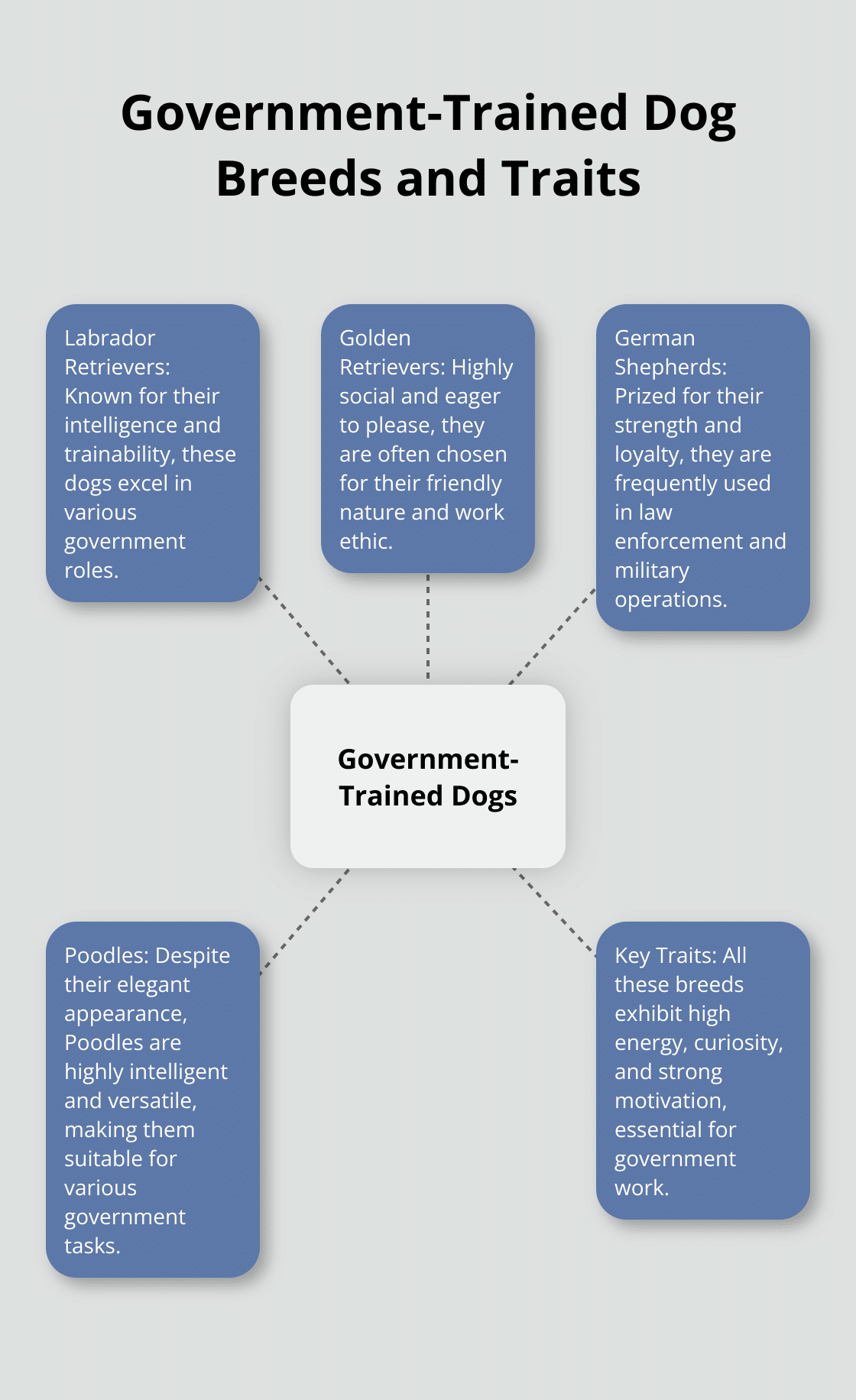
Labrador Retrievers, Golden Retrievers, German Shepherds, and Poodles are common breeds selected for government training programs. These breeds excel in intelligence, trainability, and work ethic. The dogs chosen for these programs typically exhibit high energy, curiosity, and strong motivation.
Reasons for Training Failure
Not all dogs complete their government training successfully. The TSA describes some of these dogs as “too nice” or “too rambunctious” for their operational needs. Other factors that can lead to training failure include:
- Health issues (e.g., cataracts, joint problems, allergies)
- Excessive friendliness
- High energy levels
- Difficulty with leash work
Benefits of Adopting Failed Government Dogs
Adopting a dog that didn’t complete government training offers unique advantages:
- Solid foundation in basic obedience and socialization
- Prime age range (typically 2-4 years old)
- High energy levels suitable for active households
- Potential for sports or outdoor adventures
These dogs can significantly improve psychosocial health, including higher social, emotional, and work/school functioning for their owners. They enjoy engaging in activities and mental challenges, making them ideal for active lifestyles.
Cost Considerations
Adopting a failed government-trained dog can be cost-effective. The TSA, for example, offers their dogs for adoption free of charge. However, potential adopters should prepare for the expenses associated with owning a large breed dog (including food, medical care, and ongoing training).
As we move forward to explore the adoption process, it’s important to understand the organizations that offer these exceptional dogs and the steps involved in bringing one into your home.
Where to Find and Adopt Failed Government Dogs
Government Agencies with Adoption Programs
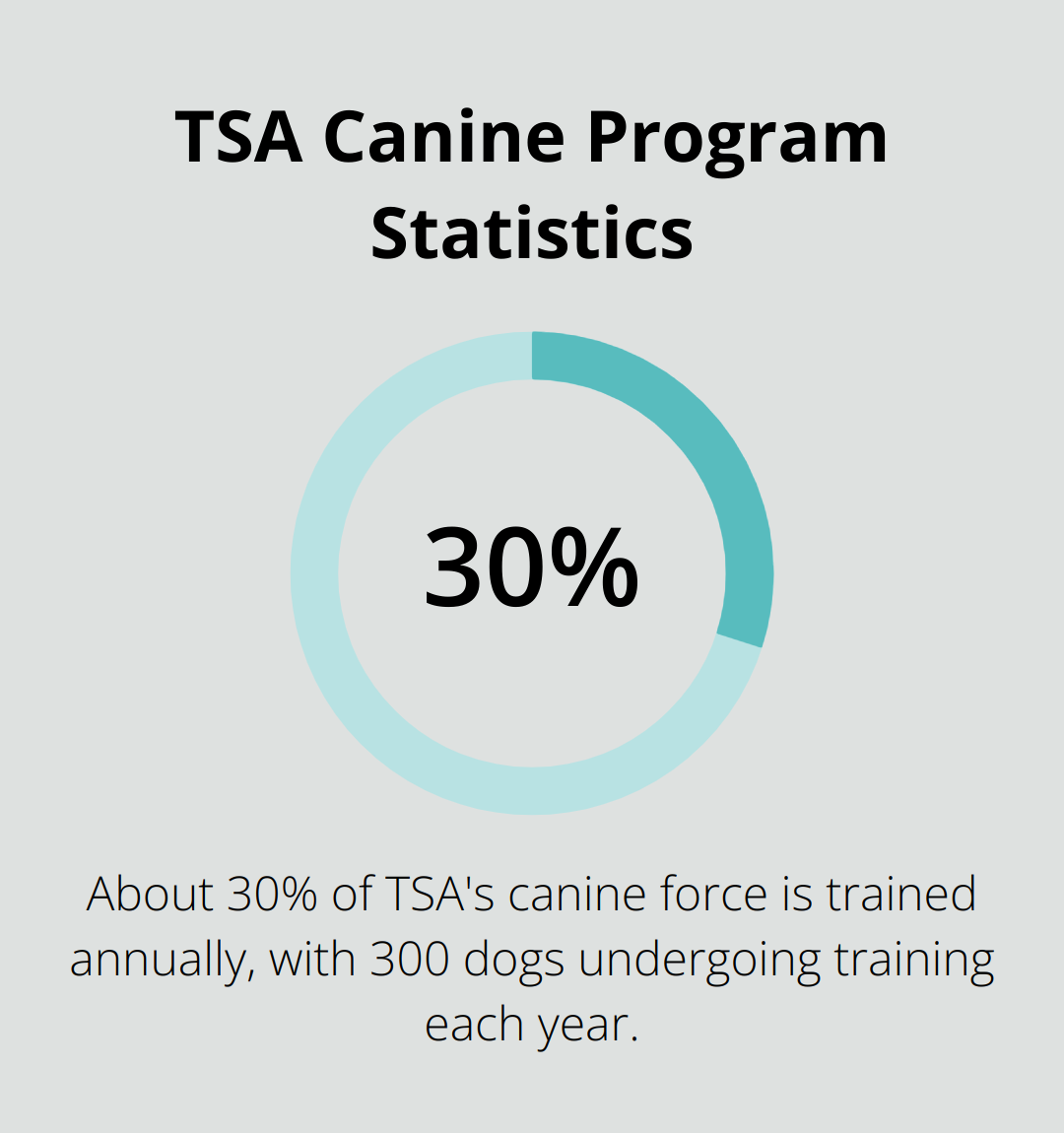
The Transportation Security Administration (TSA) Canine Adoption Program stands out as a primary source for dogs that didn’t complete explosives detection training. These canines are available for adoption at no cost. The TSA operates over 1,000 canine teams throughout the U.S., with about 300 dogs trained annually.
Other agencies, such as the Department of Defense and various law enforcement organizations, also offer dogs for adoption periodically. These programs strive to find loving homes for failed government dogs that did not meet TSA’s training criteria for government work, as well as retired working dogs.
The Application Process
The adoption process for these dogs is thorough and competitive. The TSA, for example, operates on a first-come, first-served basis, but applicants must meet specific criteria:
- A fenced yard at the time of application
- Compliance with local pet ordinances
- No plans to move within six months of adopting
- Current vaccinations and preventive care for all existing pets
Approved applicants must visit Joint Base San Antonio-Lackland in Texas to meet potential dogs. This process can take from a few days to weeks, depending on the dog’s status and visit scheduling.
Cost Considerations
While the TSA offers its dogs for adoption free of charge, other programs may have adoption fees. These fees can range from $0 to over $1,000, reflecting the extensive training and health screening these dogs have undergone.
The initial adoption fee is just the beginning. Potential adopters should prepare for the ongoing costs of owning a large breed dog. This includes expenses for food, medical care, and additional training. These dogs often have high energy levels and may require professional help for integration into a family setting.
Long-term Commitment
Adopting a failed government dog requires a significant long-term commitment. These dogs may need help adjusting to life outside of a working environment. However, the rewards of giving these exceptional animals a loving home are immeasurable.
As we move forward, we’ll explore how to prepare your home for your new canine companion, ensuring a smooth transition for both you and your adopted dog.
How to Prepare Your Home for a Former Government Dog
Create a Safe Space
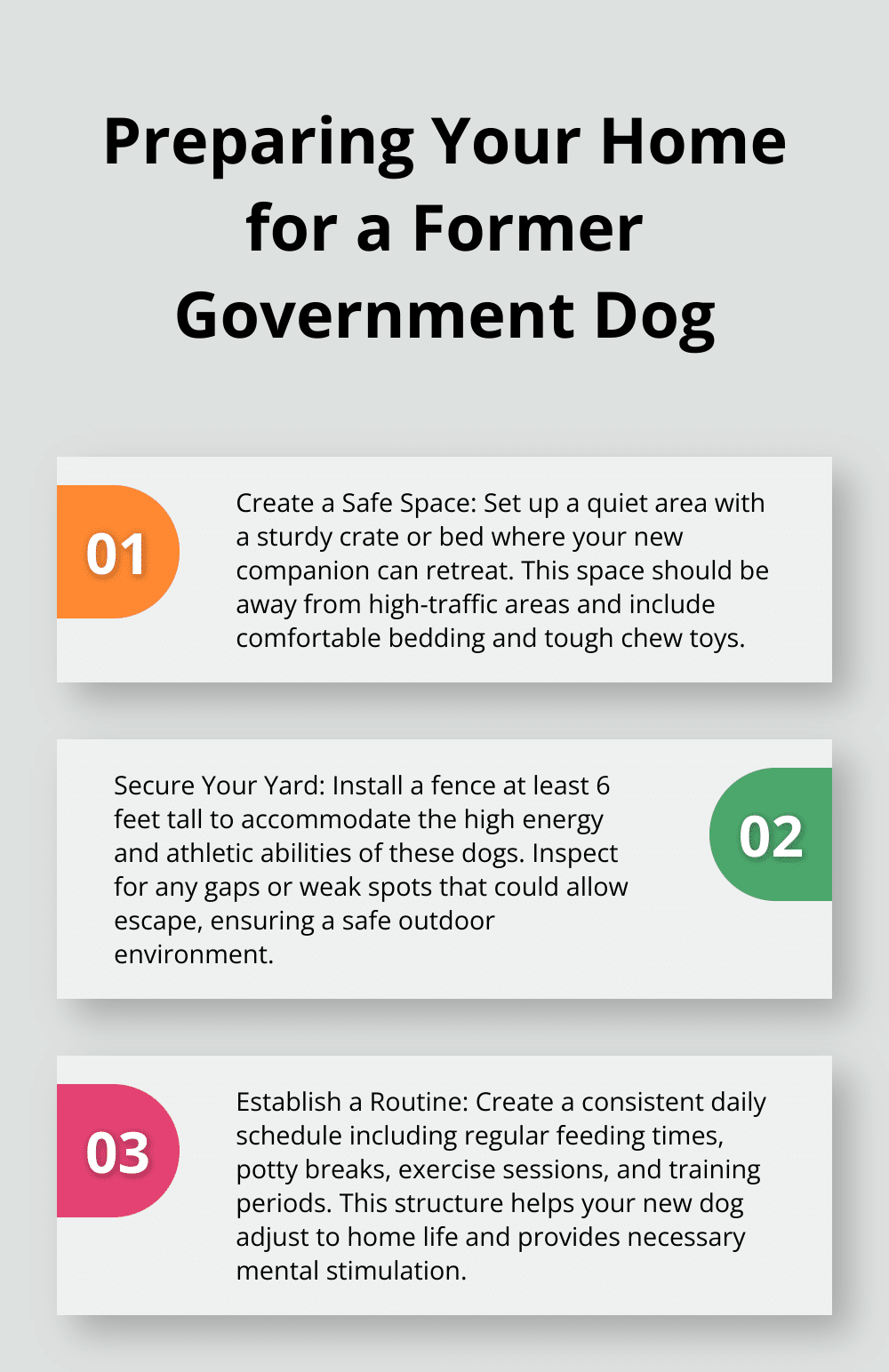
Former government dogs need a structured environment to thrive in their new civilian life. Set up a quiet area with a sturdy crate or bed where your new companion can retreat. Place this space away from high-traffic areas of your home. Line the crate with comfortable bedding and include a few tough chew toys. These dogs are often large breeds, so ensure the crate is appropriately sized.
Secure Your Yard
Government-trained dogs typically have high energy and need plenty of exercise. Make sure your yard has a secure fence. These dogs are often athletic and may jump or climb over standard fences. Install a fence at least 6 feet tall. Inspect for any gaps or weak spots that could allow escape.
Stock Up on Supplies
Before your new dog arrives, gather these essential supplies:
- A sturdy leash and collar
- High-quality dog food (ask the adoption agency for recommendations)
- Food and water bowls
- Durable toys for mental stimulation
- A brush suitable for the dog’s coat type
- Dog shampoo and nail clippers
Purchase puzzle toys and treat-dispensing toys. These will keep your intelligent new companion mentally stimulated when you’re not actively training or playing.
Establish a Routine
Government-trained dogs thrive on structure. Create a consistent daily routine from day one. Include regular feeding times, potty breaks, exercise sessions, and training periods. Adhere to this schedule as closely as possible to help your new dog adjust to home life.
Many of these dogs are accustomed to working. Include training sessions in your daily routine to provide mental stimulation and reinforce good behaviors. Begin with basic obedience commands and gradually introduce more complex tasks.
Prepare for Exercise
These dogs often have high energy levels and need plenty of physical activity. Plan at least an hour of exercise daily (split into multiple sessions). This could include walks, runs, fetch games, or agility training. Prepare a variety of activities to keep your dog engaged and prevent boredom-related behaviors.
Final Thoughts
Adopting dogs that failed government training offers a unique opportunity to welcome a highly skilled and well-socialized canine into your home. These exceptional animals, often available through programs like the TSA Canine Adoption Program, come with a solid foundation in obedience and socialization. The adoption process requires thorough preparation, including creating a safe space, securing your yard, and establishing a consistent routine for your new companion.
We at DogingtonPost encourage you to consider adopting one of these remarkable dogs. You’ll gain a loyal companion with high energy levels, perfect for active households or those interested in canine sports. These dogs thrive on structure and mental stimulation, so you must provide plenty of exercise and training.
The rewards of adopting a dog that didn’t complete government training are immeasurable. You’ll give a second chance to a deserving animal while gaining a devoted friend. For more information on responsible dog ownership and care tips, visit our comprehensive guide for dog lovers.