
“This post contains affiliate links, and I will be compensated if you make a purchase after clicking on my links.”
Choosing the right dog food for renal care can be a daunting task for pet owners. At DogingtonPost, we understand the importance of proper nutrition for dogs with kidney issues.
This guide will help you navigate the world of renal care diets, highlighting key nutrients and ingredients to look for in specialized dog food. We’ll also explore top brands and products to support your furry friend’s kidney health.
What Makes Renal Care Diets Different?
Renal care diets for dogs support kidney function and slow the progression of kidney disease. These diets differ from regular dog food in several key aspects.
Protein: Quality Over Quantity
Dogs with kidney issues need less protein, but it must be high-quality and easily digestible. A study found that dogs eating a renal diet had a 3-fold reduction in relative risk of uremic crises compared with dogs eating the maintenance control diet.

Egg whites and whitefish are excellent protein sources for dogs with kidney problems. These proteins have a high biological value, allowing the body to use them efficiently with minimal waste.
Phosphorus: A Key Concern
Phosphorus restriction is a critical aspect of renal diets. Research from the American College of Veterinary Internal Medicine shows that reducing dietary phosphorus can significantly slow kidney disease progression in dogs.
Most commercial renal diets aim for phosphorus levels between 0.2% and 0.5% on a dry matter basis (considerably lower than the 0.7% to 1.6% in standard dog foods). Pet owners should check for foods where phosphorus appears far down on the ingredient list, if at all.
Sodium: Keeping It Low
Sodium restriction helps manage blood pressure and reduces kidney workload. The Veterinary Medical Center at Tufts University recommends renal diets for dogs contain no more than 0.3% sodium on a dry matter basis.
When selecting renal care dog food, avoid products with added salt or high-sodium ingredients like certain preservatives. Instead, look for natural flavor enhancers (such as herbs) that improve palatability without adding sodium.
Omega-3 Fatty Acids: Natural Anti-Inflammatories
Omega-3 fatty acids, particularly DHA from fish oil, play a vital role in renal diets. DHA has been shown to improve cognitive dysfunction in affected dogs and appears to slow the progression of human cognitive decline.
Try to find renal diets that list fish oil or specific omega-3 sources in the first few ingredients. The ideal ratio of omega-6 to omega-3 fatty acids in these diets should fall between 5:1 and 10:1.
Understanding these key differences in renal care diets empowers pet owners to make informed decisions when selecting food for their dogs with kidney issues. However, the selection process doesn’t end here. The next crucial step involves identifying specific ingredients that can further support your dog’s renal health.
What Ingredients Matter Most in Renal Care Dog Food?
High-Quality, Digestible Proteins
Protein quality and digestibility are paramount for dogs with kidney issues. Egg whites and whitefish stand out as excellent protein sources. These proteins have high biological value, which means the body uses them efficiently with minimal waste. Numerous studies have confirmed that protein does not adversely affect the kidneys. However, phosphorus- and protein-restricted diets are clinically beneficial for dogs with kidney disease.
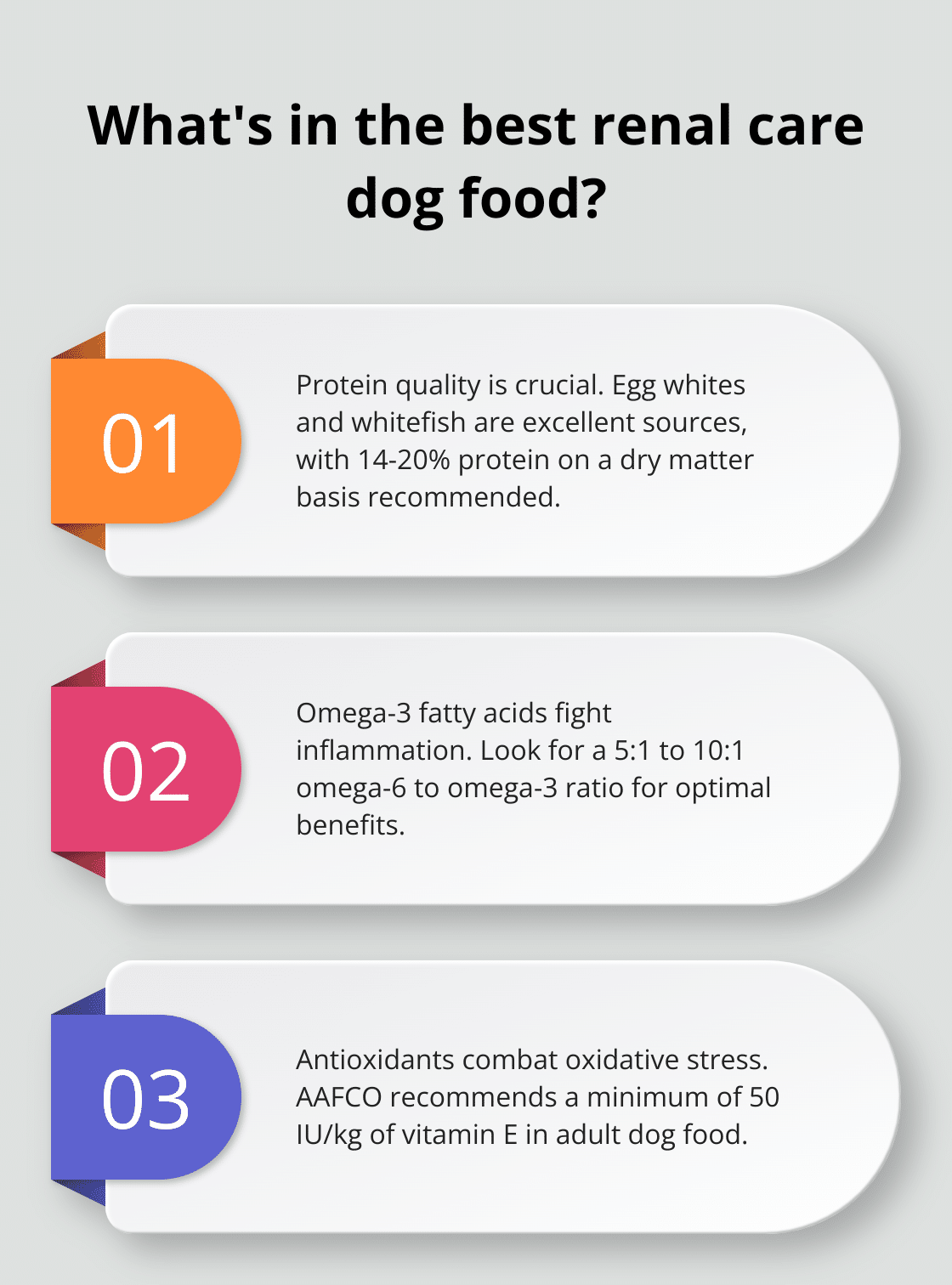
Some premium renal care dog foods incorporate novel protein sources like venison or duck. These can benefit dogs with food sensitivities (common in kidney disease). Check the guaranteed analysis on the label for protein content. Try to find options with 14-20% protein on a dry matter basis.
Omega-3 Fatty Acids: Natural Inflammation Fighters
Omega-3 fatty acids, especially EPA and DHA from fish oil, play a vital role in renal care diets. These compounds reduce kidney inflammation and slow disease progression. Renal diets that have both omega-3 fatty acids and antioxidants combined are better at slowing the progression of chronic kidney disease.
When examining dog food labels, look for specific omega-3 sources such as salmon oil or menhaden fish oil. Try to select a product with an omega-6 to omega-3 ratio between 5:1 and 10:1 for optimal benefits.
Antioxidants and Vitamins: Cellular Defense
Antioxidants and vitamins provide essential support for overall kidney health. Vitamin E, Vitamin C, and beta-carotene combat oxidative stress in the kidneys. A study in the Veterinary Journal highlighted the importance of dietary antioxidant supplementation, as dogs with kidney disease showed lower blood antioxidant levels.
Search for dog foods that include natural antioxidant sources like blueberries, cranberries, or sweet potatoes. Some brands add specific antioxidant complexes to their renal formulas. The Association of American Feed Control Officials (AAFCO) recommends a minimum of 50 IU/kg of vitamin E in adult dog food, but many renal diets provide higher levels.
Low Phosphorus Content
Phosphorus restriction is a key aspect of renal diets. Foods with low phosphorus content help slow kidney disease progression. Most commercial renal diets target phosphorus levels between 0.2% and 0.5% on a dry matter basis (significantly lower than the 0.7% to 1.6% in standard dog foods). Look for foods where phosphorus appears far down on the ingredient list, if at all.
Sodium Restriction
Low sodium content helps manage blood pressure and reduces kidney workload. Experts recommend renal diets for dogs contain no more than 0.3% sodium on a dry matter basis. Avoid products with added salt or high-sodium ingredients like certain preservatives. Instead, opt for foods with natural flavor enhancers (such as herbs) that improve palatability without adding sodium.
Now that we’ve covered the essential ingredients in renal care dog food, let’s explore some top brands and products that incorporate these key components effectively.
Best Renal Care Dog Foods
Prescription Renal Diets
Veterinary-prescribed renal diets support kidney function. Hill’s Prescription Diet k/d offers wet and dry options with controlled levels of high-quality protein and restricted phosphorus. It contains omega-3 fatty acids from fish oil. Supplementation with functional food bioactives can temporarily reverse the age-associated decline in renal function and serum total protein.

Royal Canin Veterinary Diet Renal Support comes in various textures to cater to different preferences. This variety can help dogs with decreased appetite. Royal Canin states that their renal diet can slow the progression of chronic kidney disease by up to 24 months.
Purina Pro Plan Veterinary Diets NF Kidney Function features low sodium and phosphorus levels. It includes added B-complex vitamins to compensate for losses often seen in kidney disease. A study in the Journal of Veterinary Internal Medicine found that dogs on this diet showed improved quality of life scores compared to those on standard diets.
Over-the-Counter Options
Blue Buffalo Natural Veterinary Diet KS Kidney Support is available without a prescription. It offers moderate protein levels with restricted phosphorus. This option suits dogs with early-stage kidney disease or those transitioning to a full renal diet.
Wellness Complete Health Senior, while not specifically formulated for kidney disease, offers lower protein and phosphorus levels. This food suits older dogs with mild kidney issues. However, consult with a veterinarian before choosing an over-the-counter option for a dog with kidney problems.
Wet vs. Dry Food for Kidney Health
Both dry dog food and wet dog food can provide nutritionally balanced diets, but the major difference is in the way they are processed. The higher moisture content in wet food (typically around 75-80%) helps keep dogs hydrated, which benefits kidney function. A study in the Journal of Feline Medicine and Surgery (applicable to dogs as well) found that cats on wet food diets had better hydration status and lower urine specific gravity compared to those on dry food.
Wet food also tends to be more palatable. This quality matters for dogs with decreased appetite due to kidney disease. Many pet owners succeed in mixing wet and dry renal diets to provide both increased moisture and the dental advantages of crunchy kibble.
Importance of Veterinary Guidance
The choice of renal care dog food should align with your dog’s specific nutritional requirements. Regular veterinary check-ups allow for potential diet adjustments. These check-ups ensure the best possible outcome for dogs with renal issues.
DogingtonPost’s Recommendations
We at DogingtonPost recommend consulting with your veterinarian to determine the best renal care diet for your dog. Our experts emphasize the importance of tailoring the diet to your dog’s specific stage of kidney disease and overall health condition.
Final Thoughts
Selecting the right dog food for renal care requires careful consideration of your pet’s specific needs. Your veterinarian plays a crucial role in guiding you through the selection process and tailoring a diet plan to your dog’s condition. We recommend introducing new renal care diets gradually over 7-10 days to prevent digestive issues and increase acceptance.

At DogingtonPost, we provide the latest information on canine nutrition and health to support your dog’s well-being. Our platform offers expert advice to help you make informed decisions about your dog’s care, including choosing the best renal care dog food. We encourage you to explore our resources and stay updated on developments in renal care nutrition.
Your commitment to your dog’s health can lead to many more happy years together. With the right approach to nutrition and regular veterinary check-ups, you can effectively manage your dog’s kidney health. We invite you to visit our website for more comprehensive guides on pet care and nutrition.