

“This post contains affiliate links, and I will be compensated if you make a purchase after clicking on my links.”
Bringing a new furry friend into your life is exciting, but it can also be overwhelming. At DogingtonPost, we understand the joys and challenges of first-time dog ownership.
Our comprehensive guide offers essential tips for first-time dog owners, covering everything from preparing your home to establishing routines and ensuring your pup’s health and wellness. Get ready to embark on an incredible journey with your new canine companion!
How to Prepare Your Home for a New Dog
Welcoming a new dog into your home requires careful preparation. This chapter outlines the essential steps to create a safe and comfortable environment for your furry friend.
Dog-Proofing Your Living Space
Dog-proofing your living space involves removing toxic foods, securing hazardous areas, and being mindful of what is accessible to your pets. This can help reduce the risks associated with common household hazards. Examine your home from a dog’s perspective. Remove or secure potential hazards like loose wires, toxic plants, or small objects that could be swallowed. Secure trash cans with locking lids to prevent curious noses from exploring.
Install baby gates to restrict access to certain areas of your home, especially during the initial adjustment period. This helps manage your dog’s environment and prevents accidents or unwanted chewing.
Essential Supplies to Purchase
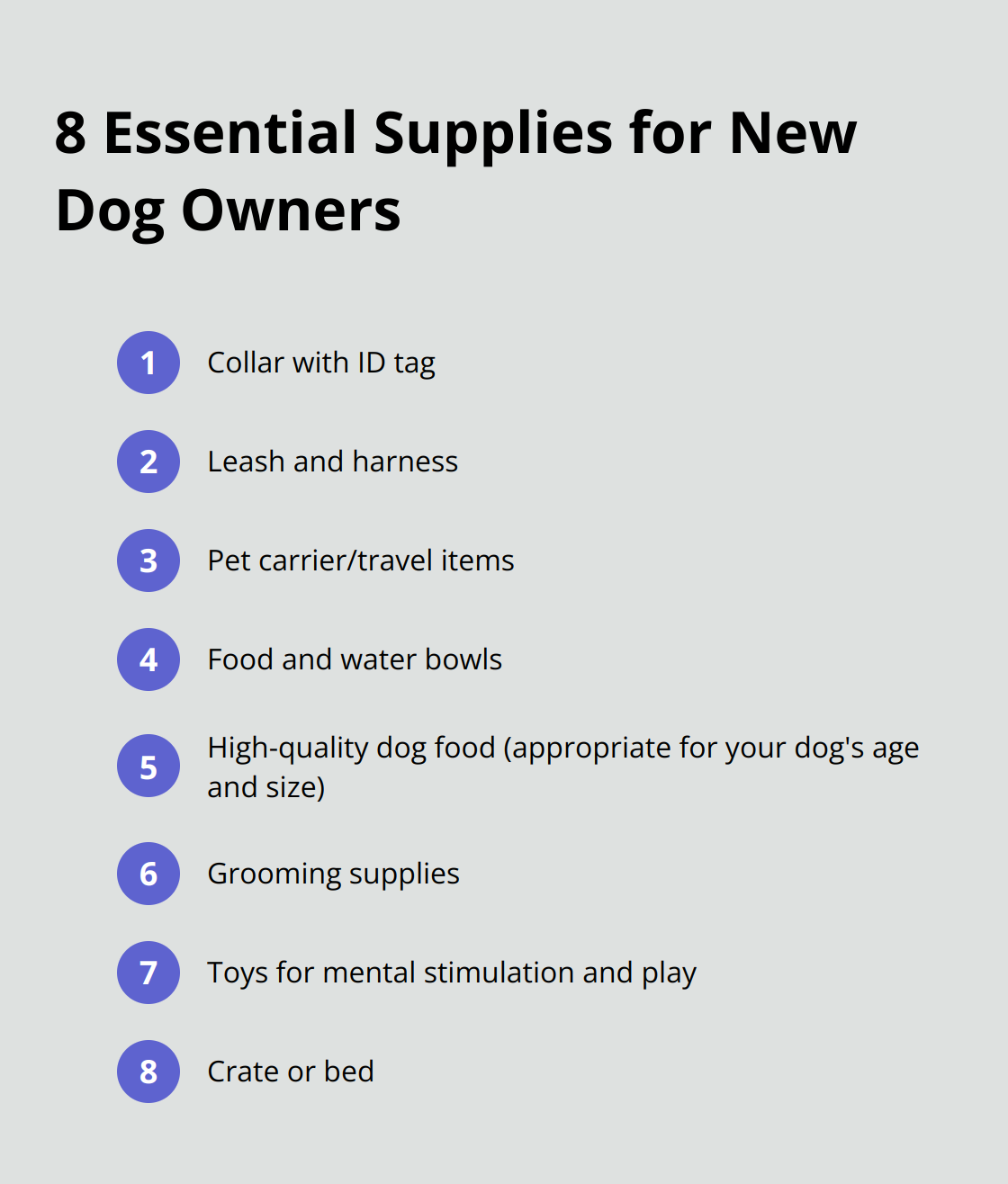
Before your new dog arrives, stock up on these must-have items:
- Collar with ID tag
- Leash and harness
- Pet carrier/travel items
- Food and water bowls
- High-quality dog food (appropriate for your dog’s age and size)
- Grooming supplies
- Toys for mental stimulation and play
- Crate or bed
Don’t forget training treats. The American Kennel Club suggests using small, soft treats that your dog can eat quickly during training sessions.
Creating a Comfortable Sleeping Area
Dogs need a designated space where they feel safe. Choose a quiet area of your home for your dog’s bed or crate. If using a crate, ensure it’s large enough for your dog to stand up, turn around, and lie down comfortably.
Make the space inviting with a soft bed or blanket. Some dogs prefer enclosed spaces, so consider a crate with a cover or a bed with raised sides. Place the bed or crate away from drafts and direct sunlight to maintain a comfortable temperature.
Introduce your dog to their new sleeping area using positive reinforcement techniques. Never force your dog into their crate or bed – allow them to explore and get comfortable at their own pace.
With these preparations complete, you’ll set the stage for a smooth transition. The next chapter will explore how to establish routines and start basic training with your new canine companion.
How to Create a Routine for Your New Dog
Set Feeding and Walking Schedules
Consistency forms the foundation of your dog’s routine. How much to feed your dog depends on a variety of factors, including their size, age, energy level, health issues, and type of food they eat. Pick feeding times that align with your schedule and maintain them rigorously.
For walks, try to schedule at least two 15-30 minute outings daily. Morning and evening walks often work best for dogs and owners alike. Keep in mind that exercise needs vary by breed (a Border Collie, for instance, requires significantly more activity than a Bulldog).
Master House Training
House training demands patience and positive reinforcement. Take your dog out first thing in the morning, after meals, and before bedtime. Select a specific spot outside and use a consistent command like “go potty.” Offer immediate praise and a treat when your dog eliminates outside.
Clean accidents indoors thoroughly with an enzymatic cleaner to remove odors. Never punish your dog for accidents; instead, interrupt them mid-act and take them outside immediately.
Teach Basic Obedience Commands
Start with essential commands such as “sit,” “stay,” “come,” and “leave it.” Conduct short, 5-10 minute training sessions several times a day. Always finish on a positive note with a command your dog knows well.
Reward-based training methods are recommended for all dog training, including the treatment of behavior problems. Use treats, praise, and play as rewards. Avoid punishment-based methods, which can lead to fear and aggression.
Every dog learns at their own pace. Some may grasp commands quickly, while others need more time and repetition. Maintain patience and consistency in your training approach.

Establish a Bedtime Routine
Create a calming bedtime routine to help your dog wind down for the night. This might include a short walk, a quiet play session, or some gentle petting. Stick to a consistent bedtime to help regulate your dog’s internal clock.
Consider using a crate or designated sleeping area to provide your dog with a sense of security. Make this space comfortable with a soft bed or blanket (some dogs prefer enclosed spaces, so a crate with a cover might be ideal).
As you establish these routines and basic training foundations, you’ll pave the way for a harmonious relationship with your new furry friend. Next, we’ll explore how to ensure your dog’s health and wellness, including finding a trustworthy veterinarian and understanding proper nutrition and exercise guidelines.
Keeping Your New Dog Healthy and Happy
Finding the Right Veterinarian
Selecting a trustworthy veterinarian plays a key role in your dog’s long-term health. Ask for recommendations from fellow dog owners, local pet stores, or animal shelters. Look for a vet who demonstrates patience, communicates clearly, and answers your questions willingly.
Schedule a meet-and-greet appointment to evaluate the clinic’s cleanliness, staff friendliness, and the vet’s approach to pet care. Ask about their experience with your dog’s breed and any specific health concerns you may have.
Vaccination and Preventive Care Schedules
Work with your chosen vet to create a vaccination and preventive care schedule tailored to your dog’s needs. Core vaccines typically include rabies, distemper, parvovirus, and canine hepatitis. Your vet might recommend additional vaccines based on your dog’s lifestyle and risk factors.
Preventive care extends beyond vaccinations. Regular check-ups allow your vet to detect potential health issues early. Veterinarians often recommend diagnostics on a yearly basis, such as bloodwork to check basic health and rule out various conditions. Ask your vet about the best flea, tick, and heartworm preventatives for your dog.
Proper Nutrition Guidelines
Proper nutrition forms the foundation of your dog’s health. Select a high-quality dog food appropriate for your pet’s age, size, and activity level. The 2022 U.S. Pet Obesity Prevalence Survey found that 59% of dogs are overweight or have obesity, highlighting the importance of portion control and balanced nutrition.

Exercise Requirements
Exercise needs vary widely among dog breeds. A Border Collie might require several hours of intense activity daily, while a Bulldog may prefer shorter, less strenuous walks. Adapt your dog’s exercise routine to their breed, age, and health status. Regular physical activity not only keeps your dog fit but also provides mental stimulation and strengthens your bond.
Mental Stimulation and Enrichment
Physical exercise alone isn’t enough to keep your dog healthy and happy. Provide mental stimulation through puzzle toys, training sessions, and interactive games. This mental enrichment (which can include activities like hide-and-seek with treats or teaching new tricks) helps prevent boredom and reduces the likelihood of destructive behaviors.
Final Thoughts
Dog ownership brings joy, laughter, and learning. These tips for first-time dog owners provide a solid foundation for a happy, healthy relationship with your canine companion. Patience and consistency will help you navigate the challenges of welcoming a new dog into your home.
DogingtonPost offers valuable resources for dog owners at every stage of their journey. We provide expert advice on training, nutrition, and the latest in canine news to support you. Our team understands the joys and challenges of welcoming a new dog into your life.
Savor the moments of pure joy your new companion brings. The unconditional love, excited tail wags, and comforting presence make all the effort worthwhile. Embrace the learning process, stay open to new experiences, and enjoy the incredible bond you’re forming with your new best friend.