

“This post contains affiliate links, and I will be compensated if you make a purchase after clicking on my links.”
At DogingtonPost, we often encounter questions about the difference between animal rights and animal welfare. These two concepts, while related, have distinct philosophies and approaches to animal treatment.
Understanding these differences is essential for anyone passionate about animal issues. In this post, we’ll explore the core principles of both animal rights and animal welfare, highlighting their unique perspectives and practical implications.
What Are Animal Rights?
The Philosophical Foundation of Animal Rights
Animal rights represents a philosophical stance that advocates for the fundamental rights of animals, similar to those afforded to humans. This perspective extends beyond the concept of animal welfare, asserting that animals possess inherent value and should not be treated as property or resources for human use.
Core Principles of Animal Rights
At its heart, animal rights philosophy argues that animals deserve to live free from exploitation, suffering, and human interference. This means opposing the use of animals for food, clothing, entertainment, or scientific research. Organizations like People for the Ethical Treatment of Animals (PETA) promote these ideas, often through provocative campaigns and legal action.
Key Arguments of Animal Rights Advocates
Animal rights advocates often point to scientific evidence of animal sentience and emotional complexity to support their position. For instance, research has shown that pigs can learn to play video games, and elephants mourn their dead. These findings challenge the traditional view of animals as unfeeling or unintelligent beings.

Another critical argument is the concept of speciesism – the idea that humans unjustly discriminate against other species. Peter Singer, a prominent philosopher in the field, argues that the ability to suffer (not species membership) should be the benchmark for moral consideration.
Animal Rights in Practice
In practice, animal rights advocacy has led to significant changes in various industries. The cosmetics industry, for example, has seen a surge in cruelty-free products due to consumer demand and legal pressure. According to the Humane Society International, the number of country-level cosmetics animal testing sales bans or restrictions has risen from 28 to 43, not counting 10 state-level bans in the United States.
Animal rights organizations also work to expose and end practices they deem cruel. The Humane League, for instance, has successfully campaigned for cage-free egg policies in major corporations, impacting millions of hens’ lives.
However, it’s important to note that animal rights is not without controversy. Critics argue that this philosophy, if fully implemented, would have far-reaching consequences for human society, potentially affecting everything from our diets to medical research.
As we explore the concept of animal rights, it’s essential to understand how it differs from animal welfare. Let’s now turn our attention to the principles and practices of animal welfare to gain a comprehensive understanding of these two related but distinct approaches to animal treatment.
What Is Animal Welfare?
Definition and Focus
Animal welfare concentrates on the physical and mental well-being of animals under human care. Unlike animal rights, which opposes all use of animals, animal welfare seeks to improve the quality of life for animals in various settings.
The Five Freedoms
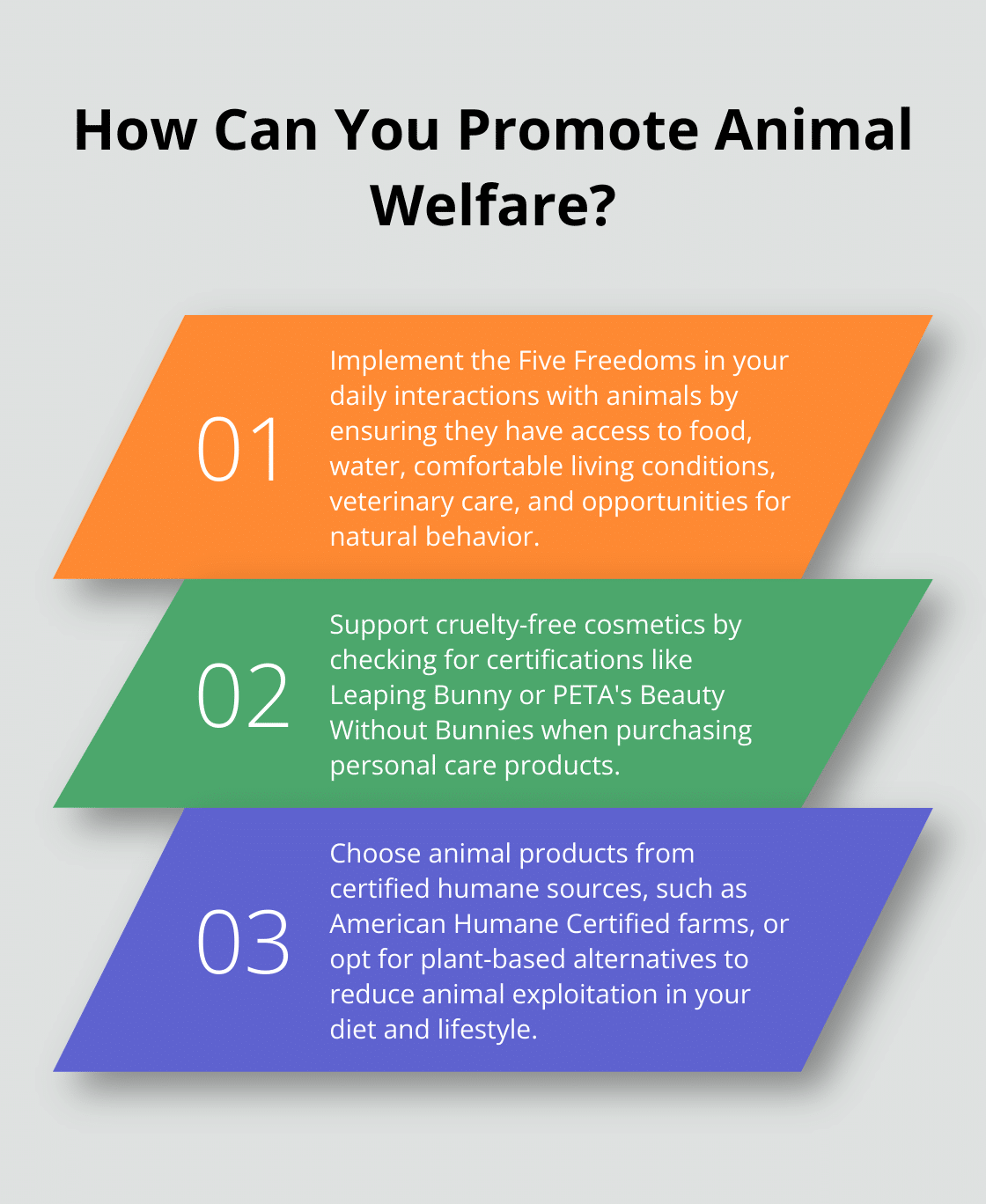
The concept of animal welfare often finds explanation through the Five Freedoms, which have been the basis of animal welfare since the 1960s. These freedoms include:
- Freedom from hunger and thirst
- Freedom from discomfort
- Freedom from pain, injury, or disease
- Freedom to express normal behavior
- Freedom from fear and distress

These principles guide animal welfare practices across industries and have gained widespread global adoption.
Welfare in Practice
The farming industry has witnessed significant changes due to animal welfare practices. For example, many egg producers have transitioned to cage-free systems.
In the entertainment industry, animal welfare concerns have prompted changes in zoos and aquariums. The Association of Zoos and Aquariums (AZA) now requires its accredited facilities to provide enrichment activities for animals, which promotes natural behaviors and reduces stress.
Measuring Welfare
The assessment of animal welfare involves both physical and behavioral indicators. Scientists use measures like cortisol levels to gauge stress, while also observing behaviors that indicate comfort or distress. The Welfare Quality® assessment protocols provide an integrated standardised methodology for the assessment of welfare in cattle, pigs and poultry from farm to slaughter.
Animal welfare science continues to evolve, with new research constantly refining our understanding of animal needs and experiences. This ongoing process helps inform policy decisions and industry practices, ultimately improving the lives of animals under human care.
As we explore the concept of animal welfare, it becomes clear that it differs significantly from animal rights. In the next section, we’ll examine the key differences between these two approaches to animal treatment, shedding light on their unique perspectives and practical implications.
How Do Animal Rights and Welfare Differ in Practice?
Legal and Policy Implications
Animal rights and welfare advocates pursue different goals in law and policy. Animal welfare laws focus on preventing cruelty and ensuring basic care standards. The Animal Welfare Act in the United States is the only Federal law that regulates the treatment of animals in research, teaching, testing, exhibition, transport, and by dealers.

Animal rights proponents push for more radical changes. They advocate for legal personhood for animals, which would grant them fundamental rights similar to humans. This movement includes legal challenges and decisions aimed at extending rights to animals.
Industry Practices and Consumer Choices
The divergence between animal rights and welfare is evident in industries that use animals. Animal welfare advocates work within existing systems to improve conditions. The American Humane Certified program certifies farms that meet specific animal welfare standards, affecting millions of farm animals annually.
Animal rights organizations often call for the complete abolition of industries that use animals. People for the Ethical Treatment of Animals (PETA) campaigns against the use of animals in the fashion industry, pushing for alternatives to leather, fur, and other animal-derived materials.
These differing approaches influence consumer choices. Welfare-conscious consumers might opt for free-range eggs or grass-fed beef, while those aligned with animal rights principles often choose plant-based alternatives entirely.
Research and Education
The animal rights versus welfare debate impacts research and education. Animal welfare science focuses on understanding and improving the quality of life for animals in human care. This research informs practices in areas like veterinary medicine and animal husbandry.
Animal rights advocates often oppose any research involving animals, regardless of potential benefits. They argue for alternative methods that don’t use animals at all. This stance has led to the development of new research techniques, such as organ-on-a-chip technology (which simulates human biology without animal testing).
In education, animal welfare principles are often incorporated into veterinary and agricultural curricula. Animal rights perspectives, while less common in traditional academic settings, have gained traction in philosophy and ethics courses.
Impact on Daily Life
The distinctions between animal rights and welfare shape our daily choices. Consumers who support animal welfare might purchase products from companies that adhere to humane practices. In contrast, those who align with animal rights principles might avoid animal products altogether.
These differences extend to pet ownership as well. Animal welfare advocates focus on responsible pet ownership and proper care, while some animal rights proponents question the ethics of pet ownership itself.
Final Thoughts
The difference between animal rights and animal welfare reflects distinct philosophies and practical approaches to animal treatment. Animal rights advocates oppose any form of exploitation, while animal welfare focuses on improving the quality of life for animals under human care. Both perspectives share a common goal to enhance the lives of animals, which offers potential for collaboration and progress in animal-related issues.
We at DogingtonPost believe in the importance of education and informed decision-making for animal care. Our comprehensive platform offers the latest news, practical tips, and expert advice to help dog owners provide the best possible care for their furry friends. We support you in making choices that enhance the lives of dogs and promote responsible ownership, regardless of your alignment with animal rights or animal welfare principles.
It remains essential to keep an open mind and continue learning about different approaches to animal treatment. Understanding the nuances of animal rights and welfare allows us to make more informed decisions (and contribute positively to the ongoing dialogue about our relationship with animals). This knowledge empowers us to create a better world for all creatures, both human and non-human alike.