

“This post contains affiliate links, and I will be compensated if you make a purchase after clicking on my links.”
At DogingtonPost, we understand the life-changing impact of emotional support dog adoption. These furry companions offer comfort, love, and support to individuals facing mental health challenges.
If you’re considering bringing an emotional support dog into your life, you’re in the right place. This guide will walk you through the process, from understanding what these dogs do to finding and adopting the perfect match for your needs.
What Are Emotional Support Dogs?
Definition and Purpose
Emotional support dogs are more than just pets. These companions provide comfort and support to individuals who face mental health challenges. Unlike service dogs, emotional support dogs don’t require special training to perform specific tasks. Their primary role is to offer companionship and emotional stability.
The Role of Emotional Support Dogs
Emotional support dogs help reduce symptoms of anxiety, depression, and PTSD. They offer a constant source of comfort and can decrease feelings of loneliness and isolation. A study published in the Journal of Psychiatric Research found that interaction with dogs can lower cortisol levels and increase oxytocin, which contributes to improved emotional well-being.
Emotional Support Dogs vs. Service Dogs
It’s important to understand the difference between emotional support dogs and service dogs. Service dogs receive training to perform specific tasks for individuals with disabilities (such as guiding the blind or alerting diabetics to blood sugar changes). They have legal protections under the Americans with Disabilities Act (ADA) and can enter public spaces where pets are typically prohibited.

Emotional support dogs don’t have the same level of training or legal protections. While they can live in housing with no-pet policies under the Fair Housing Act, they don’t have the same public access rights as service dogs.
Benefits of Emotional Support Dogs
The benefits of having an emotional support dog are numerous. They can help reduce stress, anxiety, and depression. A recent study found that 86% of pet owners reported their pets have a mostly positive impact on their mental health.
Emotional support dogs can also encourage physical activity and social interaction. Walking a dog can lead to increased exercise and opportunities to meet new people, which combats both physical inactivity and social isolation.
Moreover, caring for an emotional support dog can provide a sense of purpose and routine, which is particularly beneficial for individuals who struggle with mental health issues. The responsibility of caring for another living being can become a powerful motivator and source of comfort.
Legal Considerations
While emotional support dogs don’t have the same legal status as service dogs, they do have some protections. Under the Fair Housing Act, individuals with emotional support dogs can live in housing that might otherwise have a “no pets” policy. However, it’s important to note that these protections don’t extend to all public spaces.
Now that we understand what emotional support dogs are and how they can help, let’s explore how to find the right emotional support dog for your needs.
How to Find Your Perfect Emotional Support Dog
Assess Your Needs and Lifestyle
Before you start your search for an emotional support dog, take time to reflect on your specific needs and daily routine. What kind of emotional support do you require? Do you need a calm presence during anxiety attacks or a motivating companion to help you stay active? Your living situation also plays a role. Do you have a spacious house with a yard or a small apartment? How much time can you dedicate to exercise and playtime?
Research has found that pets can provide benefits over time to people with a diagnosis of a long-term mental health challenge. However, it’s essential to choose a dog that aligns with your lifestyle to ensure a mutually beneficial relationship.
Consider Breed Characteristics and Temperament
While any dog can potentially become an emotional support animal, certain breeds are known for their calm demeanor and affectionate nature. Labradors, Golden Retrievers, and Cavalier King Charles Spaniels are popular choices due to their gentle dispositions. However, don’t rule out mixed breeds or rescue dogs – they can make excellent emotional support animals too.
The American Kennel Club is the recognized and trusted expert in breed, health and training information for dogs. Keep in mind that individual dogs may vary from breed standards, so it’s important to meet potential companions in person.
Explore Adoption Options
Adoption is an excellent option when it comes to finding your emotional support dog. Local animal shelters and rescue organizations often have a wide variety of dogs looking for loving homes. These organizations can provide valuable insights into a dog’s personality and behavior, helping you make an informed decision.

Many shelters use temperament tests to assess a dog’s suitability for different living situations. The ASPCA reports that approximately 3.3 million dogs enter shelters each year in the United States, which means there’s a good chance you’ll find a perfect match through adoption.
Online platforms like Petfinder and Adopt a Pet allow you to search for dogs in your area based on specific criteria. However, always visit the shelter in person to interact with potential companions before making a decision.
Prepare for a Long-Term Commitment
Adopting an emotional support dog is a long-term commitment. Take your time, ask plenty of questions, and trust your instincts. The right emotional support dog will not only provide comfort and companionship but also become an integral part of your life and mental health journey.
As you embark on this journey to find your perfect emotional support dog, it’s important to understand the steps involved in the adoption process. Let’s explore how to navigate the adoption procedure and bring your new furry companion home.
How to Adopt an Emotional Support Dog
Research Adoption Options
Start your search for an emotional support dog at local animal shelters and rescue organizations. Many of these places have websites where you can view available dogs and their profiles. The ASPCA reports that approximately 3.1 million dogs enter shelters nationwide every year, which gives you a wide range of potential companions to choose from.

Online platforms like Petfinder and Adopt a Pet offer excellent resources for finding emotional support dogs. These websites allow you to filter your search based on specific criteria such as size, age, and temperament. However, online profiles can’t fully capture a dog’s personality, so in-person visits are essential.
Navigate the Adoption Process
After you identify potential matches, contact the shelters or rescue organizations to ask about their adoption procedures. Most organizations require you to complete an adoption application, which typically includes questions about your living situation, experience with pets, and reasons for seeking an emotional support dog.
Prepare for an interview with shelter staff or volunteers. They want to ensure that you’re ready for the responsibility of dog ownership and that the dog you’re interested in fits your lifestyle. Ask questions during this process – it’s an opportunity to learn more about the dog’s history, behavior, and any special needs they might have.
Meet Potential Companions
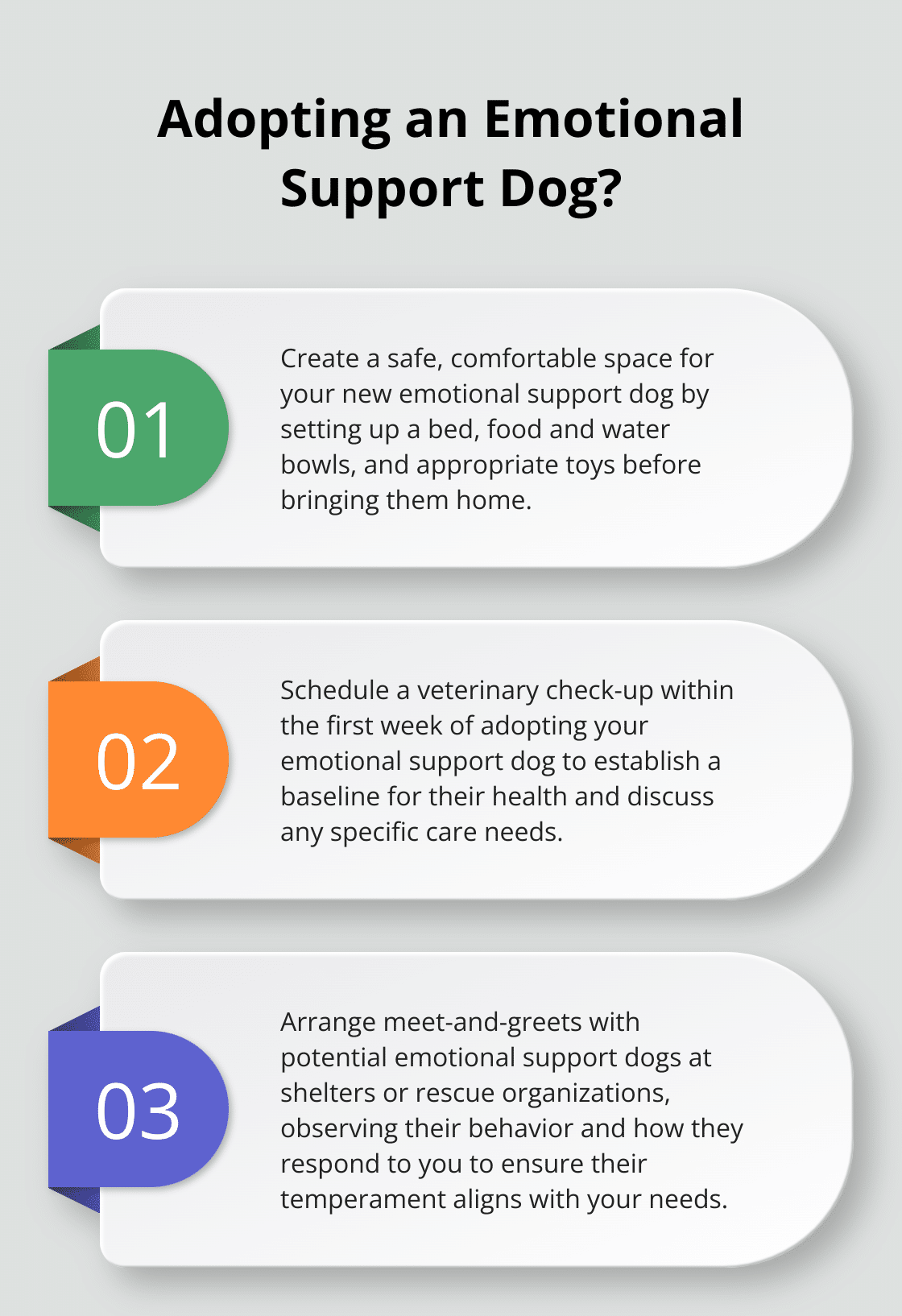
Arrange meet-and-greets with potential dogs as a key step in the adoption process. During these interactions, observe the dog’s behavior and how they respond to you. Does the dog seem comfortable in your presence? Do they seek affection or appear anxious? These observations can provide valuable insights into whether the dog’s temperament aligns with your emotional support needs.
Consider bringing a friend or family member for an additional perspective. They might notice things you overlook, especially if you feel emotional about the potential adoption.
Prepare for Your New Companion
Once you choose your emotional support dog, prepare your home for their arrival. Create a safe, comfortable space for your new companion with essentials like a bed, food and water bowls, and appropriate toys. The American Veterinary Medical Association recommends “pet-proofing” your home to ensure it’s safe for your new dog.
Schedule a veterinary check-up shortly after adoption. This initial visit will help establish a baseline for your dog’s health and allow you to discuss any specific care needs related to their role as an emotional support animal.
Adopting an emotional support dog marks the beginning of your journey together. Be patient as you both adjust to your new life, and seek professional help if you encounter any challenges along the way.
Final Thoughts
Emotional support dog adoption transforms lives and enhances mental well-being. The process involves understanding these special companions, assessing your needs, and finding the perfect match through research and shelter visits. Responsible ownership includes proper care, nutrition, and regular veterinary check-ups (as well as understanding legal considerations).
Training and socialization remain important after adoption. Many local dog trainers offer specialized programs for emotional support animals, which strengthen the bond between you and your companion. These programs help ensure your dog stays well-behaved and continues to meet your emotional support needs.
DogingtonPost offers resources for those seeking additional guidance on emotional support dog adoption and care. Our website provides expert advice on dog health, nutrition, and the latest news on canine rights and adoption. The journey of emotional support dog adoption may present challenges, but the rewards of unconditional love and companionship make it worthwhile.