
“This post contains affiliate links, and I will be compensated if you make a purchase after clicking on my links.”
At DogingtonPost, we’re excited to explore the world of retired K9 officers and how you can give them a loving home.
Adopting former police dogs is a unique and rewarding experience that offers a second chance to these brave canines.
In this post, we’ll guide you through the process of adopting a retired police dog, from understanding their background to providing the care they need in their new civilian life.
What Are Former Police Dogs Like?
Traits of Retired K9 Officers
Former police dogs, also known as retired K9 officers, possess exceptional qualities that set them apart from typical family pets. These canines have served alongside law enforcement officers, often in high-stress situations. As a result, they exhibit distinct characteristics.
Former police dogs maintain high energy levels, intelligence, and a strong work ethic. They remain alert, confident, and have a keen sense of their surroundings. These dogs excel in obedience and have a strong desire to please their handlers. However, they may carry stress from their working lives, which can manifest in various behaviors.
The National Police Dog Foundation reports that many retired K9s face challenges during their transition to civilian life. They might experience anxiety or restlessness without a job to do. Potential adopters must prepare to provide ample mental and physical stimulation for these dogs.
Popular Breeds in Law Enforcement
Law enforcement agencies select specific breeds for their physical and mental attributes. German Shepherds, Belgian Malinois, and Dutch Shepherds (known for their intelligence and trainability) top the list of popular police dog breeds.
Labrador Retrievers and Bloodhounds often perform specific tasks like narcotics detection or tracking. Each breed brings unique strengths to police work, which influences their behavior and needs in retirement.

Training and Experiences of Police Dogs
Police dogs undergo intensive training that typically begins in puppyhood. This training lasts 12 to 16 weeks, covering obedience, agility, and specialized skills like tracking or narcotics detection. Throughout their careers, these dogs encounter a wide range of situations, from routine patrols to high-risk operations.
During their service, these dogs form strong bonds with their handlers and adapt to a highly structured lifestyle. This background shapes their behavior and needs in retirement significantly.
Adapting to Retirement
The transition from active duty to retirement presents unique challenges for former police dogs. They must adjust to a less structured environment and learn to relax without constant stimulation. Some may experience separation anxiety or struggle with unfamiliar situations.
Potential adopters should understand these aspects of former police dogs. This knowledge helps set realistic expectations and ensures these remarkable animals find homes that provide the care and environment they need in their retirement years.
As we move forward, we’ll explore the adoption process for these exceptional canines, including how to find reputable organizations and what to expect during the screening procedures.
How to Adopt a Former Police Dog
Finding Adoption Organizations
The first step to adopt a retired police dog involves locating reputable organizations. The National Police Dog Foundation and Mission K9 Rescue specialize in this area. Local law enforcement agencies often have their own programs for rehoming retired K9 officers.
Contact your nearest police department to ask about their retirement policies for K9 officers. Some departments prioritize handler adoptions, while others collaborate with external organizations to place dogs in suitable homes.
The Application Process
After you identify an organization, prepare for a thorough application process. Most agencies request detailed information about your living situation, experience with dogs, and ability to meet the specific needs of a former police dog.
The application typically includes questions about your home environment, family members, other pets, and your daily schedule. Provide honest and thorough responses. Organizations use this information to match dogs with the most suitable homes.
Home Visits and Compatibility Assessments
If your initial application receives approval, expect a home visit from a representative of the adoption organization. They will assess your living space to ensure it’s safe and suitable for a retired police dog.
During this visit, the representative may evaluate your interaction with dogs. They might bring a dog similar to those available for adoption to gauge your handling skills and comfort level.
Understanding the Costs
Adoption of a former police dog often involves fees that cover medical examinations, vaccinations, and sometimes transportation costs. It’s up to the Police Department to make that call. Police dogs are expensive, averaging about $30,000. However, K9’s and their handlers are valuable assets to law enforcement agencies.
Factor in ongoing costs for high-quality food, regular veterinary care, and potential behavioral training beyond the initial adoption fee. The American Kennel Club estimates the average annual cost of dog ownership at $2,000 to $3,000, but retired police dogs may require additional expenses due to their specialized needs.

Preparing for Your New Companion
If you receive approval, you’ll likely need to wait for a suitable match. Use this time to prepare your home and educate yourself about the specific needs of retired police dogs.
Consider enrollment in training courses specialized for working dog transitions. Police departments across the country need qualified Police K9 trainers, and there are intensive programs available for this purpose.
The adoption of a former police dog represents a significant commitment. These dogs have spent their lives in service and require owners who can provide structure, patience, and understanding as they transition to civilian life. As you embark on this journey, the next crucial step involves understanding how to care for your newly adopted police dog, which we’ll explore in the following section.
How to Care for a Former Police Dog
Exercise Requirements
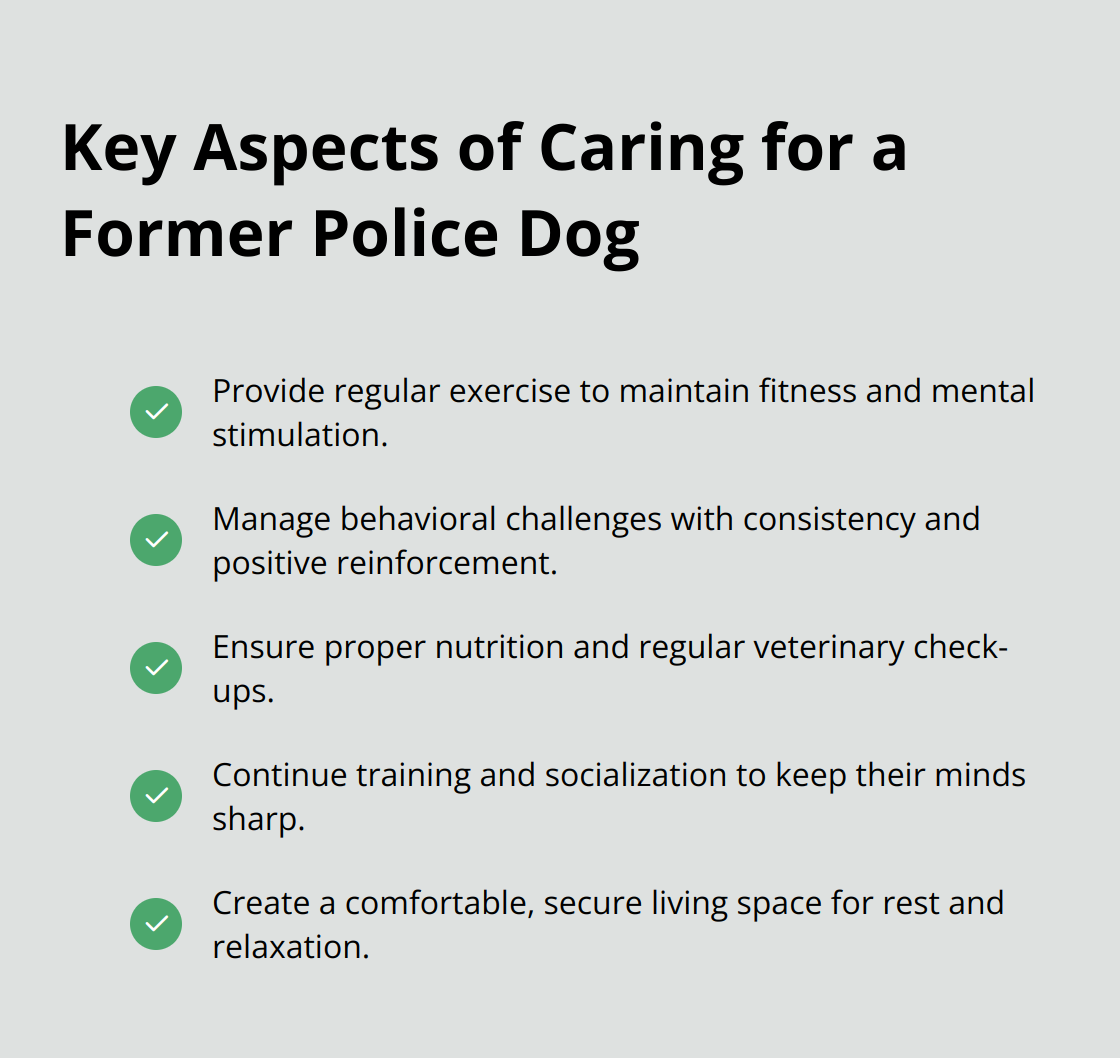
Retirement shouldn’t mean the end of all physical activity for working dogs. Exercise maintains their fitness, mobility, and mental stimulation. You should plan regular exercise sessions that include activities like long walks, runs, or play sessions in a secure area. Many retired K9s enjoy activities that remind them of their former work (such as fetch with a ball or frisbee, or scent work games).
Behavioral Challenge Management
Retired police dogs may show behaviors from their training and work experiences. These can include heightened alertness, protectiveness, or difficulty relaxing in new environments. Some struggle with separation anxiety when alone.
You should establish a consistent routine that provides structure and security. Use positive reinforcement techniques to encourage desired behaviors. If your dog shows signs of anxiety or aggression, consult a professional trainer experienced with former police dogs.
The American Kennel Club emphasizes the importance of considering eligibility rules for events involving retired working dogs.
Nutrition and Health Care
Proper nutrition maintains the health of your retired police dog. These dogs often have higher caloric needs due to their muscular build and activity levels. Ask your veterinarian to determine the best diet plan, which may include high-quality commercial dog food supplemented with fresh ingredients.
Schedule regular veterinary check-ups. Former police dogs may develop certain health issues due to their work history (joint problems or injuries). The American Veterinary Medical Association recommends bi-annual check-ups for senior dogs, which includes many retired K9s.
Maintain preventative care, including vaccinations, flea and tick prevention, and dental cleanings. Prepare for potential age-related health issues and consider pet insurance to help manage costs.
Ongoing Training and Socialization
Retired dogs benefit from ongoing training and mental stimulation. Include daily training sessions to keep their minds sharp and reinforce obedience. Practice commands they already know and teach new tricks.
Socialization matters equally. Expose your dog gradually to various people, animals, and environments. This helps them adjust to civilian life and prevents anxiety in new situations. Always monitor their comfort level and never force interactions.
Creating a Comfortable Living Space
Provide a quiet, comfortable area for your former police dog to rest and relax. This space should be away from high-traffic areas of your home. Consider using a crate or a designated bed to create a safe haven.
Install baby gates or use closed doors to limit access to certain areas of your house if needed. This can help manage any protective behaviors and give your dog a sense of security in their new environment.
Final Thoughts
Adopting former police dogs offers a unique opportunity to provide a loving home for these dedicated canines. These exceptional animals bring loyalty, intelligence, and a strong work ethic to their new families. The adoption process may require more effort than typical pet adoptions, but the rewards far outweigh any challenges.
Patience and understanding play vital roles when welcoming a retired K9 officer into your home. These dogs need time to adjust to civilian life after years of service. Providing structure, mental stimulation, and physical exercise will help ensure a smooth transition for your new family member.
Support and community connections enhance the experience of owning a former police dog. Many organizations offer resources and support groups for adopters (including training tips). For more information on responsible dog ownership and care tips for adopted dogs, visit The Dogington Post. We strive to provide dog lovers with the latest news and expert advice to improve the lives of dogs and their owners.