

“This post contains affiliate links, and I will be compensated if you make a purchase after clicking on my links.”
At DogingtonPost, we’re passionate about finding loving homes for all dogs, including those who’ve served in law enforcement.
Wondering how to adopt retired police dogs? These brave canines deserve a peaceful retirement after years of dedicated service.
In this guide, we’ll walk you through the process of adopting a retired police dog, from understanding their unique needs to navigating the adoption procedure.
What Are Retired Police Dogs Like?
Characteristics of Retired Police Dogs
Retired police dogs possess unique traits shaped by their service. These canines typically retire between 7 to 10 years old (depending on their health and performance). German Shepherds, Belgian Malinois, and Labrador Retrievers are the most common breeds in law enforcement due to their intelligence, strength, and trainability.

K9 dogs are loyal, strong, and dependable servants used by police, military, and other important organizations. These animals are trained to perform tasks and can maintain their abilities even after retirement. However, their background in high-stress situations can sometimes lead to anxiety or hypervigilance in retirement.
Health Considerations for Retired Police Dogs
Like all aging dogs, retired police dogs may face health issues. Hip dysplasia is common in German Shepherds and can affect their mobility. Regular veterinary check-ups are essential to monitor and manage any developing conditions. Without the assistance of programs like NPDF, working and retired police dogs are at risk for shorter and less comfortable lives because of the costs associated with their care.
Adapting to Civilian Life
The transition from active duty to a home environment can challenge these dogs. They may need time to adjust to a less structured routine and learn to relax. Some retired police dogs have difficulty with loud noises or sudden movements due to their training. Patience and understanding from their new families are vital during this adjustment period.
Training and Exercise Needs
Retired police dogs often retain their training and may require continued mental stimulation. Regular exercise (both physical and mental) is important to keep them healthy and happy. These dogs typically excel at obedience and can learn new commands quickly. However, their high drive and energy levels mean they need plenty of physical activity to stay content.
Socialization and Interaction
While retired police dogs are often well-socialized with humans, they may need extra support when interacting with other animals. Their protective instincts can sometimes lead to wariness around unfamiliar people or pets. Gradual introduction to new environments and consistent positive reinforcement can help these dogs adjust to their new civilian life.
As we move forward, let’s explore the process of adopting these remarkable animals and providing them with the loving homes they deserve after their years of service.
How to Start the Adoption Process
Locating Adoption Organizations
The search for a retired police dog begins with contacting local police departments. Many departments run their own retirement programs for K9 officers. The National Police Dog Foundation raises funds for the purchase, training, and veterinary care of law enforcement K-9s, making it an excellent resource.
Mission K9 Rescue specializes in the adoption of retired working dogs, including some police dogs. They implement a thorough adoption process and provide an excellent option for those who want to offer a home to these heroic animals.
Meeting Adoption Requirements
Organizations that handle retired police dog adoptions maintain strict requirements to ensure suitable homes for these animals. Most require adopters to:
- Be at least 21 years old
- Own a fenced yard
- Show ability to provide proper care (including regular vet visits)
- Have experience with large, high-energy breeds
- Live within driving distance of the organization
Financial stability plays a key role, as retired police dogs often need ongoing medical care. The average annual veterinary cost for a dog amounts to approximately $600 (not including emergencies). Potential adopters should prepare for these expenses.
Navigating the Application Process
The application process involves several steps:
- Submission of a detailed application form
- Provision of references
- Completion of a home visit
- Participation in interviews with adoption coordinators
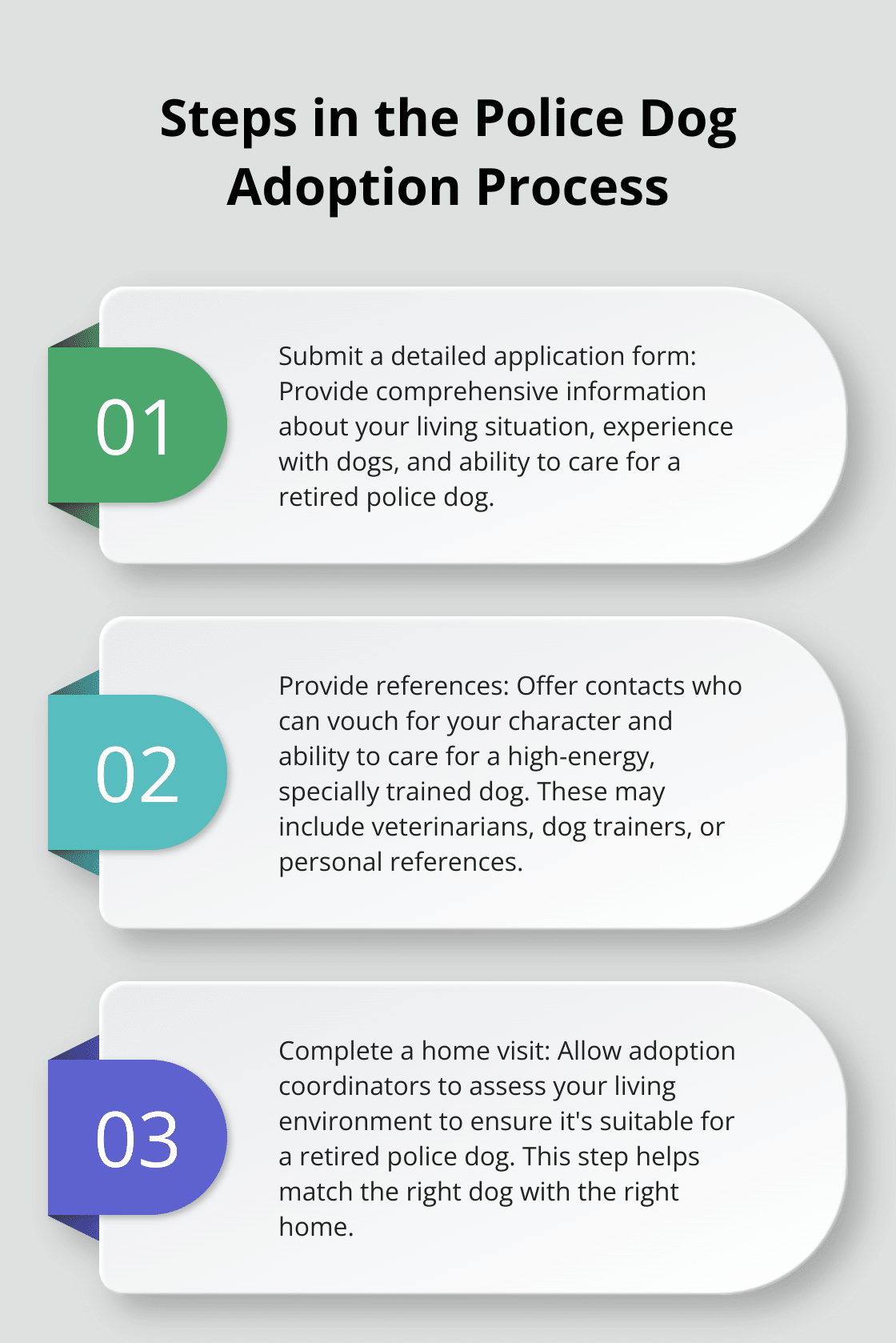
Applicants should expect questions about their lifestyle, experience with dogs, and plans for caring for a retired police dog. The process can extend over several months, as organizations carefully match dogs with appropriate homes.
Some organizations (like Mission K9 Rescue) charge an adoption fee of around $375, plus transportation costs if needed. This fee contributes to the care of these dogs while they await adoption.
Preparing for a Long-Term Commitment
Adopting a retired police dog requires a significant long-term commitment. These dogs often need extra patience and understanding as they transition to civilian life. Potential adopters should consider:
- The dog’s age and potential health issues
- The need for continued training and mental stimulation
- Possible behavioral challenges due to their working background
Understanding the Rewards
Despite the challenges, adopting a retired police dog offers unique rewards. These dogs often form strong bonds with their new families and bring a sense of security to the home. Their intelligence and trainability make them excellent companions for those willing to invest time and effort in their care.
As we move forward, we’ll explore the specific care requirements for these remarkable animals, ensuring you’re fully prepared to provide the best possible home for a retired police dog.
Caring for Your Retired Police Dog
Establishing a Routine
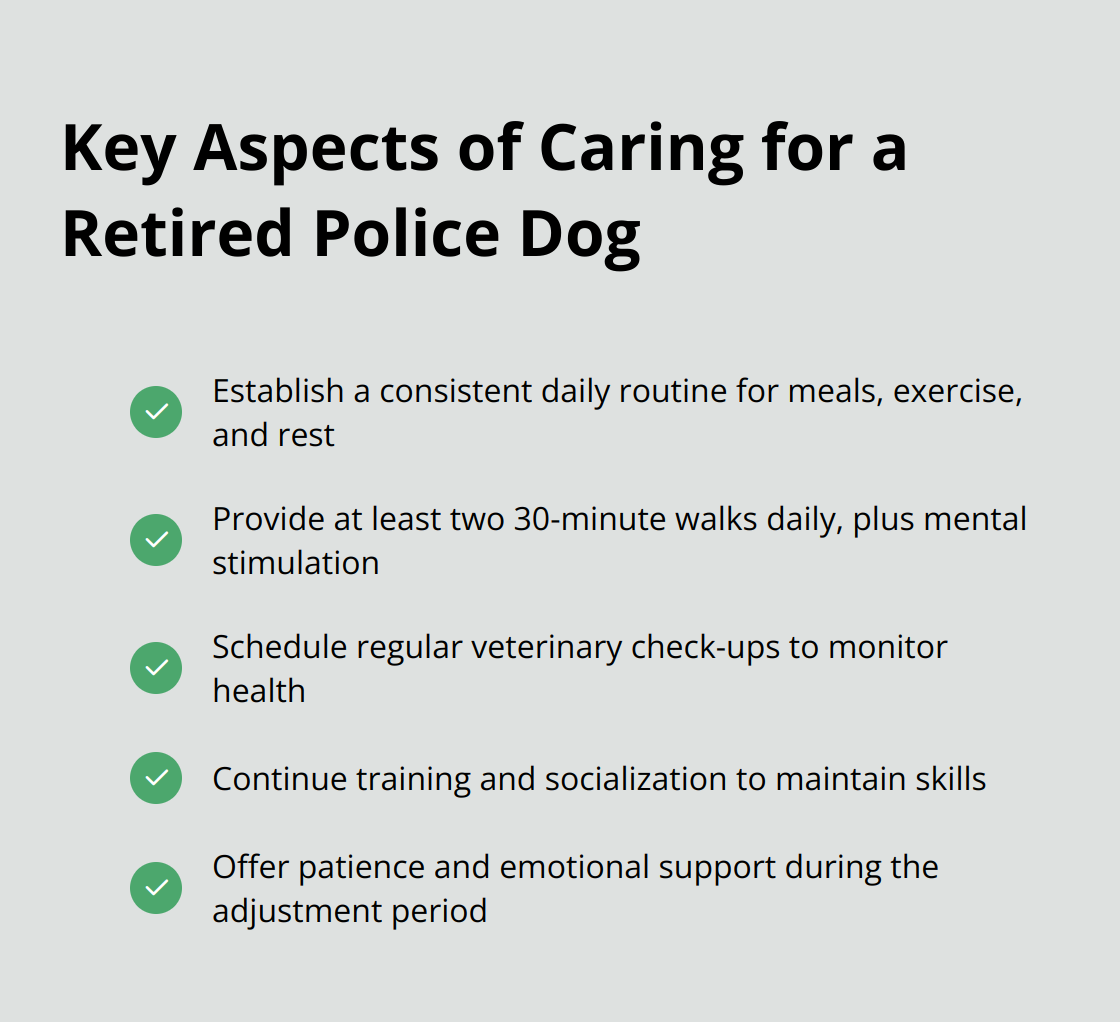
Retired police dogs thrive on structure. Create a daily schedule that includes regular mealtimes, exercise sessions, and quiet periods. This helps your new companion adjust to home life and reduces anxiety. Start with a routine similar to their working schedule and gradually transition to a more relaxed home routine over several weeks.
Meeting Exercise Needs
Despite retirement, these dogs still need plenty of physical activity. Try to provide at least two 30-minute walks daily, supplemented with play sessions. Puzzle toys and scent work games can provide mental stimulation (which is essential for these intelligent animals). A tired dog is a happy dog – and less likely to engage in destructive behaviors.
Addressing Health Concerns
Regular veterinary check-ups are essential for retired police dogs. Many face breed-specific health issues or injuries from their service. German Shepherds, for instance, are prone to hip dysplasia. Be prepared for potential medical expenses – pet insurance can help manage costs. A balanced diet tailored to your dog’s age and health status is important. Consult with your vet to develop an appropriate nutrition plan.
Training and Socialization
Retired police dogs often retain their training and may require continued mental stimulation. These dogs typically excel at obedience and can learn new commands quickly. However, their high drive and energy levels mean they need plenty of physical activity to stay content. Gradual introduction to new environments and consistent positive reinforcement can help these dogs adjust to their new civilian life.
Providing Emotional Support
The transition from active duty to a home environment can challenge these dogs. They may need time to adjust to a less structured routine and learn to relax. Some retired police dogs have difficulty with loud noises or sudden movements due to their training. Patience and understanding from their new families are vital during this adjustment period (which can last several months).
Final Thoughts
Adopting a retired police dog offers unique benefits and challenges. These loyal companions bring years of training, intelligence, and dedication to their new homes. You’ll gain a faithful friend and honor their service to the community when you provide a loving environment for these canine heroes.
Retired police dogs often form strong bonds with their new families and offer a sense of security. Their high level of training means they typically behave well and respond to commands, making them excellent companions for experienced dog owners. However, these dogs may need extra patience as they adjust to civilian life, and their care can involve specific health considerations.
We at DogingtonPost support responsible dog ownership and promote the welfare of all dogs (including retired service animals). Our platform provides information on dog care, health, and lifestyle to help you give the best possible life to your new companion. If you want to learn how to adopt retired police dogs, numerous resources are available to support you throughout the process and beyond.