
“This post contains affiliate links, and I will be compensated if you make a purchase after clicking on my links.”
Is your dog’s coat looking dull or itchy? Skin issues can significantly impact your furry friend’s quality of life.
At DogingtonPost, we understand the importance of maintaining your dog’s skin health. That’s why we’ve put together this guide on dog skin health supplements to help you boost your pup’s skin and coat condition.
What’s Causing Your Dog’s Skin Problems?
Common Culprits Behind Canine Skin Issues
Dogs often suffer from a variety of skin problems. These issues range from minor irritations to serious conditions that require immediate attention. Allergies top the list of common skin problems in dogs, with canine atopic dermatitis (CAD) affecting an estimated 3-15% of dogs. These allergic reactions can cause itching, redness, and inflammation. Food sensitivities, environmental factors, and parasites frequently trigger these allergic responses.

More Than Skin Deep: The Impact of Skin Problems
Skin issues in dogs extend beyond mere cosmetic concerns. They can significantly affect your pet’s quality of life. Persistent itching and discomfort may lead to behavioral changes, sleep disturbances, and even depression in severe cases. Moreover, skin problems often signal underlying health issues that need addressing.
Recognizing Poor Skin Health in Your Dog
Early detection of skin problems is key to effective treatment. Watch for signs such as:
- Excessive scratching, licking, or biting at the skin
- Redness or flakiness
- A dull coat
- Unpleasant odors from the skin or ears (which could indicate yeast or bacterial infections)
The Nutritional Connection to Skin Health
A balanced diet plays a crucial role in maintaining healthy skin and coat. Essential fatty acids (particularly omega-3s and omega-6s) are vital for skin health. Studies have shown that EFA supplements can have beneficial effects on hair and skin quality, as well as in dogs suffering from pruritic and inflammatory skin conditions.
Environmental Influences on Canine Skin
Your dog’s environment greatly impacts their skin health. Dry air (especially during winter months) can lead to dry, itchy skin. Regular bathing with appropriate dog shampoos helps, but over-bathing can strip natural oils and worsen skin issues. Finding the right balance is essential.
When to Consult a Veterinarian
While you can manage many minor skin issues at home, persistent problems warrant a visit to the vet. If you notice sudden changes in your dog’s skin or coat, or if home remedies don’t provide relief, it’s time to seek professional help. Veterinarians can perform tests to identify underlying causes and recommend targeted treatments.
As we move forward, let’s explore the role of supplements in boosting your dog’s skin health and how they can complement a balanced diet and proper care routine.
What Supplements Boost Dog Skin Health?
Supplements play a key role in maintaining your dog’s skin health. Let’s explore the most effective options backed by scientific research.
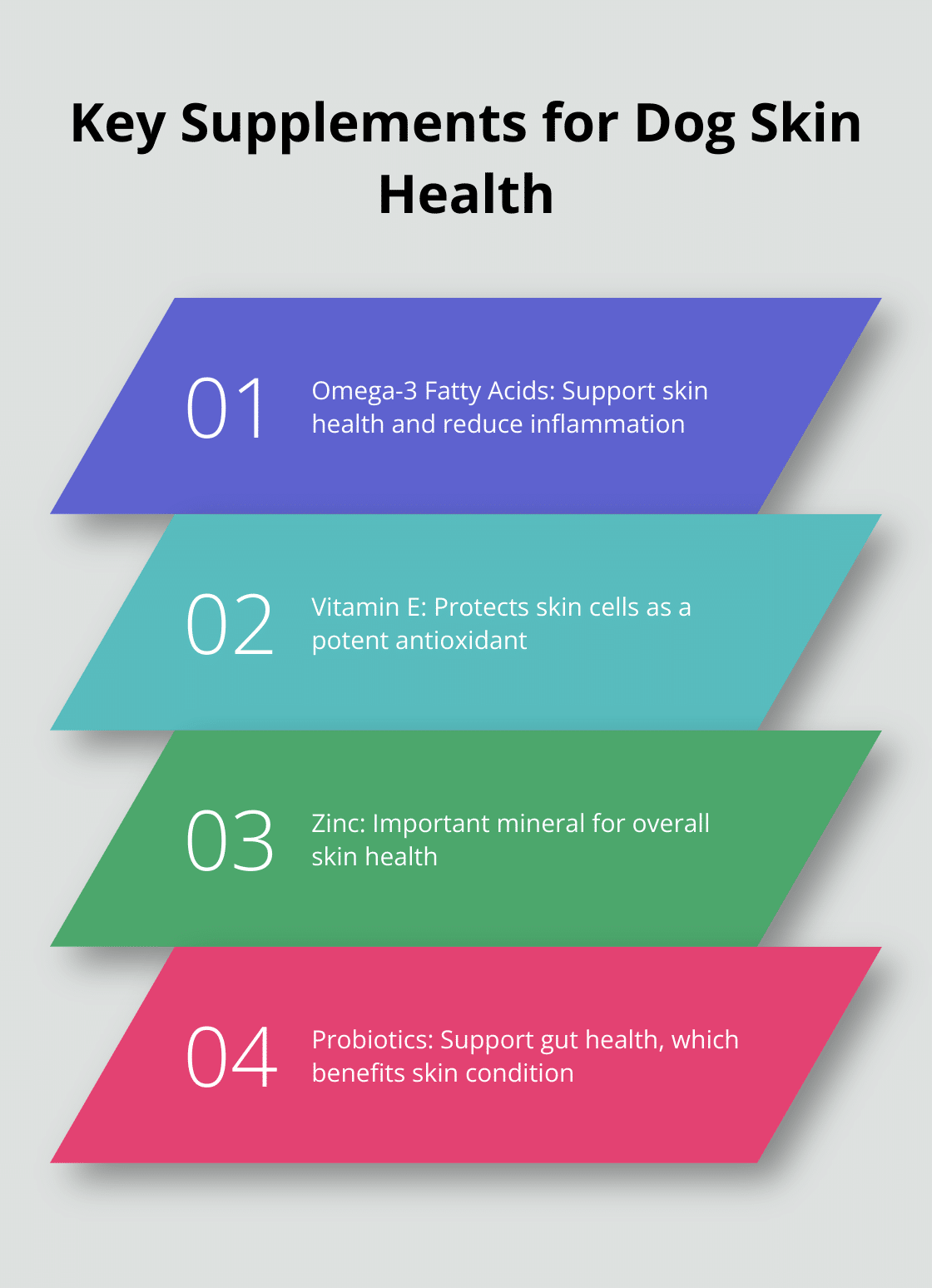
Omega-3 Fatty Acids: The Skin’s Best Friend
Omega-3 fatty acids can be beneficial for managing canine skin diseases. A review of the literature on nutritional supplementation for canine skin conditions suggests that omega-3s may have potential benefits.
Fish oil provides an excellent source of omega-3s. When you choose a fish oil supplement, select those derived from wild-caught fish to ensure purity. Always consult your veterinarian for personalized advice on dosage and administration.
Vitamin E: Nature’s Antioxidant
Vitamin E protects your dog’s skin cells from damage as a potent antioxidant. It works synergistically with omega-3 fatty acids to enhance their anti-inflammatory effects.
The typical dosage for vitamin E is 400 IU per day for a 40-pound dog. However, it’s important to avoid overdosing, as excessive vitamin E can interfere with blood clotting.
Zinc: The Healing Mineral
Zinc is important for dogs’ health, including skin health. Current research is focused on understanding zinc requirements for healthy dogs and identifying biomarkers of zinc status.
The recommended zinc dosage varies based on your dog’s size and specific needs. Always choose zinc supplements specifically formulated for dogs to avoid potential toxicity.
Probiotics: Gut Health for Skin Health
The connection between gut health and skin condition is well-established in both humans and dogs. Probiotics support a healthy gut microbiome, which in turn benefits skin health.
When you select a probiotic supplement, look for products containing multiple strains of beneficial bacteria (such as Lactobacillus and Bifidobacterium species).
While these supplements can significantly improve your dog’s skin health, they don’t substitute for a balanced diet and proper veterinary care. Always introduce new supplements gradually and monitor your dog for any adverse reactions. If you notice any unusual symptoms, discontinue use and consult your veterinarian immediately.
Now that we’ve covered the essential supplements for dog skin health, let’s move on to how you can choose and administer these supplements effectively to ensure the best results for your furry friend.
How to Choose and Use Dog Skin Supplements
Consult Your Veterinarian
Before you start any supplement regimen, talk to your veterinarian. They will assess your dog’s specific needs and recommend appropriate supplements. It’s important for veterinarians and pet owners to understand that supplements don’t have the same oversight as drugs approved by the Food and Drug Administration.
Your vet will identify any underlying health issues that might affect your dog’s skin. They’ll consider factors like age, breed, existing health conditions, and current medications to tailor recommendations. Your veterinarian may recommend specific supplements as part of your dog’s nutrition plan.
Read Supplement Labels
When you shop for supplements, examine the labels carefully. Look for products that clearly list all ingredients and their quantities. The NASC Quality Seal signifies a pet company’s commitment to providing high-quality products.
Pay attention to the form of the supplement. Some dogs prefer chewable tablets, while others might do better with liquid supplements added to their food. The bioavailability of nutrients can vary depending on the form, so discuss this with your vet.
Administer Proper Dosage
Accurate dosing ensures supplement effectiveness and safety. Overdosing can lead to adverse effects, while underdosing might not provide the desired benefits. Follow the manufacturer’s instructions and your vet’s guidance closely.
For example, the recommended dosage of fish oil for dogs is about 20 mg per pound of body weight (this can vary based on the concentration of EPA and DHA in the product).
Consistency matters when you administer supplements. Set a regular schedule and stick to it. Many pet owners find success when they incorporate supplements into their dog’s mealtime routine.
Watch for Side Effects
While supplements are generally safe, they can cause side effects in some dogs. Common issues include digestive upset, allergic reactions, or interactions with medications.
Look out for symptoms like vomiting, diarrhea, lethargy, or changes in appetite. If you notice any unusual behavior or symptoms, stop the supplement and contact your veterinarian immediately.
Keep a log of when you start new supplements and any changes you observe in your dog’s skin, coat, or overall health. This information can help your vet assess the supplement’s effectiveness and make any necessary adjustments.

Final Thoughts
Dog skin health supplements offer a powerful way to support your pet’s well-being from the inside out. Omega-3 fatty acids, vitamin E, zinc, and probiotics work together to promote a healthy, vibrant coat and resilient skin. A holistic approach to skin care combines these supplements with a balanced diet, regular grooming, and protection from environmental stressors.
Regular veterinary check-ups play a vital role in maintaining your dog’s overall health, including their skin condition. Your vet can help you adjust your dog’s skin health supplement regimen and identify potential issues early. Consistency is important when using supplements, as it may take time to see results.
We at DogingtonPost strive to provide comprehensive resources for dog owners. For more information on dog health, nutrition, and care tips, visit our comprehensive guide for dog owners. Our goal is to help you provide the best care for your canine companion, enhancing their comfort, happiness, and quality of life.