
“This post contains affiliate links, and I will be compensated if you make a purchase after clicking on my links.”
Dog bites can be scary and potentially dangerous. Knowing how to provide proper dog bite care is essential for every pet owner and animal lover.
At DogingtonPost, we understand the importance of quick and effective first aid for dog bites. This guide will walk you through the immediate steps to take after a bite occurs and when to seek professional medical attention.
What to Do Right After a Dog Bite
Clean the Wound Immediately
Dog bites require immediate action. The first few minutes after a bite are critical for infection prevention and proper healing. Take these steps:
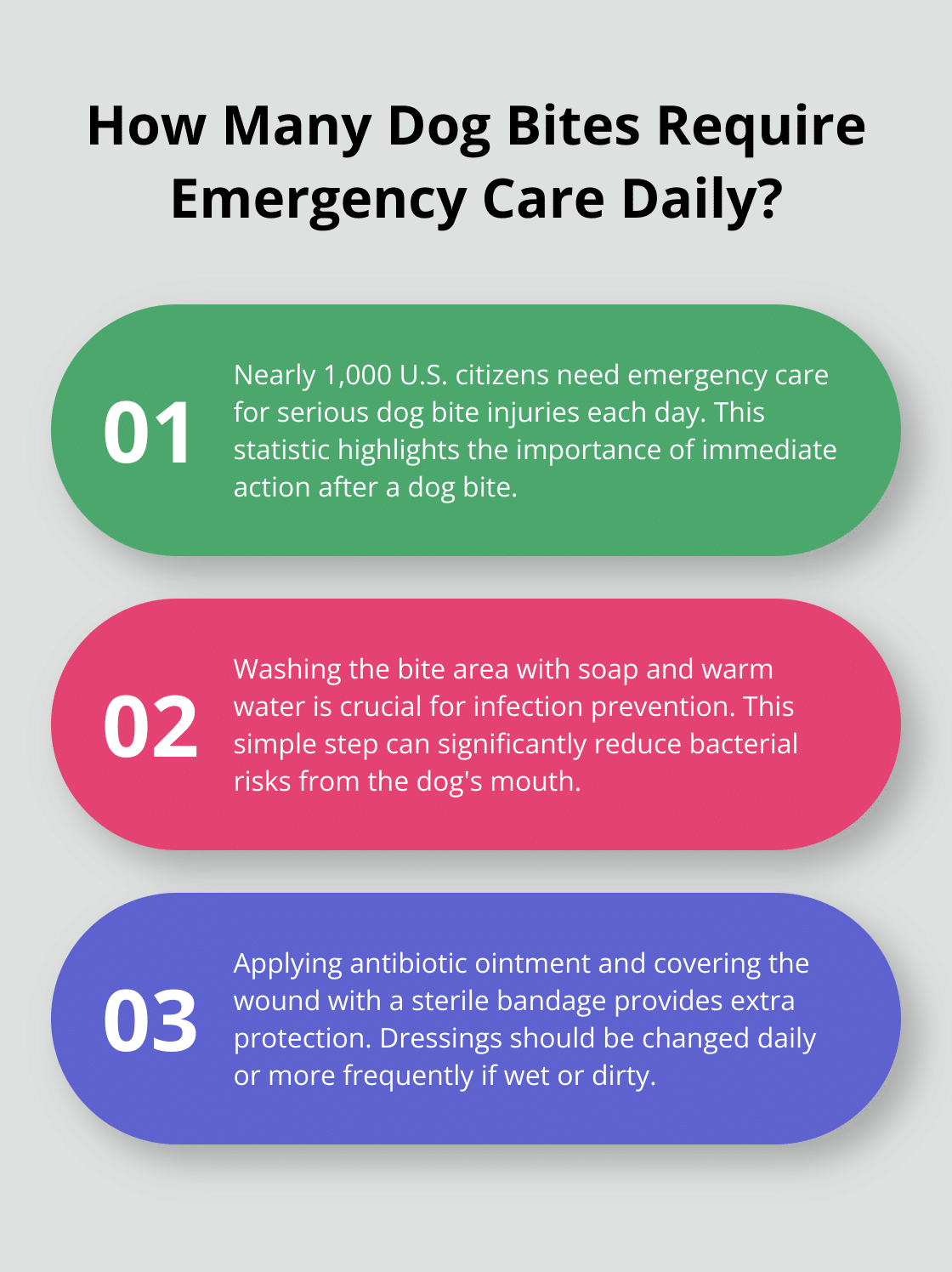
Wash the bite area thoroughly with soap and warm water. Scrub gently to remove any bacteria from the dog’s mouth. This simple step can significantly reduce the risk of infection.
Stop the Bleeding
After cleaning, apply firm pressure to the wound with a clean cloth or sterile gauze. Hold it in place for several minutes until the bleeding stops. If blood soaks through, add more layers without removing the original dressing. This action helps form a clot and prevents further blood loss.
Protect the Wound
Once the bleeding has stopped, apply an antibiotic ointment to the bite area. This adds an extra layer of protection against bacteria. Cover the wound with a sterile bandage or gauze pad. Change the dressing daily (or more often if it gets wet or dirty).
Assess the Severity
While these steps are essential for immediate care, they don’t replace professional medical attention. Evaluate the bite’s severity:
- Is the bite deep?
- Does it continue to bleed?
- Are there signs of infection (redness, swelling)?
If you answer “yes” to any of these questions, seek medical help immediately. Each day nearly 1,000 U.S. citizens require emergency care treatment for serious dog bite injuries.
Document the Incident
Try to gather information about the dog (if possible). Note the following:
- The dog’s appearance
- Its owner’s contact information (if available)
- The location where the bite occurred
- The circumstances leading to the bite
This information may prove valuable for medical professionals and legal purposes.
Quick action and proper first aid can give you or the bite victim the best chance at a speedy recovery. However, the care doesn’t stop here. The next section will discuss when to seek professional medical attention and what to expect during follow-up treatment.
When to Seek Medical Attention for a Dog Bite
Severe Bleeding or Deep Wounds
Dog bites that cause deep punctures, tears, or persistent bleeding require immediate medical attention. If blood flow doesn’t stop after 15 minutes of direct pressure, head to the emergency room. Deep wounds have a high infection risk and might need stitches or specialized treatment.
Infection Warning Signs
Monitor the bite area closely for infection symptoms in the following days. Red flags include:
- Increased redness
- Swelling
- Warmth around the wound
- Pus discharge
Don’t delay if you notice these signs-see a doctor right away. Up to 18% of dog bites become infected.
High-Risk Bite Locations
Bites to the face, hands, or feet always warrant professional evaluation. These areas are prone to scarring and contain complex structures easily damaged by bites. According to the Center for Disease Control and Prevention (CDC), in the United States alone, an estimated 4.5 million dog bites occur each year.
Unknown or Unvaccinated Dogs
Seek immediate medical help if a stray dog or one with unknown vaccination status bites you. Your doctor might recommend rabies post-exposure prophylaxis. While rare in the United States, rabies proves fatal if left untreated. The World Health Organization estimates that dogs cause up to 99% of human rabies cases globally.
Underlying Health Conditions
People with compromised immune systems, diabetes, or liver disease should consult a doctor after any dog bite (no matter how minor it seems). These conditions increase complication risks and slow wound healing.

Medical professionals assess wounds, provide appropriate treatment, and prevent potential complications. Don’t hesitate to seek help if you’re unsure about a bite’s severity. Your next steps after medical attention focus on proper follow-up care and treatment to ensure optimal healing and prevent further issues.
How to Ensure Proper Healing After a Dog Bite
Maintain Wound Cleanliness
Keep the bite area clean and dry to prevent infection. Clean the wound with mild soap and warm water at least twice daily. Dry the area with a clean towel or sterile gauze. Avoid scrubbing to prevent irritation and slow healing.

Apply antibiotic ointment as your healthcare provider directs. This prevents bacterial growth and promotes healing. Cover the wound with a fresh, sterile bandage after each cleaning.
Change Dressings Regularly
Replace your wound dressing at least once daily or more often if it becomes wet or soiled. This prevents bacteria buildup and allows you to inspect the wound for infection signs. Wash your hands thoroughly before and after changing dressings to minimize contamination risks.
Monitor for Infection Signs
Check the bite area closely for potential infection indicators. Look for increased redness, swelling, warmth, or pus discharge. Seek medical attention immediately if you notice these symptoms or develop a fever. The American Academy of Family Physicians reports that up to 18% of dog bites become infected, so stay vigilant.
Take Prescribed Antibiotics
If your doctor prescribes antibiotics, take the entire course as directed, even if the wound appears to heal well. Early antibiotic cessation can lead to antibiotic-resistant infections. More than 2.8 million antimicrobial-resistant infections occur each year in the United States.
Address Tetanus and Rabies Prevention
Discuss tetanus and rabies prevention with your healthcare provider. You may need a booster if your tetanus shot isn’t up to date.
For rabies prevention, your doctor will assess the risk based on the bite circumstances and the dog’s vaccination status. In high-risk cases, you may receive rabies post-exposure prophylaxis (PEP). While rare in the United States, rabies proves fatal if left untreated, so follow your doctor’s recommendations closely.
Control Pain and Swelling
Use over-the-counter pain relievers as needed to manage discomfort. Apply cold compresses to the area for 15-20 minutes at a time to reduce swelling and numb pain. Elevate the affected limb when possible to minimize swelling. For bug bites or other causes of itchy skin, antihistamines can be useful.
Attend Follow-up Appointments
Go to all scheduled follow-up appointments with your healthcare provider. These visits allow your doctor to assess healing progress, check for complications, and adjust treatment if necessary. Don’t skip these appointments, even if the wound seems to heal well.
Final Thoughts
Dog bite care requires swift action and careful attention. Clean the wound thoroughly, stop any bleeding, and protect the area with a sterile dressing. These immediate steps will reduce infection risks and promote faster healing.

Professional medical care is often necessary for dog bites. Seek immediate attention for deep wounds, bites from unknown dogs, or if you notice signs of infection. Your health and safety should always be the top priority.
Prevention is the best approach to dog bite incidents. Responsible dog ownership, proper training, and understanding canine body language will help avoid many potentially dangerous situations. We at DogingtonPost provide valuable resources for dog owners to ensure the well-being of both humans and canines.