
“This post contains affiliate links, and I will be compensated if you make a purchase after clicking on my links.”
At DogingtonPost, we know that accidents happen, and our furry friends sometimes end up with cuts or scrapes.
Proper dog cut care is essential to prevent infections and ensure quick healing. This guide will walk you through the steps of assessing and treating your dog’s cuts, from minor scrapes to more serious wounds.
Learn when to handle the situation at home and when it’s time to seek professional help.
Is Your Dog’s Cut Serious?
Minor vs. Serious Cuts
Most minor cuts affect only the skin’s surface. These cuts typically stop bleeding within a few minutes and measure less than half an inch long. Serious cuts penetrate deeper, extend longer, or occur in sensitive areas (near the eyes or on paw pads).
Red Flags for Veterinary Care
Certain signs indicate that your dog needs immediate professional attention. Take your dog to the vet if the cut:
- Gushes blood
- Doesn’t stop bleeding after 10-15 minutes of applied pressure
- Exposes muscle, fat, or bone
Home Treatment vs. Professional Help
You can treat minor scrapes and small cuts at home. Initially, attempt to stop the bleeding by applying direct pressure to the wound with an absorbent dressing, such as dry gauze, followed by a layer of bandage. However, if you’re unsure about the severity or your dog shows signs of distress, consult a veterinarian.
Location Matters
The location of the cut plays a significant role in determining its severity. Cuts on the legs or paws can cause lameness and require professional evaluation. In many cases, your veterinarian can accurately diagnose the cause of lameness and provide your pet with specific treatment. This treatment may include surgery. A veterinarian should examine facial injuries, especially near the eyes or mouth, to prevent complications.
Assessing Blood Loss
The amount of blood loss can help you determine the cut’s severity. Minor cuts might produce a few drops of blood, while serious injuries can result in significant bleeding. If you notice your dog becoming weak or lethargic due to blood loss, seek immediate veterinary care.

Your dog’s health and comfort are paramount. Don’t hesitate to seek professional advice if you’re ever in doubt about the seriousness of a cut. Quick action prevents minor injuries from becoming major problems. In the next section, we’ll discuss first aid techniques for minor dog cuts that you can safely perform at home.
How to Treat Minor Dog Cuts at Home
Clean the Wound
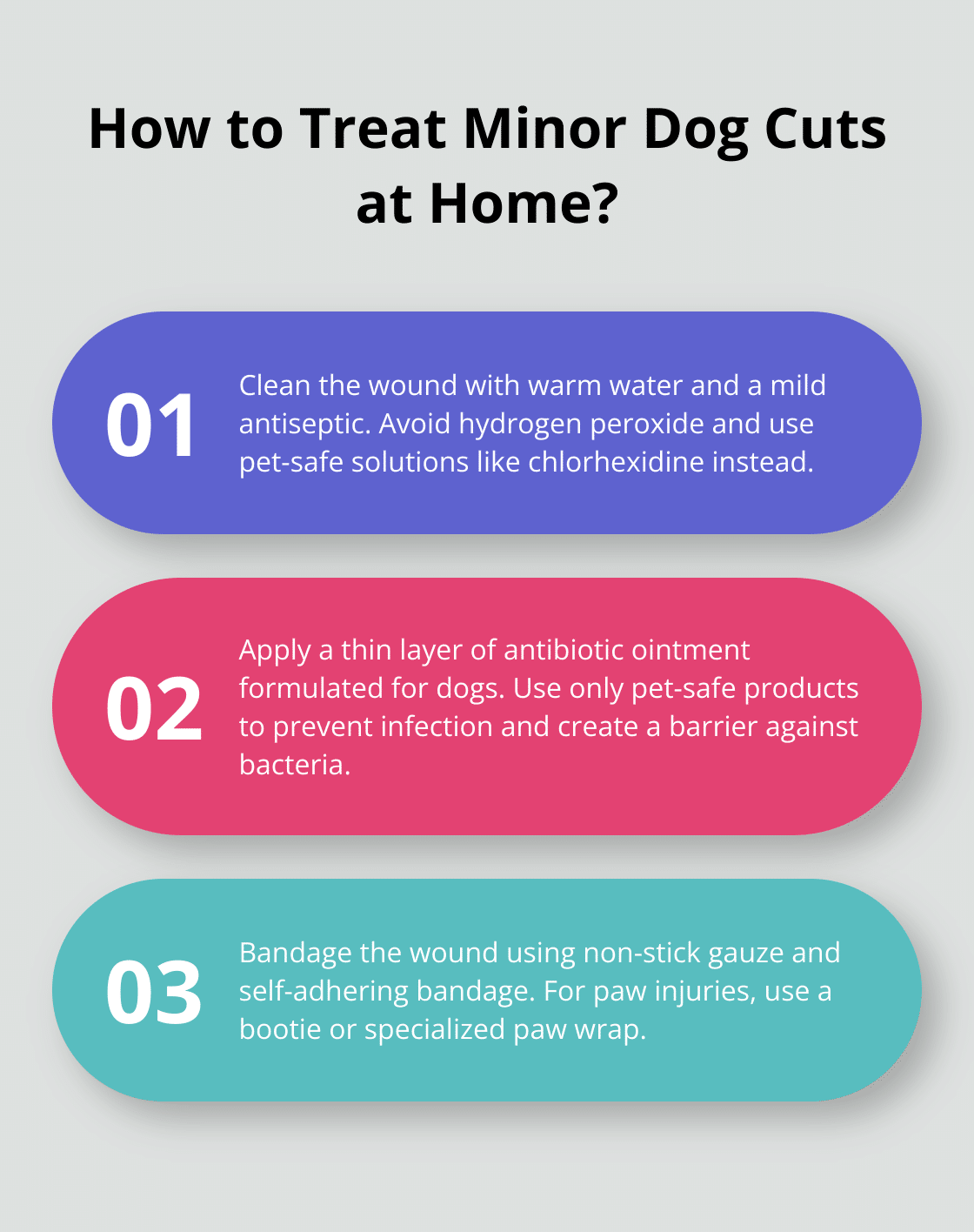
Start by cleaning the area around the cut with warm water. Use a clean cloth or gauze to remove dirt or debris. Avoid hydrogen peroxide, as it damages healthy tissue and slows healing. Instead, use a mild, pet-safe antiseptic solution like chlorhexidine. It’s a quick-acting solution that maintains its effectiveness for a substantial period, providing prolonged protection.
Apply Antiseptic and Protect
After cleaning, apply a thin layer of antibiotic ointment formulated for dogs. These products prevent infection and create a barrier against bacteria. Use only pet-safe products (some human medications can be toxic to dogs if ingested).
Bandaging Techniques
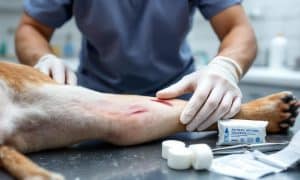
For body cuts, apply a non-stick gauze pad directly over the wound, then wrap with a self-adhering bandage. Make it snug but not tight enough to restrict circulation. For paw injuries, use a bootie or specialized paw wrap to keep the area clean during walks.
Leg wounds require special attention. Place a gauze pad over the cut, then wrap the leg with cotton padding to provide cushioning. Finish with a layer of self-adhering bandage, starting from the paw and moving upward to prevent swelling.
Monitor and Change
Change the bandage daily and check the wound for signs of healing. If you notice increased redness, swelling, or discharge, consult your veterinarian immediately.
When to Seek Professional Help
While these steps work for minor cuts, deep wounds or injuries near sensitive areas (eyes or ears) always require professional veterinary care. Quick and appropriate action helps your dog recover comfortably from minor cuts and scrapes.
As we move forward, let’s explore how to provide ongoing care and prevent infections in your dog’s healing wound.
How to Ensure Your Dog’s Cut Heals Properly
Keep the Wound Clean and Dry
Change your dog’s bandage daily, or more often if it becomes wet or dirty. Clean the wound with warm water and a pet-safe antiseptic solution before applying a fresh bandage. Pat the area dry with a clean towel. This routine prevents bacteria buildup and promotes healing.
Prevent Wound Licking
Dogs often lick their wounds, which can introduce bacteria and slow healing. Use an Elizabethan collar (E-collar) or inflatable collar to stop your dog from reaching the affected area. Some dogs adapt quickly to these devices, while others need time to adjust. Offer plenty of positive reinforcement during this process.
Monitor for Infection Signs
Check the wound twice daily for infection indicators. Look for increased redness, swelling, warmth, or pus-like discharge. Contact your veterinarian immediately if you notice any of these symptoms, or if your dog develops a fever (normal temperature ranges between 101-102.5°F).
Restrict Your Dog’s Activity
Limit your dog’s activity during the healing process to prevent reopening the wound. Allow short, controlled walks but avoid rough play or activities that might cause the cut to reopen. This precaution is especially important for cuts on legs or paws.
Provide a Healthy Diet
A nutritious diet supports wound healing. Feed your dog a balanced diet rich in protein, vitamins, and minerals. Some veterinarians recommend supplements like omega-3 fatty acids to support skin health and healing (always consult with your vet before adding any supplements to your dog’s diet).
Track the Healing Progress
Take daily photos of the wound to monitor its progress. This visual record helps you spot any concerning changes and provides valuable information to your veterinarian if needed. It also reassures you that healing is progressing normally.

Final Thoughts
Proper dog cut care requires knowledge and preparation. You must clean wounds thoroughly, apply appropriate antiseptics, and use correct bandaging techniques. Regular wound checks and preventing your dog from licking the affected area will promote optimal healing. A well-stocked first aid kit at home will help you act quickly and confidently during emergencies.

Regular veterinary check-ups are essential for your dog’s overall health. These visits allow professionals to identify potential issues early and provide tailored advice for your pet’s specific needs. We at DogingtonPost believe responsible dog ownership includes both immediate care during emergencies and ongoing preventive care.
Your veterinarian is your best resource for personalized advice and treatment plans. Most minor cuts will heal quickly with proper attention and care (allowing your furry companion to return to their happy, healthy self). You can ensure your dog receives the best possible care for cuts and other health concerns through informed and proactive pet ownership.