
“This post contains affiliate links, and I will be compensated if you make a purchase after clicking on my links.”
Dog ear infections can be a painful and frustrating experience for our furry friends. At DogingtonPost, we understand the importance of proper dog ear infection care to keep your canine companion healthy and comfortable.
In this guide, we’ll explore the causes, symptoms, and treatment options for ear infections in dogs. We’ll also provide practical tips for at-home care and explain when it’s time to seek professional veterinary help.
What Causes Dog Ear Infections?
The Perfect Storm for Ear Infections
Dog ear infections occur frequently and cause discomfort for our canine companions. Certain factors create an ideal environment for these infections to develop. Dogs who spend a lot of time swimming are more likely to develop chronic ear infections, because excessive water in the ears creates an ideal environment for bacteria and yeast. Breeds such as Cocker Spaniels, Basset Hounds, and Labrador Retrievers (known for their love of water) are particularly prone to ear infections.

Allergies also contribute significantly to ear infections in dogs. A study in the Journal of Veterinary Internal Medicine found that up to 80% of dogs with food allergies experience ear infections as a symptom. Environmental allergies can lead to similar issues.
Early Warning Signs
Detecting ear infections early can prevent severe complications. Look out for these symptoms:
- Frequent head shaking or ear scratching
- Redness or swelling of the ear canal
- Unusual odor from the ears
- Dark discharge or debris in the ear canal
- Sensitivity when touching the ears
If you notice any of these signs, take action immediately. Prompt attention can save your dog from unnecessary discomfort.
Types of Ear Infections
Dog ear infections typically fall into three categories:
- Bacterial infections: Often caused by Staphylococcus or Pseudomonas bacteria
- Yeast infections: Usually caused by Malassezia pachydermatis
- Ear mites: Tiny parasites that infest the ear canal
Each type requires a specific treatment approach, highlighting the importance of proper diagnosis by a veterinarian. The American Veterinary Medical Association reports that ear infections account for about 15-20% of all dog visits to the vet.
Risk Factors and Prevention
Several factors increase a dog’s risk of ear infections:
- Breed predisposition (especially long-eared breeds)
- Frequent swimming or bathing
- Allergies (both food and environmental)
- Endocrine disorders (such as hypothyroidism)
- Foreign objects in the ear canal
To reduce the risk of ear infections, try to keep your dog’s ears dry after swimming or bathing. Regular ear checks and cleaning (as recommended by your vet) can also help prevent infections.
Now that we understand the causes and symptoms of dog ear infections, let’s explore how to treat these conditions at home and when professional veterinary care becomes necessary.
How to Treat Dog Ear Infections at Home
Safe Ear Cleaning Techniques
Proper ear cleaning plays a key role in managing and preventing ear infections. Gather these supplies: a veterinarian-approved ear cleaner, cotton balls or gauze, and treats for positive reinforcement. Avoid cotton swabs as they can push debris further into the ear canal or damage the eardrum.

Follow these steps to clean your dog’s ears:
- Hold the ear flap up and fill the ear canal with the cleaning solution.
- Massage the base of the ear for about 30 seconds to help the solution break down debris.
- Let your dog shake its head, which helps bring the loosened debris to the outer ear.
- Wipe away the debris with cotton balls or gauze.
Repeat this process as your veterinarian recommends (typically once or twice a week for dogs prone to ear infections).
Over-the-Counter Solutions
Several over-the-counter treatments can effectively address mild ear infections. Look for products that contain ingredients like hydrocortisone (which reduces inflammation) or ketoconazole (which fights yeast infections). Oticbliss medicated drops contain hydrocortisone to help stop the redness and inflammation of the ear infection.
Read product labels carefully and follow dosage instructions. If you’re unsure about which product to choose, ask your veterinarian for recommendations tailored to your dog’s specific needs.
Natural Remedies for Mild Infections
Some natural remedies can provide relief for mild ear infections, but they should not replace veterinary care for severe or persistent cases. Apple cider vinegar, diluted with equal parts water, can help balance the pH in your dog’s ears and create an environment where bacteria and yeast struggle to thrive. Apply this solution with a soft cloth or cotton ball, but take care not to let it drip into the ear canal.
Coconut oil, known for its antimicrobial properties, can also benefit your dog’s ears. A study published in the Journal of Medicinal Food found that coconut oil effectively combats Candida albicans (a common cause of yeast infections in dogs). Apply a small amount of melted (but cooled) coconut oil to the outer ear area gently.
Monitor Your Dog’s Progress
While home treatments can work for mild cases, you must watch your dog’s condition closely. If symptoms persist or worsen after a few days of home treatment, or if your dog shows signs of severe discomfort, professional veterinary care becomes necessary. Early intervention prevents more serious complications and ensures your dog’s ear health.
As we move forward, let’s explore when home remedies aren’t enough and professional veterinary care becomes essential for your dog’s ear health.
When to Seek Veterinary Care for Your Dog’s Ear Infection
Recognizing Severe Symptoms
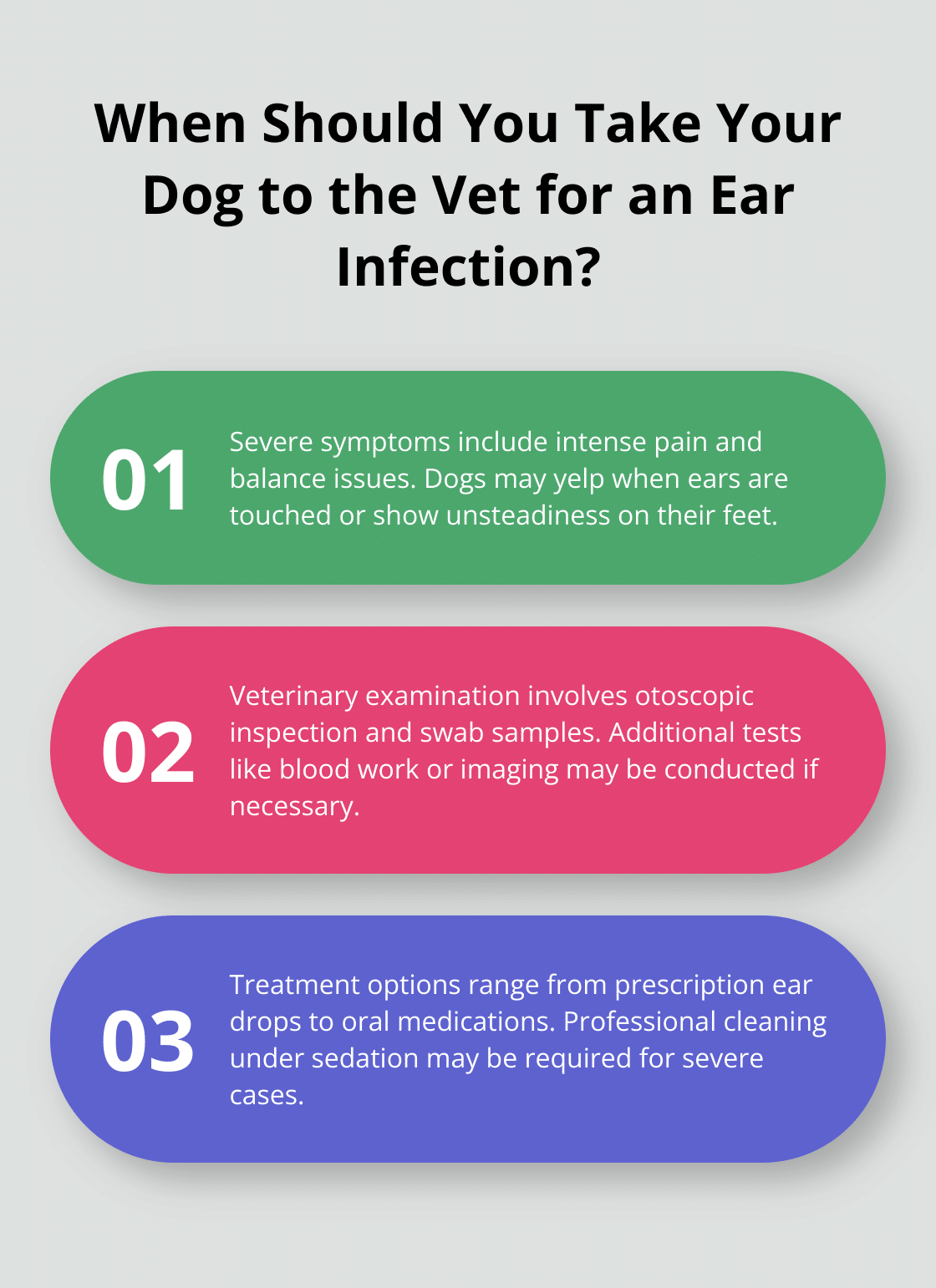
Dog ear infections can escalate beyond home remedies. You must recognize when professional help becomes necessary for your pet’s well-being. Watch for these warning signs:
- Severe pain: Your dog yelps when you touch their ears or constantly shakes their head.
- Balance issues: Your pet seems unsteady on their feet or tilts their head frequently.
- Swelling or discharge: The ear canal shows excessive swelling or produces a foul-smelling, colored discharge.
Don’t hesitate to consult a vet if you’re unsure about your dog’s condition.
What Happens at the Vet’s Office
When you take your dog to the vet for an ear infection, they will perform a thorough examination. This typically includes:
- Otoscopic examination: The vet uses an otoscope to examine the ear canal, checking for inflammation, discharge, and potential foreign objects.
- Swab samples: The vet may collect samples from the ear to identify the specific type of infection (bacterial, yeast, or mites) through microscopic examination.
- Additional tests: In some cases, further diagnostics like blood tests or imaging might be necessary to rule out underlying conditions.
Professional Treatment Options
Once your vet diagnoses the type and severity of the ear infection, they will recommend an appropriate treatment plan. This may include:
- Prescription ear drops: These often contain a combination of antibiotics, antifungals, and anti-inflammatory medications (tailored to your dog’s specific infection).
- Oral medications: For severe or chronic infections, your vet might prescribe oral antibiotics or anti-inflammatory drugs.
- Professional cleaning: In some cases, your vet may need to perform a deep cleaning of your dog’s ears under sedation to remove built-up debris and medication.
Follow-up Care
Your vet will likely schedule a follow-up appointment to monitor your dog’s progress. During this visit, they will:
- Re-examine the ears
- Adjust the treatment plan if necessary
- Provide additional advice on preventing future infections
Always follow your vet’s instructions carefully to ensure the best outcome for your furry friend.
Final Thoughts
Proper dog ear infection care requires regular checks and preventive measures. Keep your pet’s ears dry after swimming or bathing to prevent bacteria and yeast growth. Use a veterinarian-approved ear cleaner weekly for dogs prone to infections, and address underlying issues like allergies or hormonal imbalances.

A balanced diet rich in omega-3 fatty acids supports overall ear health by reducing inflammation. Regular exercise and maintaining a healthy weight contribute to your dog’s immune system, helping fight off potential infections. Always consult with your veterinarian if you suspect an ear infection in your furry friend.
We at DogingtonPost want to help you provide the best care for your canine companion. Our comprehensive resources offer expert advice on various aspects of dog health, including ear care. With proper attention, you can keep your dog’s ears healthy and infection-free, contributing to their overall happiness and well-being.