
“This post contains affiliate links, and I will be compensated if you make a purchase after clicking on my links.”
At DogingtonPost, we understand that seeing your furry friend with an open wound can be distressing.
Knowing how to care for your dog’s open wound is essential for their health and recovery. This guide will walk you through the steps to assess, clean, and bandage your dog’s injury properly.
We’ll also cover when it’s crucial to seek veterinary care to ensure your pup receives the best treatment possible.
Assessing Your Dog’s Wound Severity
Minor vs. Severe Wounds
When your dog gets injured, you must quickly determine the wound’s severity. Not all injuries require a veterinary visit, but some demand immediate professional attention.

Minor wounds typically present as small cuts or scrapes with minimal bleeding. These injuries don’t penetrate deep into the skin and heal rapidly. Severe wounds, however, are often deep, long, or wide. They frequently bleed profusely and may expose muscle or bone.
Red Flags for Veterinary Care
Certain signs indicate the need for immediate veterinary attention:
- Persistent bleeding after 5 minutes of applied pressure
- Wounds near sensitive areas (eyes, ears, or genitals)
- Puncture wounds (prone to infection)
- Signs of infection (pus, swelling, or foul odor)
- Animal bite wounds (potential disease carriers)
A study found that male dogs were more frequently bitten than females, and small dogs (≤ 10 kg) were not only the most common victims but also were more likely to be bitten. These injuries often require antibiotics to prevent infection.
Safe Home Treatment
You can treat minor wounds at home if they meet these criteria:
- Bleeding stops quickly
- The wound is small (less than 1 inch)
- It’s superficial (muscle or bone not visible)
- Your dog exhibits minimal pain
- The wound isn’t located on a joint or high-movement area
For home care, clean the wound with warm water and mild soap. Then apply an antiseptic spray formulated for dogs. Monitor the wound for signs of healing over the next few days.
When to Seek Professional Help
If you’re uncertain about the wound’s severity, contact your veterinarian. They can advise whether your dog needs professional care or if home treatment suffices. Swift action can prevent minor issues from escalating into major problems.
Proper Assessment Techniques
To accurately assess your dog’s wound:
- Gently part the fur around the injury site
- Use a clean, damp cloth to wipe away any debris
- Examine the wound’s depth and size
- Check for any foreign objects embedded in the wound
- Observe your dog’s behavior and pain level
(Note: Always handle your dog with care during this process to avoid causing additional stress or pain.)
Now that you’ve assessed your dog’s wound, let’s move on to the next critical step: cleaning and disinfecting the injury to promote proper healing and prevent infection.
How to Clean Your Dog’s Wound
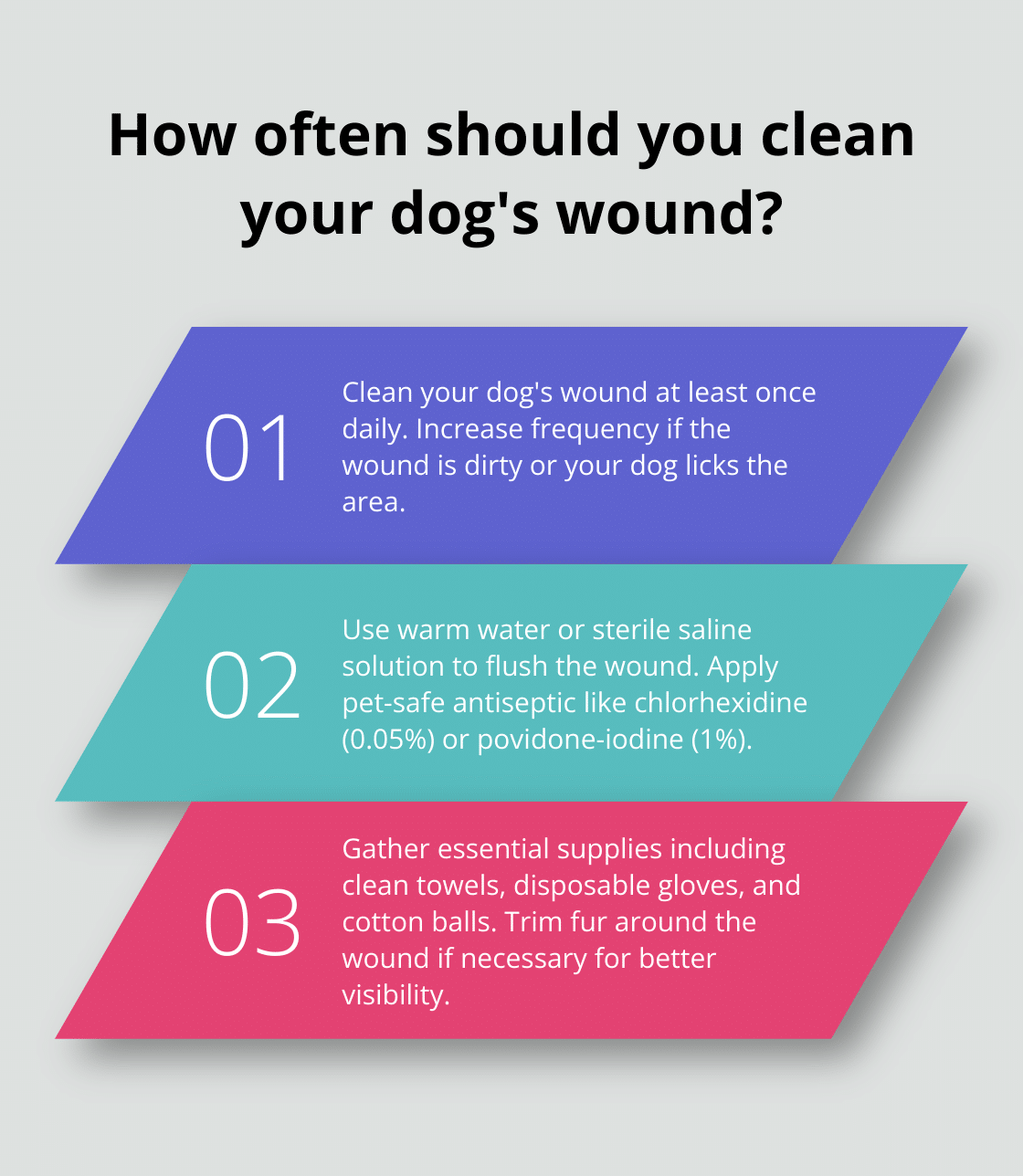
Gathering Essential Supplies
Before you start the cleaning process, collect these items:
- Clean towels or paper towels
- Warm water
- Sterile saline solution
- Pet-safe antiseptic solution (chlorhexidine or povidone-iodine)
- Disposable gloves
- Scissors (for trimming fur if needed)
- Cotton balls or gauze pads
Having all supplies ready will make the cleaning process more efficient and less stressful for you and your dog.
Step-by-Step Wound Cleaning
- Wash your hands thoroughly and put on disposable gloves.
- If necessary, carefully trim the fur around the wound using scissors. This improves visibility and prevents hair from entering the wound.
- Flush the wound gently with warm water or sterile saline solution. This removes surface debris and helps you see the injury’s extent.
- Use cotton balls or gauze pads soaked in warm water to clean the wound’s edges. Work from the center outward to avoid introducing bacteria into the wound.
- Apply a pet-safe antiseptic solution after cleaning. Use chlorhexidine diluted to a 0.05% solution or povidone-iodine diluted to a 1% solution. (Avoid hydrogen peroxide, as it can damage healthy tissue.)
- Let the antiseptic solution sit on the wound for a few minutes, then pat the area dry gently with a clean towel.
Selecting Safe Disinfectants
When choosing a disinfectant for your dog’s wound, use products specifically formulated for pets. Human antiseptics can be too harsh for canine skin.
Chlorhexidine is a popular choice among veterinarians due to its broad-spectrum antimicrobial properties and low toxicity. It effectively combats many bacteria, fungi, and viruses.
Povidone-iodine, when properly diluted, is another excellent option. It works well for contaminated wounds due to its ability to penetrate organic matter.
Do not use alcohol, hydrogen peroxide, or tea tree oil, as these can irritate the wound and delay healing. If you’re unsure about a product, ask your veterinarian before use.
Frequency of Wound Cleaning
Clean the wound at least once daily, or more often if it’s particularly dirty or your dog tends to lick the area. Always monitor the wound for signs of infection, such as increased redness, swelling, or discharge.
With proper cleaning and care, most minor wounds will heal without complications. However, if you notice any signs of infection or delayed healing, seek veterinary attention promptly.
Now that you’ve learned how to clean your dog’s wound effectively, let’s move on to the next critical step: proper bandaging techniques to protect the wound and promote healing.
Bandaging Your Dog’s Wound
When Bandages Are Necessary
Not all wounds require bandages, but proper application can significantly aid the healing process. Bandage your dog’s wound if it’s in an area likely to get dirty or if your dog keeps licking or biting it. Wounds on legs, paws, or the abdomen often benefit from bandaging. However, leave small, superficial cuts on areas like the face unbandaged to heal in the open air.
Essential Bandaging Materials
To bandage your dog’s wound effectively, you’ll need:
- Non-stick gauze pads
- Conforming bandage (like Vet Wrap)
- Adhesive tape
- Scissors
- Elastic bandage (for outer layer)

Always use pet-specific products when available. Human bandages may be too tight or contain adhesives that irritate your dog’s skin.
Applying the Bandage
Place a non-stick gauze pad directly over the wound. This prevents the bandage from sticking to the injury and absorbs wound drainage.
Wrap a conforming bandage around the area, covering the gauze pad. Apply it snugly but not tightly – you should be able to slip two fingers under the bandage. Overlap each layer by about 50% as you wrap.
Finish with an elastic bandage for extra protection and to keep the underlying layers in place. Secure the end with adhesive tape, but avoid taping directly onto your dog’s fur or skin.
Changing the Bandage
Change the bandage daily or more frequently if it becomes wet, dirty, or if you notice an unusual odor. When removing the old bandage, check for signs of infection (like increased redness, swelling, or discharge).
Before applying a new bandage, clean the wound as described in the previous section. Allow the area to air dry completely before re-bandaging to prevent moisture buildup, which can lead to skin irritation or infection.
Seeking Professional Help
While proper bandaging can aid healing, incorrect application can cause more harm than good. If you’re unsure about bandaging your dog’s wound, consult your veterinarian for guidance or a demonstration. They can provide personalized advice based on your dog’s specific needs and the nature of the wound.
Final Thoughts
Caring for your dog’s open wound requires vigilance and proper technique. You must monitor the wound closely for signs of improvement or complications. Watch for reduced swelling, decreased redness, and the formation of healthy new tissue.

Certain situations demand professional care when you care for a dog’s open wound. Seek veterinary help if the wound doesn’t show signs of healing within a few days, if your dog develops a fever, or if you observe any behavioral changes that might indicate discomfort or pain. Early intervention can prevent minor issues from becoming serious health concerns.
We at DogingtonPost strive to provide you with the latest information on how to care for your dog’s open wound. You can ensure your canine companion receives the best possible care and enjoys a happy, healthy life by your side (with proper wound care and regular check-ups). Take proactive steps to create a safe environment for your dog to minimize the risk of future injuries.