
“This post contains affiliate links, and I will be compensated if you make a purchase after clicking on my links.”
At DogingtonPost, we know that accidents happen, and our furry friends can sometimes get injured.
Proper dog wound care is essential for preventing infections and promoting quick healing. This guide will walk you through the steps to effectively treat different types of wounds your dog may encounter.
We’ll also cover when it’s crucial to seek professional veterinary help, ensuring your pup receives the best care possible.
Common Dog Wounds: Identification and Understanding
Cuts and Lacerations
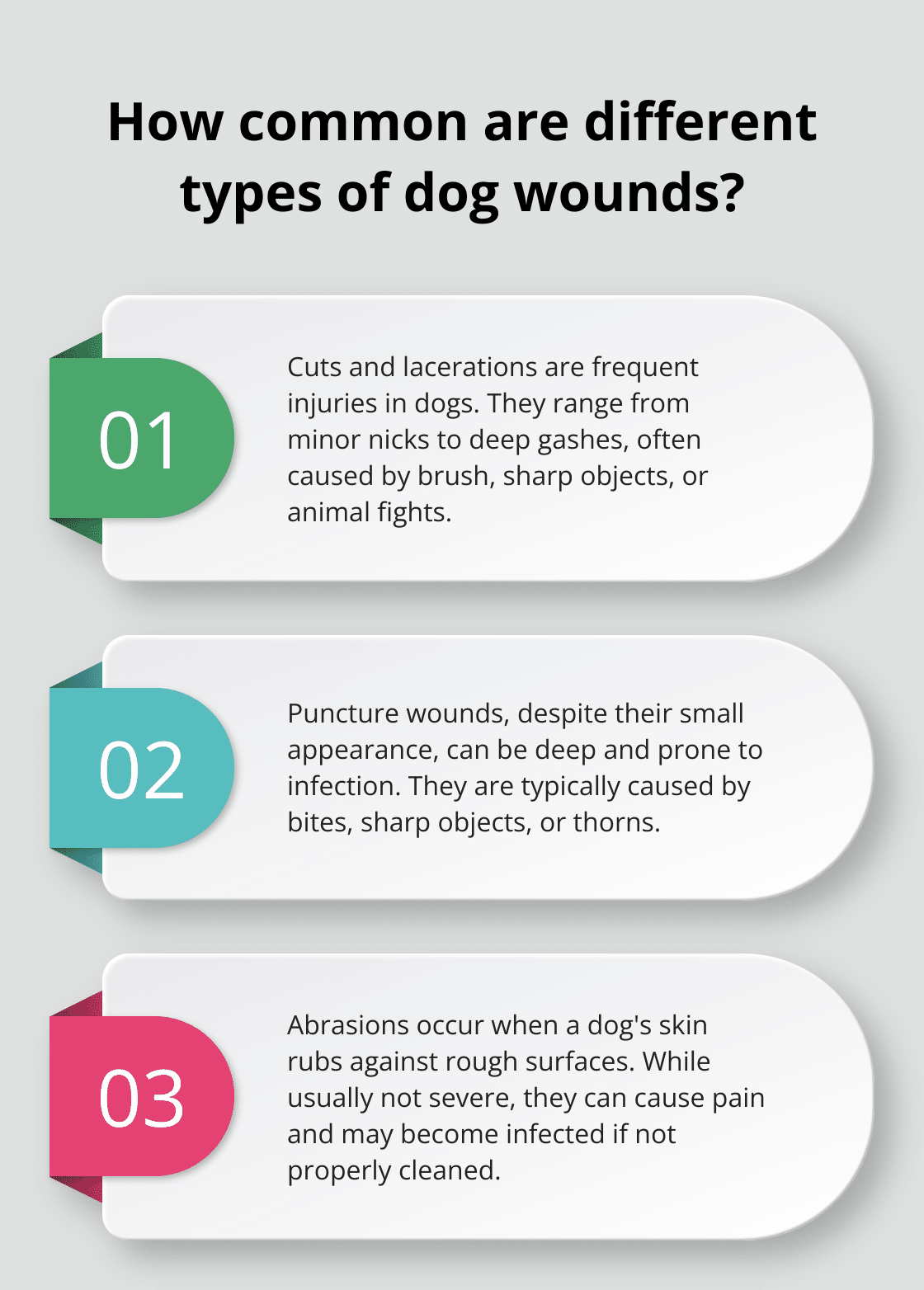
Cuts and lacerations are common injuries that dogs often sustain. These wounds range from minor nicks to deep gashes. Dogs typically acquire these injuries when they run through brush, step on sharp objects, or engage in scuffles with other animals.
Puncture Wounds
Puncture wounds pose a deceptive danger. Despite their small surface appearance, these injuries can penetrate deeply and become prone to infection. Bites, sharp objects, or thorns usually cause these wounds. A study published in the Journal of Emergency Medicine suggests that small scalp puncture wounds may overlie intracranial injury and facial fractures in dog bite cases.
Abrasions and Scrapes
Abrasions occur when a dog’s skin rubs against a rough surface, causing superficial damage. Falls or slides on rough terrain often lead to these wounds. While abrasions don’t usually present severe issues, they can cause pain and may become infected without proper cleaning.
Burns
Burns in dogs come in three types: thermal (from heat), chemical, or electrical. Although less common than other wounds, burns can inflict severe damage. These injuries demand immediate attention and often require specialized care.
Quick identification of these wound types allows for effective first aid and helps determine whether professional veterinary care becomes necessary. The next section will outline the steps for proper wound care, ensuring your furry friend receives the best treatment possible.
How to Treat Dog Wounds Effectively
Assessing the Wound
When your dog gets injured, quick and proper action is essential. Take a moment to evaluate the injury. Ask yourself: Is it a superficial cut or a deep gash? Does it involve a large area of skin? Is there excessive bleeding? Your answers will help you determine whether you can handle the wound at home or if you need to rush to the vet.

For minor wounds, you can proceed with home care. However, deep cuts, puncture wounds, or injuries near the eyes or other sensitive areas require immediate veterinary attention.
Cleaning the Wound
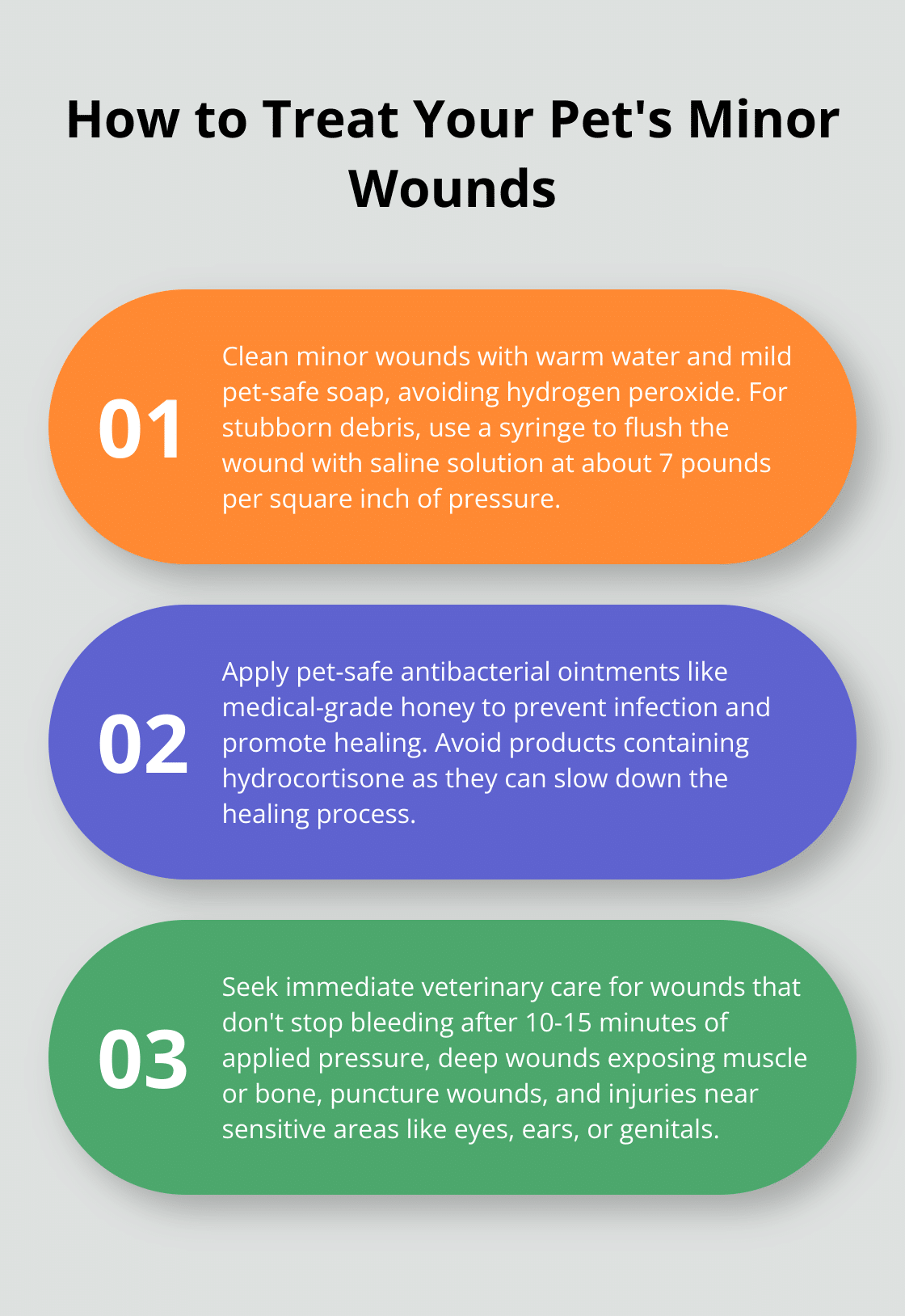
Once you’ve determined the wound is minor enough for home care, cleaning is your next step. Use warm water and a mild, pet-safe soap to gently clean the area around the wound. Avoid hydrogen peroxide as it can damage healthy tissue and delay healing.
For stubborn dirt or debris, you can use a syringe (without the needle) to flush the wound with saline solution. A study found that using a saline solution bag placed in a pressure cuff, at a cuff pressure of 300 mm Hg, was the most consistent technique for generating about 7 pounds per square inch of pressure.
Applying Treatment
After cleaning, apply an appropriate treatment. Pet-safe antibacterial ointments, such as medical-grade honey ointments, can help prevent infection and promote healing. However, avoid using products containing hydrocortisone, as these can slow down the healing process.
If you’re unsure about which product to use, consult your veterinarian. They might recommend specific treatments based on your dog’s condition and the type of wound.
Bandaging Techniques
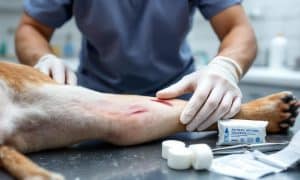
For wounds that require bandaging, start with a non-stick gauze pad directly over the wound. Then, wrap a self-adhesive bandage around the area, ensuring it’s snug but not too tight. Leave room for some air circulation to promote healing.
Change the bandage daily or more frequently if it gets wet or dirty. When changing bandages, always check for signs of infection such as increased redness, swelling, or discharge.
Monitoring the Healing Process
Keep a close eye on the wound as it heals. Most minor wounds should show improvement within a few days. If you notice any signs of infection, increased pain, or if the wound isn’t healing as expected, it’s time to consult your vet.
Prevent your dog from licking or chewing the wound, as this can introduce bacteria and slow down healing. An Elizabethan collar (e-collar) can be helpful in these situations.
While these steps can provide effective first aid for your dog’s minor wounds, it’s important to know when professional help is needed. In the next section, we’ll discuss the situations that warrant immediate veterinary care, ensuring your furry friend receives the best possible treatment.
When to Seek Veterinary Care for Your Dog’s Wound
Severe Bleeding and Deep Wounds
Severe bleeding or deep wounds usually require immediate veterinary care, while minor wounds can often be treated at home. However, if your dog’s wound doesn’t stop bleeding after 10-15 minutes of applied pressure, you should take them to the vet immediately. Deep wounds that expose muscle, bone, or fat tissue also require professional care. These injuries often need stitches and have a higher risk of infection.

A study in the Journal of Veterinary Emergency and Critical Care revealed that about 10% of dogs brought to emergency clinics had traumatic wounds requiring immediate care. This statistic highlights the importance of quick action in severe cases.
Recognizing Signs of Infection
You should watch for signs of infection in your dog’s wound. These include:
- Redness and swelling around the wound site
- Discharge (especially if it’s yellow, green, or has a foul odor)
- Increased pain or sensitivity
- Fever (normal dog temperature ranges between 101-102.5°F)
If you notice any of these symptoms, don’t delay. Infections can spread quickly and lead to more serious health problems. The American Veterinary Medical Association warns that untreated wound infections can progress to sepsis, which can be life-threatening.
Wounds in Sensitive Areas
You should always have a veterinarian evaluate injuries near your dog’s eyes, ears, mouth, or genitals. These areas are particularly sensitive and prone to complications. For instance, eye injuries can lead to vision problems if not treated properly.
Similarly, wounds on paw pads or joints can affect your dog’s mobility and may require special care. A study in the Journal of Small Animal Practice found that paw pad injuries (if not treated promptly) can lead to chronic lameness in dogs.
Puncture Wounds
Puncture wounds (often caused by bites or sharp objects) may appear small on the surface but can penetrate deeply. These wounds have a high risk of infection and should be examined by a vet. They may require thorough cleaning, antibiotics, or even surgical intervention.
Large or Gaping Wounds
Any wound that appears large or gaping requires immediate veterinary attention. These wounds often need professional closure (such as stitches or staples) to heal properly and prevent infection. Large wounds can also lead to significant blood loss, which can be dangerous for your dog.
Final Thoughts
Dog wound care requires quick action and proper assessment. Clean minor wounds with warm water and mild soap, then apply appropriate treatments. Monitor the healing process closely and seek professional help for serious injuries. Your veterinarian will provide the best care for your dog’s more severe wounds.
Regular check-ups and preventive care help maintain your dog’s overall health. These visits allow your vet to catch potential issues early and provide guidance on injury prevention. We at DogingtonPost strive to offer the latest information and expert advice to support you in every aspect of dog care.
Stay informed and prepared to ensure your furry companion leads a happy, healthy life. Your quick thinking and proper care can make all the difference in your dog’s recovery from wounds and injuries. Keep learning, stay vigilant, and always put your pet’s well-being first.