
“This post contains affiliate links, and I will be compensated if you make a purchase after clicking on my links.”
At DogingtonPost, we believe in educating our readers about important legislation that affects our furry friends.
The Animal Welfare Act stands as a cornerstone of animal protection in the United States. This landmark law has shaped the way we treat and care for animals in various settings.
Let’s explore the history, scope, and impact of this crucial piece of legislation.
How the Animal Welfare Act Came to Be
The Birth of Animal Protection
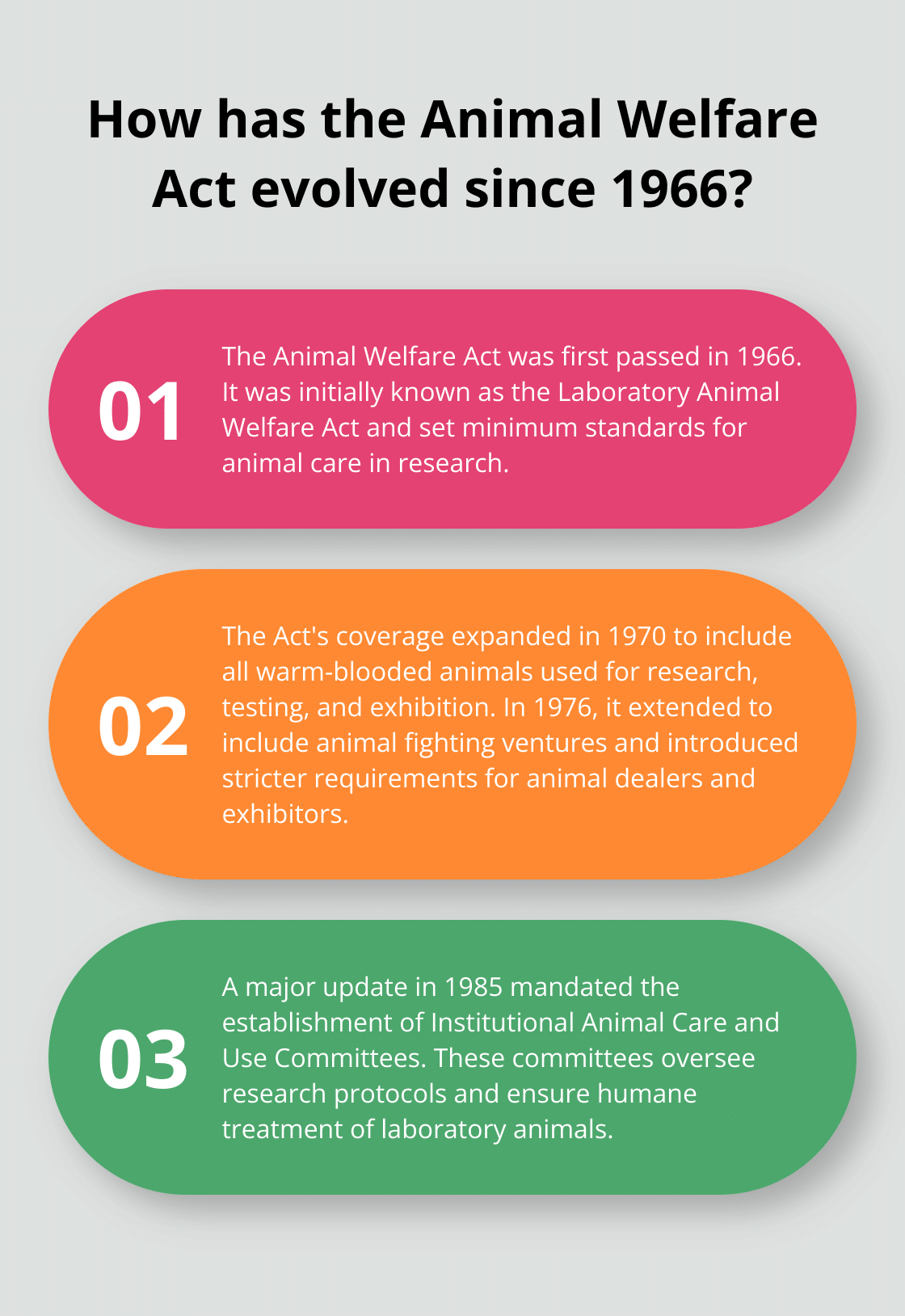
The Animal Welfare Act (AWA) was first passed by Congress in 1966, following years of lobbying by animal welfare organizations. This groundbreaking legislation, initially known as the Laboratory Animal Welfare Act, set minimum standards for the humane care and treatment of animals used in research.
The AWA’s origins trace back to a Life magazine exposé that revealed horrific conditions of animal dealers supplying dogs to research facilities. This shocking revelation sparked public outrage and prompted swift action from Congress. On August 24, 1966, President Lyndon B. Johnson signed the AWA into law, marking a significant milestone in animal welfare history.
Expanding Protections Over Time
Since its inception, the AWA has undergone several key amendments to broaden its scope and strengthen its provisions:
1970: The Act’s coverage expanded to include all warm-blooded animals used for research, testing, and exhibition. This amendment also introduced regulations for animal transport and handling.
1976: The AWA’s reach extended to include animal fighting ventures and introduced more stringent requirements for animal dealers and exhibitors.
1985: A major update mandated the establishment of Institutional Animal Care and Use Committees (IACUCs) to oversee research protocols and ensure the humane treatment of laboratory animals.
Goals and Objectives
The primary objective of the AWA is to ensure the humane care and treatment of animals in various settings (including research facilities, exhibition, transport, and by dealers). It sets minimum standards for housing, handling, sanitation, nutrition, water, veterinary care, and protection from harm.
According to the USDA, which enforces the AWA, the Act aims to:
- Ensure humane treatment of animals
- Promote the responsible use of animals in research
- Improve the quality of biomedical research
- Enhance public confidence in animal research practices
Limitations and Ongoing Challenges
While the AWA has made significant strides in animal protection, it’s important to note that it doesn’t cover all animals or situations. For instance, farm animals used for food production and most rodents used in research are not protected under the Act. This limitation highlights the ongoing need for comprehensive animal welfare legislation.
As we move forward, it’s essential to understand the scope and coverage of the Animal Welfare Act to fully grasp its impact on animal protection in the United States.
What Animals Does the Animal Welfare Act Protect?
Protected Species Under the AWA
The Animal Welfare Act (AWA) extends its protection to a range of warm-blooded animals. Dogs, cats, nonhuman primates, guinea pigs, hamsters, and rabbits all fall under its umbrella. The Act also safeguards animals in zoos, circuses, and those bred for commercial sale (including exotic pets).
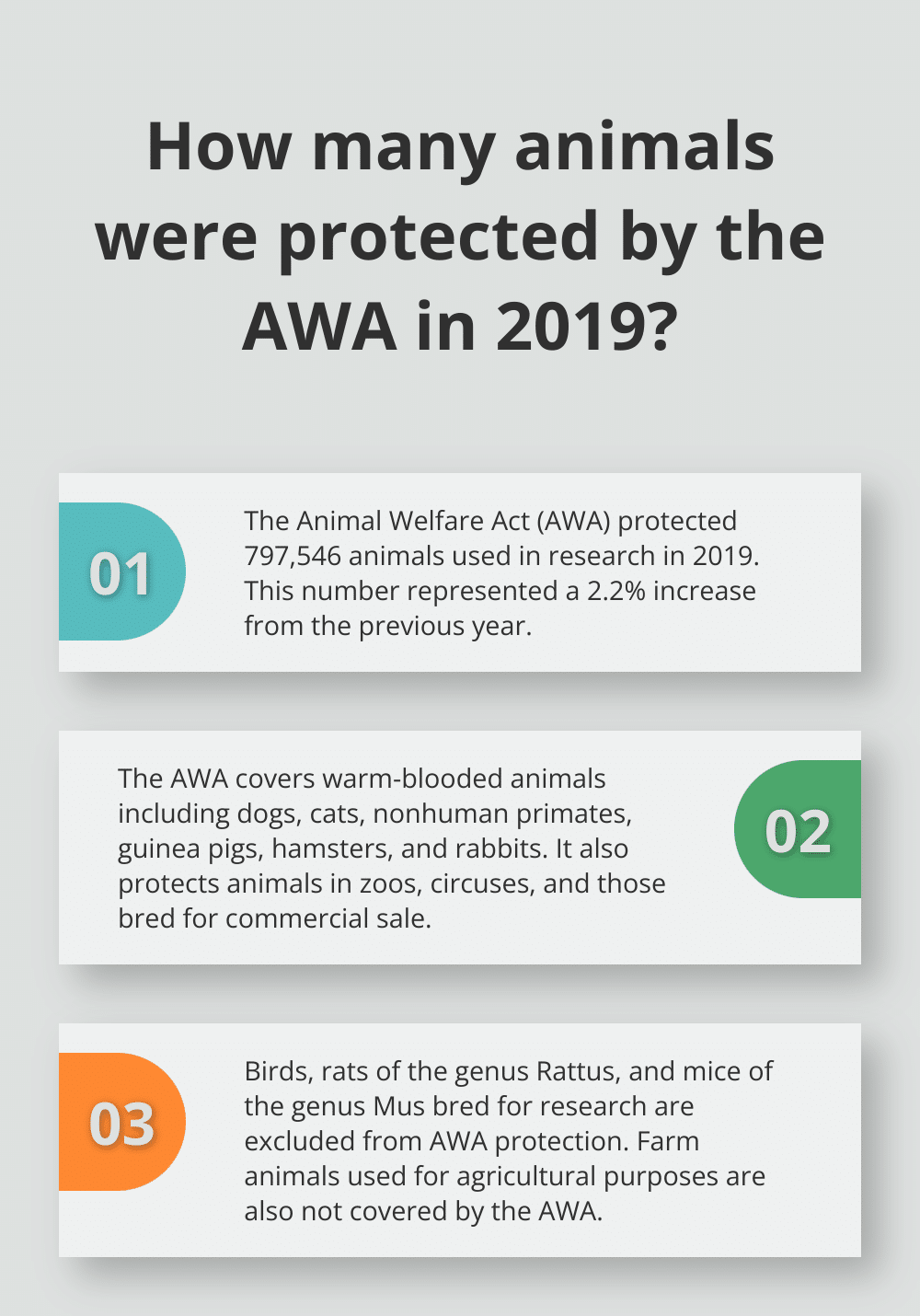
USDA statistics reveal that in 2019, the AWA covered 797,546 animals used in research, marking a 2.2% increase from the previous year. However, this figure doesn’t tell the whole story due to some notable exceptions.
Surprising Exclusions from Protection
The AWA doesn’t protect all animals equally. Birds, rats of the genus Rattus, and mice of the genus Mus bred for research are explicitly excluded from the Act’s protection. This exclusion is significant, as these species constitute the majority of animals used in laboratory research.
Farm animals used for agricultural purposes represent another major group not covered by the AWA. This means billions of chickens, pigs, and cattle raised for food production fall outside the Act’s jurisdiction.
Regulated Activities and Facilities
The AWA’s influence extends to various settings where people keep or use animals:
- Research Facilities: Universities, pharmaceutical companies, and government labs must comply with AWA standards. This includes maintaining proper housing, providing adequate veterinary care, and ensuring the psychological well-being of animals.
- Exhibitors: Zoos, circuses, and other animal exhibitors must obtain licenses and undergo regular inspections to meet the Act’s requirements for animal care and treatment.
- Dealers and Breeders: Those selling animals for research or as pets must be licensed and adhere to specific standards for animal housing, care, and record-keeping.
The AWA’s Impact on Animal Welfare
While the AWA has made significant strides in animal protection, its limitations highlight the need for continued advocacy and legislation. As pet owners and animal lovers, understanding these regulations helps us make more responsible choices and advocate for better protection where it’s needed most.
The enforcement and compliance measures of the AWA play a critical role in ensuring these protections are upheld. Let’s examine how the Act is enforced and what happens when violations occur.
How the USDA Enforces the Animal Welfare Act
Inspection Process
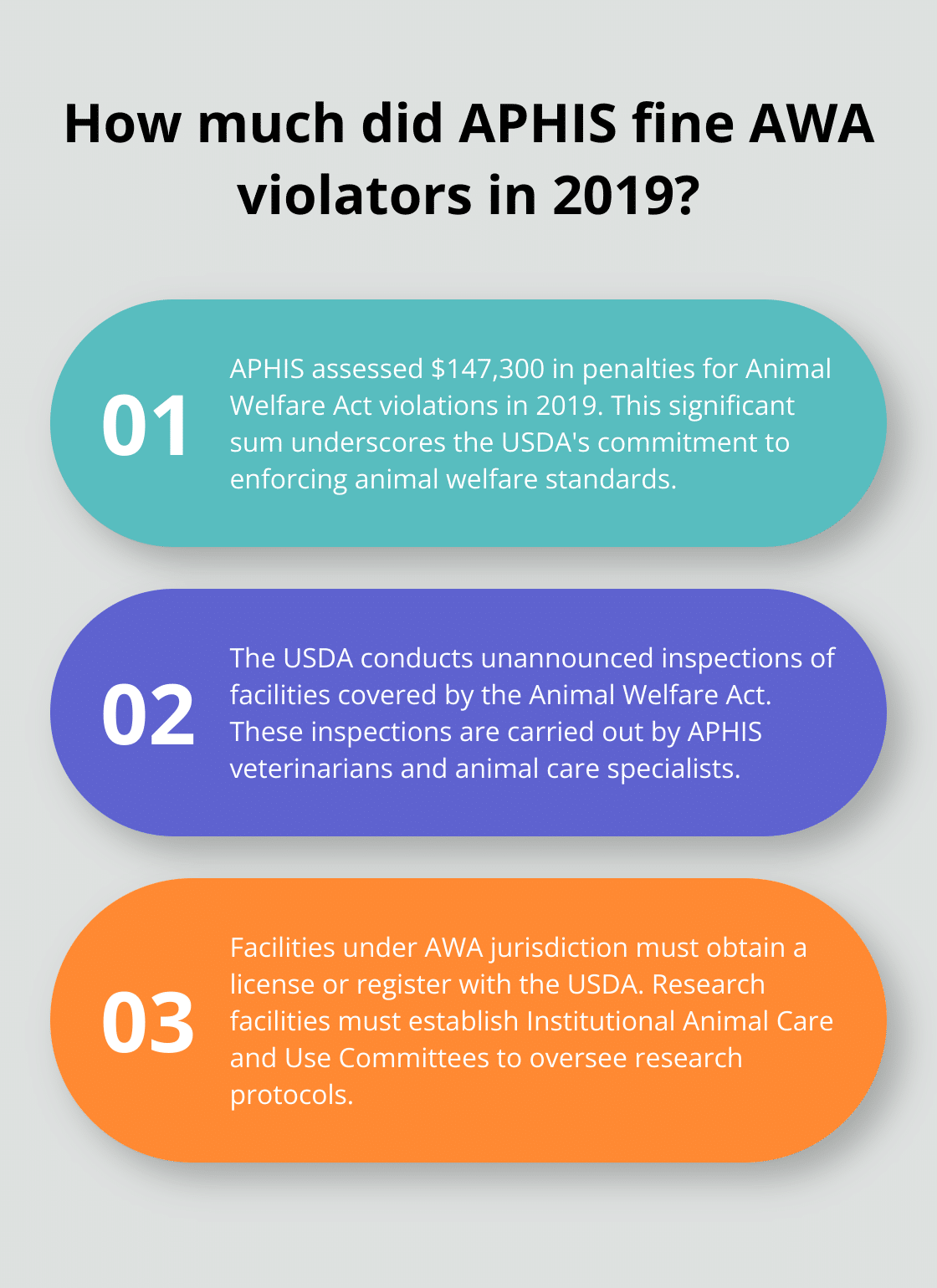
The United States Department of Agriculture (USDA) enforces the Animal Welfare Act (AWA) through its Animal and Plant Health Inspection Service (APHIS). APHIS employs veterinarians and animal care specialists who conduct unannounced inspections of facilities covered by the AWA. These inspections are comprehensive and cover aspects such as animal housing, veterinary care, and record-keeping.
APHIS conducts regulatory activities to ensure the humane care and treatment of certain animals and horses as required by the Animal Welfare Act of 1966. During these visits, inspectors examine the conditions of animal enclosures, assess the health of the animals, and review facility records. They search for any indications of neglect, improper care, or violations of the AWA standards. This hands-on approach ensures that facilities maintain high standards of animal welfare.
Licensing and Registration
Facilities that fall under the AWA’s jurisdiction must obtain a license or register with the USDA. This process requires the submission of detailed information about the facility, its animals, and its care practices. The USDA reviews these applications carefully and often conducts pre-license inspections to verify compliance before issuing a license.
Research facilities face a particularly stringent licensing process. They must establish Institutional Animal Care and Use Committees (IACUCs) to oversee research protocols and ensure the humane treatment of laboratory animals. These committees play a vital role in maintaining ethical standards in animal research.
Penalties for Non-Compliance
When inspectors uncover violations of the AWA, the consequences can be severe. The USDA has the authority to issue warnings, impose fines, suspend or revoke licenses, and even pursue criminal charges in cases of serious violations.
Fines for AWA violations can be substantial. APHIS assessed $147,300 in penalties for violations in 2019. These fines serve as a deterrent and underscore the seriousness with which the USDA approaches enforcement.
Animal Confiscation
In extreme cases, the USDA can confiscate animals from non-compliant facilities. This measure is taken when animals are found to be suffering or in immediate danger. The USDA then places the confiscated animals in approved shelters or sanctuaries.
Ongoing Monitoring
The USDA’s enforcement efforts don’t stop at inspections and penalties. They also maintain ongoing monitoring of facilities to ensure continued compliance. This includes follow-up inspections, review of regular reports submitted by facilities, and investigation of complaints from the public.
The USDA’s multifaceted approach to enforcing the Animal Welfare Act (including inspections, licensing, penalties, and ongoing monitoring) helps maintain high standards of animal care across various settings in the United States.
Final Thoughts
The Animal Welfare Act has transformed animal protection in the United States since 1966. This legislation set standards for humane treatment of animals in research, exhibition, and commercial settings. Its impact extends beyond its immediate scope, influencing public perception and promoting responsible animal care.

The Act faces ongoing challenges that require attention and action. One significant issue is the exclusion of certain species, particularly farm animals and most laboratory rodents, from the Act’s protection. Another area for improvement lies in enforcement, as limited resources can hinder thorough inspections and timely follow-ups.
We at DogingtonPost commit to inform our readers about issues affecting our furry friends. The Animal Welfare Act serves as a foundation for animal protection, but we all must build upon it. You can help ensure a better future for all animals by staying informed, supporting responsible care practices, and advocating for stronger protections.