

“This post contains affiliate links, and I will be compensated if you make a purchase after clicking on my links.”
Military dogs serve our country with unwavering loyalty and dedication. But what happens when these brave canines retire from active duty?
At DogingtonPost, we’re often asked: “Can you adopt military dogs?” The answer is yes, and it’s a rewarding experience for both the dog and the adopter.
In this guide, we’ll walk you through the process of adopting a retired military dog, from understanding their unique backgrounds to preparing your home for their arrival.
What Are Military Working Dogs?
Military Working Dogs (MWDs) are highly trained canines that play essential roles in various military operations. These dogs are not average pets; they’re skilled professionals with years of specialized training.
Types of Military Dogs
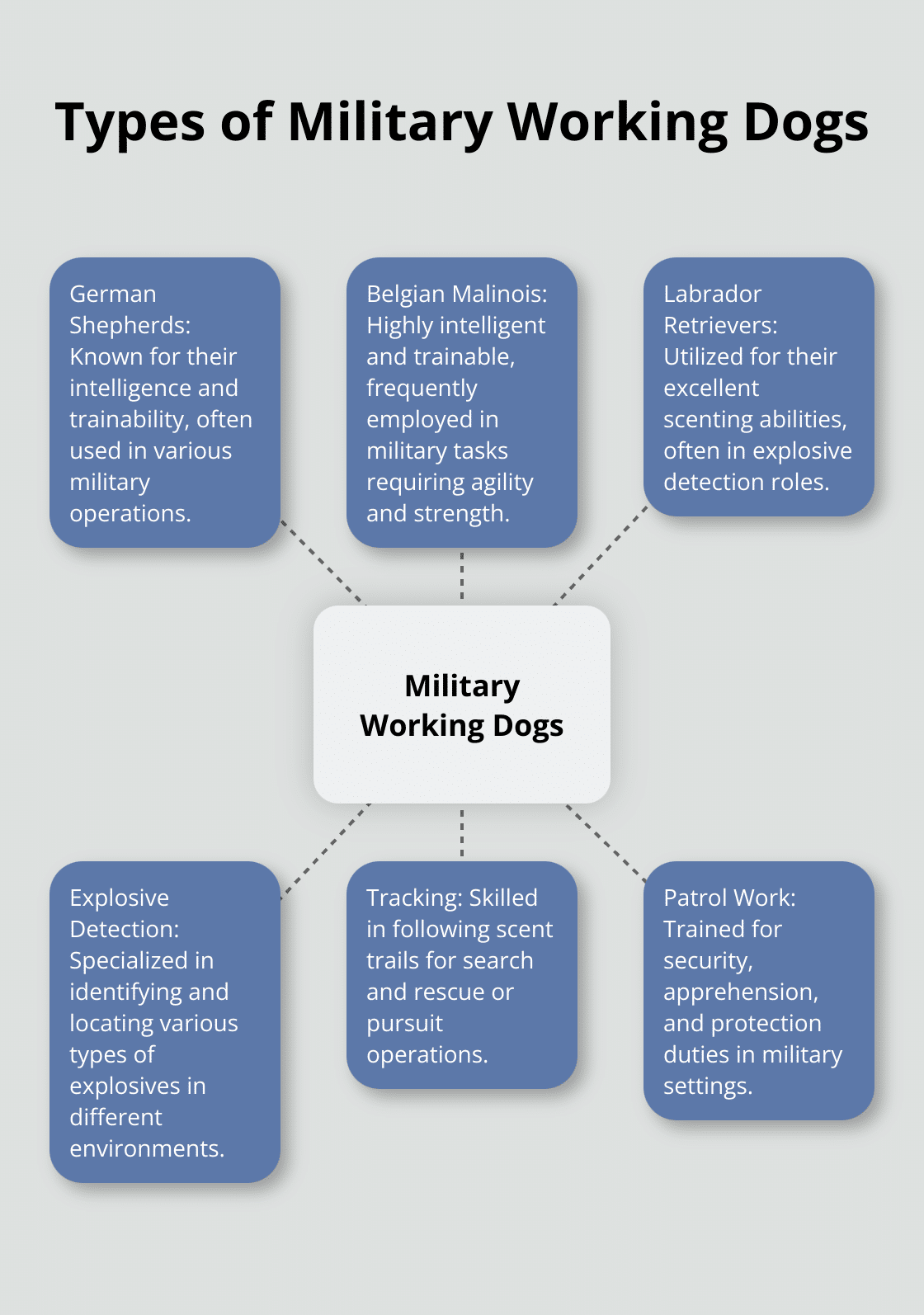
The U.S. Department of Defense employs several breeds for different tasks. German Shepherds and Belgian Malinois are popular choices due to their intelligence and trainability. Labrador Retrievers are often used for their excellent scenting abilities.
MWDs perform a range of duties. Some detect explosives, while others specialize in tracking or patrol work. About 1,600 military working dogs help keep the nation safe, with missions spanning land, air and sea.
The Retirement Process
Military dogs typically retire after about 8-10 years of service. The exact age depends on their health and ability to perform tasks. The 341st Training Squadron at Joint Base San Antonio handles about 300-400 MWD retirements annually.
Robby’s Law, signed by President Bill Clinton in November 2000, requires that all MWDs suitable for adoption be available for placement after retirement. This law ended the previous practice of euthanizing these dogs after their service.
Characteristics of Retired Military Dogs
Retired MWDs are not typical house pets. They’re highly disciplined and may have specific behavioral traits from their training. Some might struggle to adjust to civilian life, especially if they’ve seen combat.
These dogs often have strong protective instincts and may be wary of strangers. They’re usually energetic and require regular exercise and mental stimulation. Some retired MWDs may have health issues related to their service (such as joint problems or PTSD).
Adoption Considerations
Adopting a retired MWD is a significant commitment. These dogs need owners who understand their background and are prepared to provide the care they need. The adoption process prioritizes former handlers and military veterans before considering civilian applicants.
Potential adopters should thoroughly research and prepare before considering an MWD adoption. These remarkable dogs deserve loving homes, but it’s important to ensure you’re ready for the unique challenges they may present.
As we move forward, let’s explore the specific steps involved in the adoption process for these extraordinary canines.
How to Adopt a Military Dog: The Process Explained
Eligibility Requirements
The U.S. Air Force oversees the Military Working Dog (MWD) adoption program and sets strict criteria for potential adopters. You must be at least 21 years old and have a fenced yard at least 6 feet high. Families with children under 5 years old are typically not eligible. You’re also limited to a maximum of three dogs in your household (including the MWD you plan to adopt).
These requirements ensure that retired MWDs have a safe, stable environment. The high fence requirement is essential, as these dogs are trained to jump and climb. The age restriction for children exists due to the unpredictable nature of some retired MWDs (who may have been exposed to combat situations).

Application Process
The first step is to contact the 341st Training Squadron at Lackland Air Force Base in San Antonio, Texas. They manage the MWD adoption program. You’ll need to fill out a detailed application form, which includes questions about your living situation, experience with dogs, and reasons for wanting to adopt an MWD.
You must provide contact information for your veterinarian and two personal references. The application also requires you to describe your plans for the dog’s care, exercise, and living arrangements.
The wait time for adoption can be long – sometimes up to two years. This is due to the limited number of dogs available and the thorough vetting process. Patience is a key factor in this process.
Matching and Placement
If your application receives approval, you’ll be placed on a waiting list. When a suitable dog becomes available, the adoption coordinator will contact you. They’ll provide information about the dog’s background, temperament, and any special needs.
It’s important to note that you don’t get to choose a specific dog. Instead, the program matches dogs with adopters based on the dog’s needs and the adopter’s capabilities. This ensures the best possible fit for both the dog and the new owner.
If you’re selected as a potential match, you’ll need to travel to Lackland Air Force Base to meet the dog. This meeting allows both you and the dog to see if you’re a good fit. You’ll also receive a briefing on the dog’s history and care requirements.
The adoption process for MWDs is more complex than adopting from a shelter, but it’s designed to ensure these special dogs find the right forever homes. If you’re committed to providing a loving retirement for a canine hero, this could be an incredibly rewarding journey.
Now that you understand the adoption process, let’s explore how to prepare your home for your new four-legged veteran.
How to Prepare Your Home for a Military Dog

Create a Safe Space
Designate a quiet area in your home as the dog’s personal space. This could be a corner of a room or a separate area. Outfit it with a comfortable bed, water bowl, and a few toys. This space will serve as a retreat where your Military Working Dog (MWD) can decompress when feeling overwhelmed.
Make sure your yard is secure with a 6-foot fence at minimum. MWDs are trained to overcome obstacles, so a sturdy, high fence is essential. Remove any potentially harmful plants or substances from your yard and home. Many MWDs are trained to detect certain chemicals, so be mindful of cleaning products and medications.
Address Health and Behavioral Concerns
MWDs often come with specific health needs. Set up a consultation with a veterinarian experienced in treating working dogs. They can help you understand any existing conditions and create a care plan.
Prepare for potential behavioral issues. Many MWDs experience anxiety or PTSD-like symptoms. Create a calm environment by minimizing loud noises and sudden movements. Use white noise machines or soft music to mask outdoor sounds that might trigger your dog.
Implement Training and Socialization
Transitioning an MWD to pet life requires patience and consistent training. Start with basic obedience commands they’re familiar with, then slowly introduce new ones. Use positive reinforcement techniques – MWDs respond well to praise and rewards.
Socialization is important but should be done carefully. Start with controlled introductions to family members and trusted friends. Gradually expose your dog to different environments, always watching for signs of stress or discomfort.
Each MWD is unique. What works for one may not work for another. Stay flexible in your approach and be prepared to adjust your strategies based on your dog’s needs.
Establish a Routine
Military dogs thrive on structure. Create a daily routine that includes regular feeding times, exercise, and training sessions. This predictability can help ease the transition from military to civilian life.
Start with short training sessions (around 5-10 minutes), several times a day. Focus on reinforcing good behaviors and redirecting unwanted ones. As your dog adjusts, you can gradually increase the duration of these sessions.
Exercise is important for MWDs, who are used to high levels of activity. Plan for physical activity daily, split into multiple sessions. This can include walks, playtime in a secure area, or even scent work games that tap into their training. You can make the transition easier for them by continuing training, providing a lot of exercise and activity, and giving them time to relax.
Final Thoughts
Adopting a retired military dog offers a unique and rewarding experience. These extraordinary canines deserve loving homes for their retirement years after dedicating their lives to serving our country. The process to adopt military dogs can be lengthy and demanding, but the benefits outweigh the challenges.
Military Working Dogs (MWDs) often form deep bonds with their adoptive families, offering unwavering loyalty and protection. Their intelligence and trainability make them excellent partners for various activities, from hiking to advanced obedience training. However, potential adopters must prepare for the responsibility, as these dogs may require extra patience, understanding, and specialized care due to their unique backgrounds.
We at DogingtonPost support responsible dog ownership and promote the well-being of all dogs, including retired military canines. We encourage potential adopters to research and prepare thoroughly before they adopt military dogs. With the right preparation, patience, and love, this experience can honor these brave animals and provide them with the peaceful retirement they deserve.