
“This post contains affiliate links, and I will be compensated if you make a purchase after clicking on my links.”
Teacup dogs have captured the hearts of many pet lovers with their tiny size and adorable appearance. At DogingtonPost, we’ve seen a growing interest in these pint-sized pooches.
If you’re considering to adopt teacup dogs, it’s crucial to understand the unique challenges and joys they bring. This guide will walk you through everything you need to know about these miniature companions.
What Are Teacup Dogs?
Definition and Characteristics
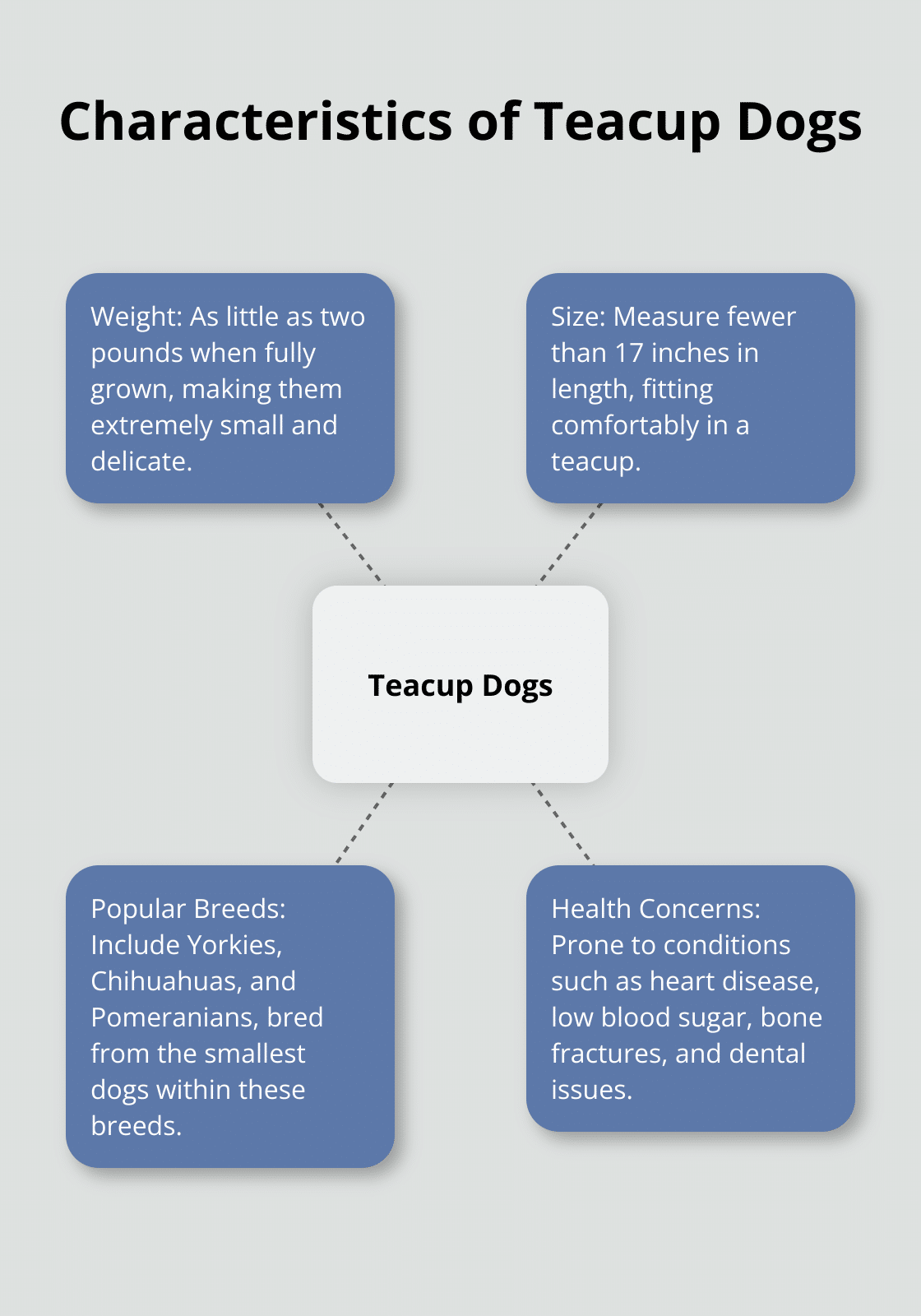
Teacup dogs can weigh as little as two pounds and measure fewer than 17 inches when fully grown. These tiny pups have gained popularity due to their compact size and cute appearance.
Popular Teacup Dog Breeds
Some common teacup varieties include Yorkies, Chihuahuas, and Pomeranians. The American Kennel Club doesn’t recognize teacup dogs as separate breeds. Instead, they are often the result of breeding the smallest dogs within a breed.
Health Concerns
Teacup dogs often face serious health issues. They are prone to conditions such as heart disease, low blood sugar, and bone fractures. Dr. Bonnie Bragdon from the Independent Veterinary Practitioners Association warns that smaller-than-usual dogs may indicate genetic problems.
Dental issues are also common in teacup breeds. Their tiny mouths can’t accommodate proper tooth development, which leads to overcrowding and decay.
Care Requirements
Caring for a teacup dog demands extra attention. They need frequent meals to prevent blood sugar drops. A high-quality diet with at least 20% protein content is essential for their health.
Exercise needs are modest. About 45 minutes of daily activity can help manage their energy levels. However, their fragile bodies require careful handling during playtime.
Grooming needs vary by breed. For instance, teacup Yorkies need regular brushing and haircuts every six to eight weeks to maintain their coat.
Cost Considerations
Adoption fees for teacup dogs can range from $50 to $250 at local shelters. However, finding teacup varieties in shelters can be challenging due to high demand.
Ongoing costs include specialized food, frequent vet check-ups, and potential medical treatments for breed-specific health issues. (Be prepared for potentially high veterinary care costs due to their unique health challenges.)
As we move forward to discuss the adoption process, it’s important to consider these factors carefully. The next section will guide you through the steps of preparing for teacup dog adoption, ensuring you’re ready for the responsibilities that come with these tiny companions.
How to Prepare Your Home for a Teacup Dog
Bringing a teacup dog into your life requires careful preparation. These tiny pups have specific needs that demand attention to detail in your home setup.
Puppy-Proofing Your Space
Teacup dogs are markedly smaller than their breed standard and are not recognized by the American Kennel Club. Get down on your hands and knees to see your home from their perspective. Look for potential hazards like small openings, loose wires, or toxic plants.
Cover electrical outlets and secure loose cords. Remove or securely store small objects that could be choking hazards. Be especially vigilant about items like rubber bands, paper clips, and small toys (these can be particularly dangerous for tiny pups).
Creating Cozy Corners
Teacup dogs need safe, warm spaces to rest. Set up multiple soft beds or cushions around your home. Place these in quiet areas away from drafts. Use pet stairs or ramps to help your tiny friend access furniture safely.
A crate can serve as a safe haven for your teacup dog. Choose one that’s snug but not cramped, with enough room for them to stand, turn around, and lie down comfortably. Line it with a soft, washable blanket.
Stocking Up on Essentials
When shopping for supplies, keep in mind that everything needs to be scaled down for your teacup pup. Look for the smallest size in collars, harnesses, and leashes. Choose adjustable options to ensure a perfect fit as your dog grows.
Food and water bowls should be shallow and easily accessible. Stainless steel or ceramic options are best as they’re easy to clean and don’t harbor bacteria.
Toys should be appropriately sized to prevent choking hazards. Soft, plush toys or small rubber ones designed for puppies are good choices. Avoid toys with small parts that could come loose.
Temperature Control
Normal body temperature for dogs is 100.0°F to 103.8°F (37.7°C to 39.8°C). Maintain a comfortable temperature in your home year-round. In colder months, use a pet-safe heating pad or a cozy sweater for your tiny friend.