
“This post contains affiliate links, and I will be compensated if you make a purchase after clicking on my links.”
At DogingtonPost, we understand the importance of proper nutrition for dogs with kidney issues.
Choosing the right food can make a significant difference in managing your pet’s kidney health. Hill’s Kidney Care dog food is specifically designed to address these concerns.
In this post, we’ll guide you through selecting the best Hill’s Kidney Care formula for your furry friend.
Why Dogs Need Kidney Care
The Prevalence of Kidney Problems in Dogs
Kidney problems affect more dogs than many pet owners realize. A study estimates that the incidence of canine chronic kidney disease (CKD) is around 0.5–1.0% in the United States, but has been shown to approach 25% in some cases. This highlights the importance of kidney care for dogs.
Kidney Disease: A Silent Threat
Kidney disease often progresses unnoticed in dogs. Symptoms typically appear only after 75% of kidney function has already been lost. This fact underscores the importance of early detection and proper management.
Diet’s Impact on Kidney Health
Diet significantly influences the management of kidney disease. Research published in the Journal of Small Animal Practice found that dogs on a kidney-specific diet lived an average of 13 months longer than those on a standard diet. This finding highlights the potential benefits of specialized diets like Hill’s Kidney Care dog food.
Hill’s Approach to Kidney Issues
Hill’s Kidney Care dog food addresses the specific nutritional needs of dogs with kidney problems through several key features:
- Phosphorus Reduction: Hill’s Kidney Care contains up to 82% less phosphorus than regular adult dog food (which can help mitigate further kidney damage).
- Protein Control: The food provides high-quality protein in amounts that don’t overburden the kidneys. A study in the Veterinary Clinics of North America: Small Animal Practice journal demonstrated that controlled protein diets can slow kidney disease progression.
- Omega-3 Fatty Acids: These nutrients help reduce kidney inflammation. A clinical trial in the Journal of the American Veterinary Medical Association found that dogs with kidney disease fed an omega-3-rich diet had a 29% lower risk of uremic crisis.

Hill’s Kidney Care dog food supports kidney function and potentially slows kidney disease progression by addressing these nutritional factors. While diet plays a vital role in kidney care, it’s just one aspect of comprehensive management. Regular veterinary check-ups and early intervention are equally important for maintaining your dog’s kidney health.
Now that we understand why specialized kidney care is essential for dogs, let’s explore the key features of Hill’s Kidney Care dog food in more detail.
What Makes Hill’s Kidney Care Dog Food Special?
Controlled Mineral Content
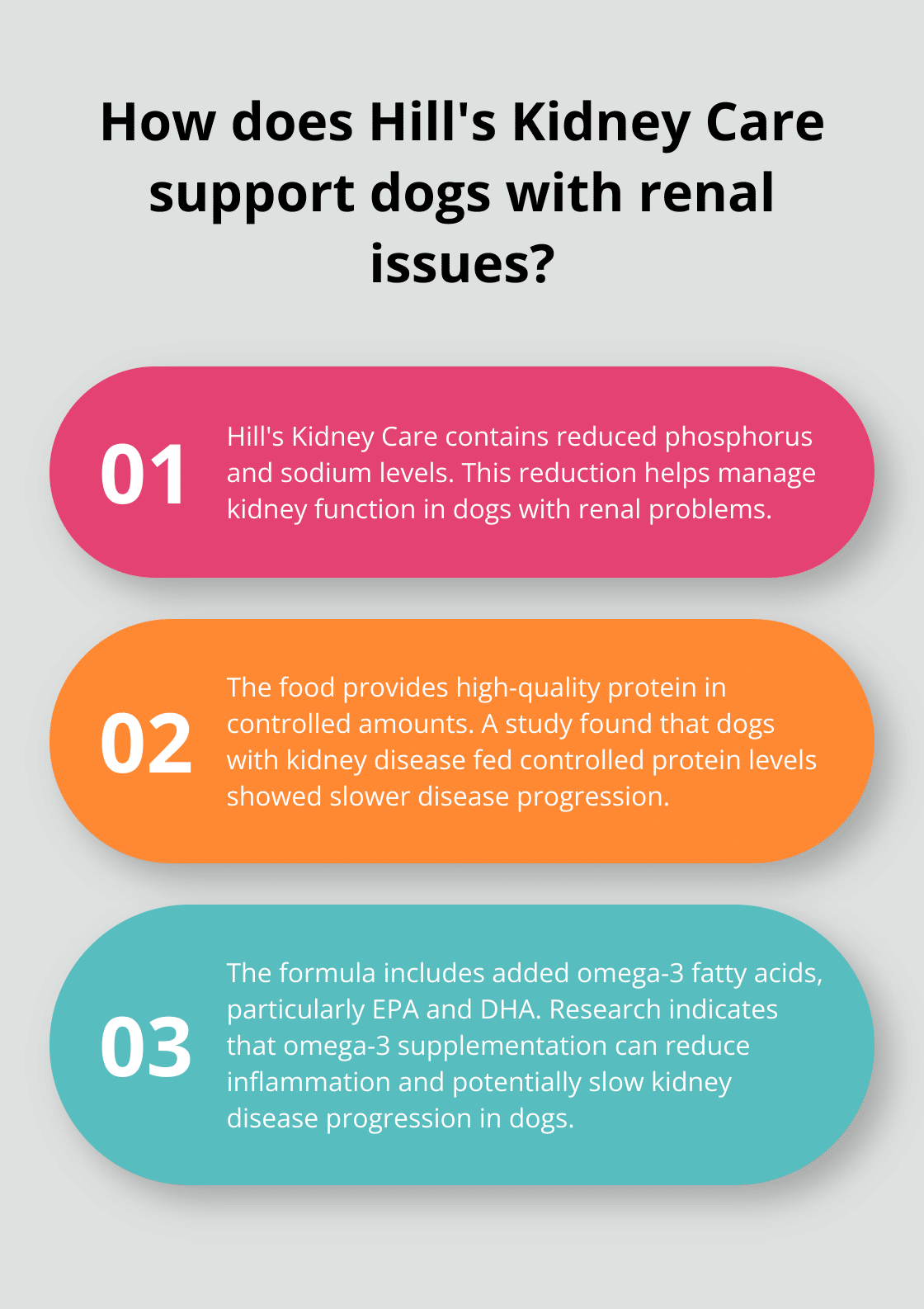
Hill’s Kidney Care dog food contains reduced levels of phosphorus and sodium. Typical therapeutic renal foods have reduced protein, phosphorus, and sodium content, increased caloric density, and increased buffering capacity. This reduction helps manage kidney function in dogs with renal issues.
Optimal Protein Balance
Protein management plays a key role in kidney care diets. Hill’s Kidney Care provides high-quality protein sources in carefully controlled amounts. This balance ensures dogs receive essential amino acids without overburdening their kidneys. A study in the Journal of Veterinary Internal Medicine found that dogs with kidney disease fed a diet with controlled protein levels showed slower disease progression.
Omega-3 Fatty Acid Boost
Hill’s Kidney Care incorporates added omega-3 fatty acids, particularly EPA and DHA. These nutrients have anti-inflammatory properties that can benefit kidney function. Research published in the Journal of the American Veterinary Medical Association indicates that omega-3 supplementation can reduce inflammation and potentially slow the progression of kidney disease in dogs.
Antioxidant Support
The formula includes a blend of antioxidants to support the immune system. This is particularly important for dogs with kidney issues, as they often have compromised immune function. A study in the Veterinary Journal found that antioxidant supplementation in dogs with kidney disease led to improvements in markers of oxidative stress.
Tailored Nutritional Approach
Hill’s Kidney Care dog food combines these elements to create a comprehensive nutritional solution for dogs with kidney problems. It addresses specific needs (such as reduced phosphorus) while providing essential nutrients (like high-quality proteins and omega-3s). This tailored approach sets it apart from standard dog foods.
While Hill’s Kidney Care offers many benefits, it’s essential to consult with your veterinarian to determine if it’s the right choice for your dog’s specific needs. Your vet can help you understand how to choose the right formula and how to transition your dog to this new diet effectively.
How to Pick the Best Hill’s Kidney Care Formula
Dry vs. Wet Food Options
Hill’s offers both dry and wet food options in their Kidney Care line. Dry food provides convenience and supports dental health. Wet food benefits dogs with decreased appetite or those needing increased hydration. A study in the Journal of Animal Physiology and Animal Nutrition found that wet food can increase water intake by up to 73% in dogs (which is essential for kidney health).
Age-Specific Formulas
Hill’s Kidney Care line includes formulas tailored to different life stages. Supplementation with functional food bioactives can temporarily reverse the age-associated decline in renal function and serum total protein.
Flavor Varieties for Picky Eaters
Hill’s understands that palatability matters, especially for dogs with decreased appetite due to kidney issues. They offer various flavors like chicken, beef, and lamb to cater to different preferences. Try rotating flavors to maintain interest if your dog is a picky eater. Always transition gradually to avoid digestive upset.
Veterinary Consultation
Consulting with your veterinarian is important when choosing a kidney care formula. Regular nutritional assessments by veterinarians can improve patients’ health. Your vet can perform blood tests to assess your dog’s kidney function and recommend the most appropriate Hill’s formula. They can also help you determine the right feeding amount based on your dog’s weight, activity level, and disease stage.
Regular Monitoring and Adjustments
Kidney disease management requires ongoing attention. Regular check-ups and dietary adjustments may become necessary as your dog’s condition changes. With the right Hill’s Kidney Care formula and proper veterinary guidance, you can improve your dog’s quality of life and potentially slow the progression of kidney disease.

Final Thoughts
Hill’s Kidney Care dog food provides a comprehensive approach to manage kidney health in dogs. It addresses unique nutritional needs through controlled mineral content, optimal protein balance, omega-3 fatty acids, and antioxidant support. The variety of formulas allows pet owners to find the best fit for their furry companions.

Proper nutrition plays a key role in maintaining kidney function and can slow the progression of kidney disease in dogs. Hill’s Kidney Care dog food supports these goals with its scientifically formulated options for dogs with renal concerns. However, diet is just one aspect of kidney care (regular veterinary check-ups and monitoring are equally important).
At DogingtonPost, we emphasize the importance of informed pet care decisions. We recommend you work closely with your veterinarian to develop a comprehensive care plan that includes Hill’s Kidney Care dog food. Your vet can provide personalized guidance on selecting the right formula and making necessary adjustments as your dog’s condition evolves.