
“This post contains affiliate links, and I will be compensated if you make a purchase after clicking on my links.”
Is your dog leaving a trail of fur everywhere? At DogingtonPost, we understand the frustration of excessive shedding.
Our comprehensive guide offers dog shedding solutions, tips, and effective strategies to help you manage this common issue.
From grooming techniques to dietary adjustments, we’ll explore practical ways to reduce shedding and keep your home fur-free.
Why Dogs Shed: Understanding the Basics
Normal vs. Excessive Shedding
Dogs shed. It’s a natural process that helps them regulate body temperature and maintain a healthy coat. Most dogs shed moderately throughout the year, with heavier periods in spring and fall. However, if your dog loses hair in patches or sheds excessively year-round, it might indicate an underlying issue.
Breed-Specific Shedding Patterns
The amount and frequency of shedding varies greatly among breeds. Double-coated breeds (like German Shepherds and Huskies) typically shed more than single-coated breeds. These dogs often experience a “blow coat” twice a year, where they shed their undercoat in large amounts.
Seasonal Influences on Shedding
Seasons play a significant role in shedding patterns. Many dogs shed their winter coats in spring and summer coats in fall. This natural process helps them adapt to changing temperatures (a fact often overlooked by frustrated owners).
Health Factors Affecting Shedding
A dog’s health status can significantly impact shedding. Poor nutrition, stress, or underlying medical conditions often lead to excessive hair loss. Recent research has identified increased gamma delta T cells in the atopic skin of dogs, which may contribute to inflammatory skin conditions.
Recognizing Abnormal Shedding
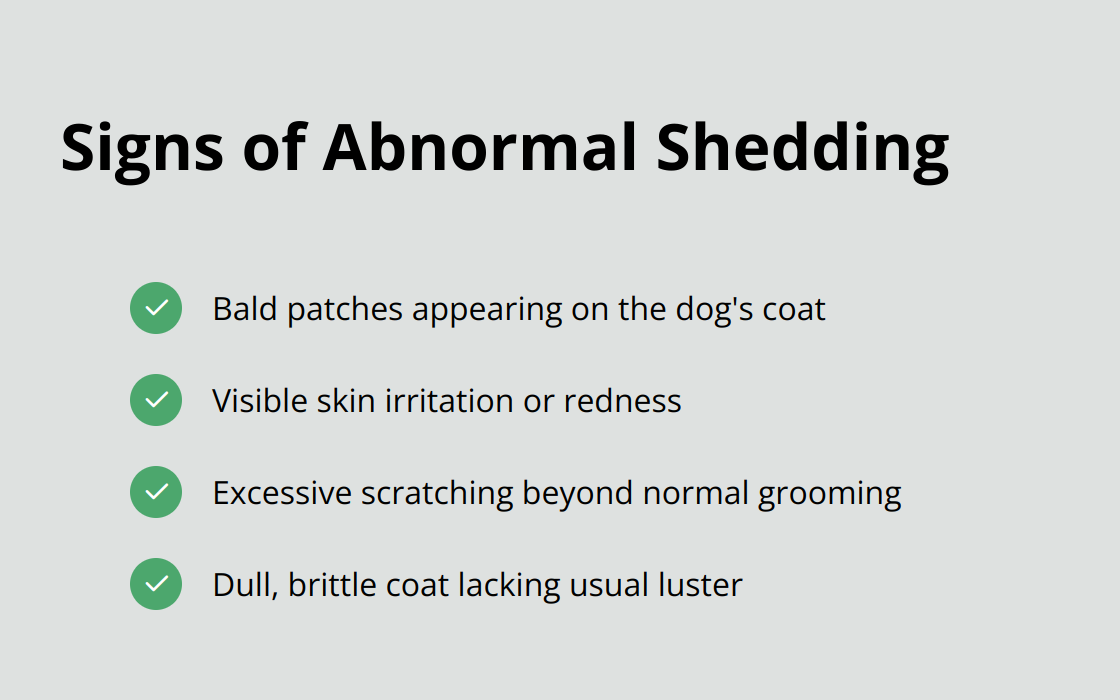
While some shedding is normal, certain signs suggest a problem:
- Bald patches
- Skin irritation
- Excessive scratching
- Dull, brittle coat
If you notice any of these symptoms, consult a veterinarian promptly.
To better understand your dog’s shedding patterns, try keeping a shedding journal. Note when your dog sheds more than usual and any accompanying symptoms. This information can prove invaluable when discussing shedding concerns with your vet.
Now that we’ve covered the basics of why dogs shed, let’s explore effective grooming techniques to control shedding and maintain a healthy coat.
Mastering Dog Grooming Techniques
Regular Brushing: Your First Line of Defense
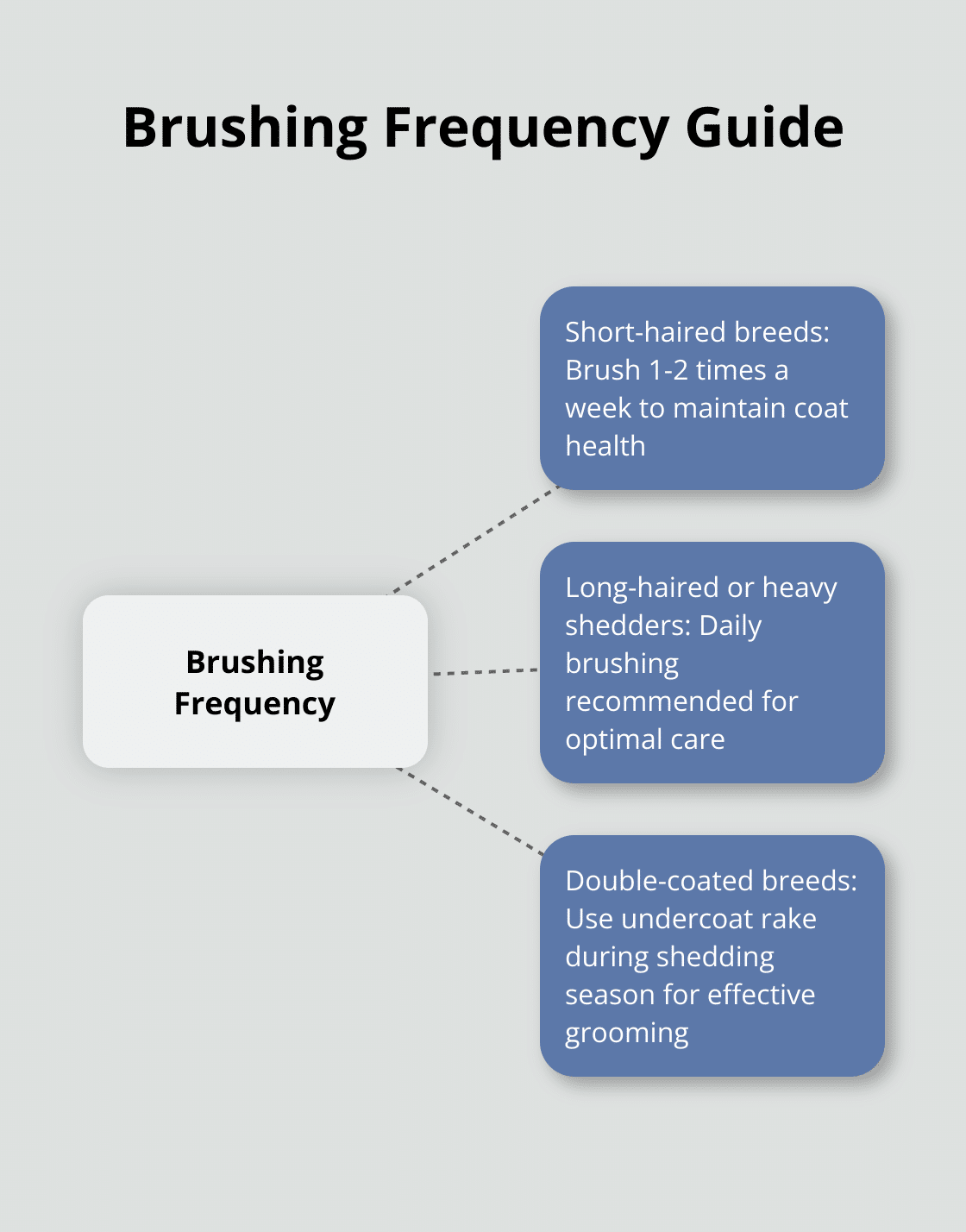
Regular brushing stands as one of the best ways to manage pet shedding. Short-haired breeds benefit from brushing 1-2 times a week, while long-haired or heavy shedders may require daily attention. The American Kennel Club suggests a slicker brush for most coat types. Double-coated breeds often respond well to an undercoat rake during shedding season.
Start at the head and work your way down to the tail, brushing in the direction of hair growth. Focus on areas prone to matting (behind the ears and under the legs). A 10-minute daily brushing session can dramatically reduce loose hair in your home.
Bathing: Strike the Right Balance
Frequent bathing can increase shedding by drying out the skin. Most dogs only need a bath every 4-8 weeks (unless they get particularly dirty). Use a high-quality, dog-specific shampoo to prevent skin irritation.
When bathing, wet your dog’s coat thoroughly before applying shampoo. Massage the shampoo into the coat, paying attention to often-neglected areas (the belly and between the toes). Rinse completely – leftover shampoo can cause skin irritation and increased shedding.
Professional Grooming: Expert Help for Challenging Coats
For some breeds or particularly difficult coats, professional grooming can make a significant difference. Groomers have access to specialized tools and techniques that can dramatically reduce shedding. The Furminator treatment, for example, can remove up to 90% of loose undercoat in a single session.
Try professional grooming every 6-8 weeks for heavy shedders or dogs with high-maintenance coats. This not only helps control shedding but also allows for early detection of skin issues or parasites.
Specialized Tools for Effective Grooming
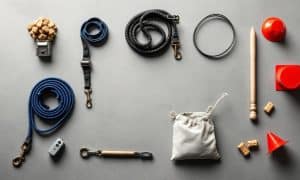
Invest in the right tools to maximize your grooming efforts. Slicker brushes work well for most coat types, while undercoat rakes excel at removing loose fur from double-coated breeds. De-shedding tools like the Furminator can be highly effective but should be used carefully to avoid skin irritation.
For short-haired dogs, grooming gloves or rubber curry brushes can help loosen and remove dead hair while providing a gentle massage. Long-haired breeds often benefit from pin brushes to detangle and distribute natural oils throughout the coat.
Establishing a Grooming Routine
Consistency proves key when it comes to grooming. Establish a routine that works for you and your dog, and stick to it. Start with short sessions and gradually increase the duration as your dog becomes more comfortable with the process. Offer treats and praise to create a positive association with grooming time.
As we move forward, let’s explore how diet and nutrition play a crucial role in maintaining a healthy coat and reducing shedding.
What Dogs Should Eat for a Healthy Coat
A dog’s diet significantly impacts coat health and shedding. The right nutrients strengthen hair follicles, improve skin health, and minimize excessive hair loss. Let’s explore the best dietary choices for your furry friend.
High-Quality Protein Sources
Protein forms the foundation of hair. Dogs need high-quality protein to maintain a healthy coat. Choose dog foods with real meat as the first ingredient. Chicken, beef, fish, and lamb provide excellent protein. The 2012 AAFCO Dog Food Nutrient Profile for Growth and Reproduction recommends the minimum crude protein concentration of dry matter to be 22.5%.
Essential Fatty Acids
Omega-3 and Omega-6 fatty acids prove vital for skin health and coat shine. Fish oil, flaxseed, and chicken fat contain these nutrients in abundance. Select dog foods that include these ingredients or consider adding a fish oil supplement to your dog’s diet. Essential Fatty Acids are significant for companion animals, with n-3 fatty acids being particularly important.
Key Vitamins and Minerals
Vitamins A, E, and B-complex, along with minerals like zinc and copper, support healthy skin and coat. Sweet potatoes, carrots, and spinach (often included in high-quality dog foods) offer these nutrients. If you consider supplements, consult your veterinarian for the right dosage.

Choosing the Right Dog Food
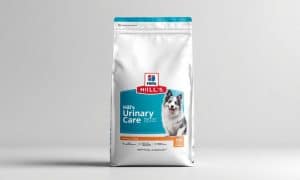
When selecting dog food, opt for brands that meet AAFCO standards and have undergone feeding trials. Avoid foods with artificial preservatives, colors, or flavors (these can potentially irritate your dog’s skin and increase shedding).
Every dog has unique needs. What works for one may not work for another. Monitor your dog’s coat condition and overall health when you make dietary changes. If you notice increased shedding or skin issues after switching foods, consult your veterinarian.
Personalized Nutrition Plans
A veterinary nutritionist can create a tailored nutrition plan based on your dog’s specific needs (considering factors like age, breed, and health conditions). This personalized approach ensures your dog receives the optimal diet for coat health and overall well-being.
Final Thoughts
Managing dog shedding requires a multi-faceted approach. Regular grooming, a balanced diet, and attention to your dog’s overall health will reduce fur in your home and improve your dog’s coat health. Consistency in grooming and dietary habits will yield the best results over time.
Excessive hair loss or changes in shedding patterns may indicate underlying health issues. If you notice bald patches, skin irritation, or a sudden increase in shedding, consult a veterinarian. They can identify potential health concerns and provide tailored advice for your dog’s specific needs.
At DogingtonPost, we provide the latest information and expert advice to help you care for your canine companion. We offer dog shedding solutions tips (and much more) to support you in every aspect of dog ownership. Our goal is to help you achieve a happier, healthier dog and a fur-free home.