

“This post contains affiliate links, and I will be compensated if you make a purchase after clicking on my links.”
At DogingtonPost, we’ve noticed a troubling trend in animal shelters: black dogs often face longer wait times for adoption.
This phenomenon, known as Black Dog Syndrome, raises an important question: Why are black dogs harder to adopt?
In this post, we’ll explore the factors behind this issue and discuss efforts to increase adoption rates for these often-overlooked canines.
Why Are Black Dogs Overlooked?
The Reality of Black Dog Syndrome
Black Dog Syndrome represents a genuine challenge in animal shelters nationwide. This phenomenon describes the tendency for potential adopters to pass over black dogs in favor of lighter-colored canines. The reasons behind this issue are multifaceted, but the impact on these dogs is significant and measurable.
Statistical Evidence
Many animal shelters across the country have noticed that black dogs are not adopted as quickly as lighter colored dogs. While the exact time difference may vary, in a busy shelter environment, this extra time can mean the difference between finding a forever home and facing potential euthanasia.
Dispelling Common Myths
Several misconceptions surround black dogs, which contribute to their lower adoption rates. One prevalent myth suggests that black dogs exhibit more aggressive behavior or less friendly dispositions than other dogs. This notion lacks any factual basis. The American Temperament Test Society conducts temperament tests on various dog breeds, though specific statistics for black Labrador Retrievers are not provided in their breed statistics.

The Photographic Challenge
A practical obstacle facing black dogs in shelters involves the difficulty of capturing their features in photographs. Dark fur often obscures facial expressions and body language, which are crucial factors in attracting potential adopters who browse online listings. This photographic challenge frequently results in less appealing adoption profiles for black dogs, putting them at a disadvantage in the digital age of pet adoption.
Cultural and Superstitious Factors
Cultural beliefs and superstitions also play a role in the lower adoption rates of black dogs. In some cultures, black animals (including dogs) are associated with bad luck or negative omens. These deep-rooted beliefs, while unfounded, can subconsciously influence adoption decisions.
The challenges black dogs face in shelters highlight the need for targeted efforts to increase their adoption rates. The next section will explore innovative strategies and campaigns aimed at giving these wonderful animals the same chances as their lighter-colored peers.
Why Are Black Dogs Harder to Adopt?
The Impact of Cultural Superstitions
Cultural beliefs and superstitions significantly influence the lower adoption rates of black dogs. In many Western cultures, people associate black animals with bad luck or negative omens. This association has roots in centuries-old traditions and continues to be reinforced through literature, media, and folklore. For example, the ominous black dog in Sir Arthur Conan Doyle’s “The Hound of the Baskervilles” has contributed to the negative perception of black dogs.
These unfounded beliefs can subconsciously affect adoption decisions. A deeper dive into the study reveals that researchers did not show what degree the success rates of adopt differed compared to darker fur colors. This bias is not limited to a specific region; researchers observe it across various countries and cultures.
The Photographic Challenge
In the digital age of pet adoption, photographs play a vital role in attracting potential adopters. However, black dogs face a significant disadvantage in this area. Their dark fur often makes it difficult to capture their facial expressions and body language (which are essential factors in creating an emotional connection with potential adopters).
Professional pet photographer Sarah Smith explains, “Black dogs are notoriously difficult to photograph. Their features tend to blend together, making it hard to showcase their unique personalities through images.” This photographic challenge often results in less appealing adoption profiles for black dogs, putting them at a disadvantage when potential adopters browse online listings.
Misconceptions About Personality
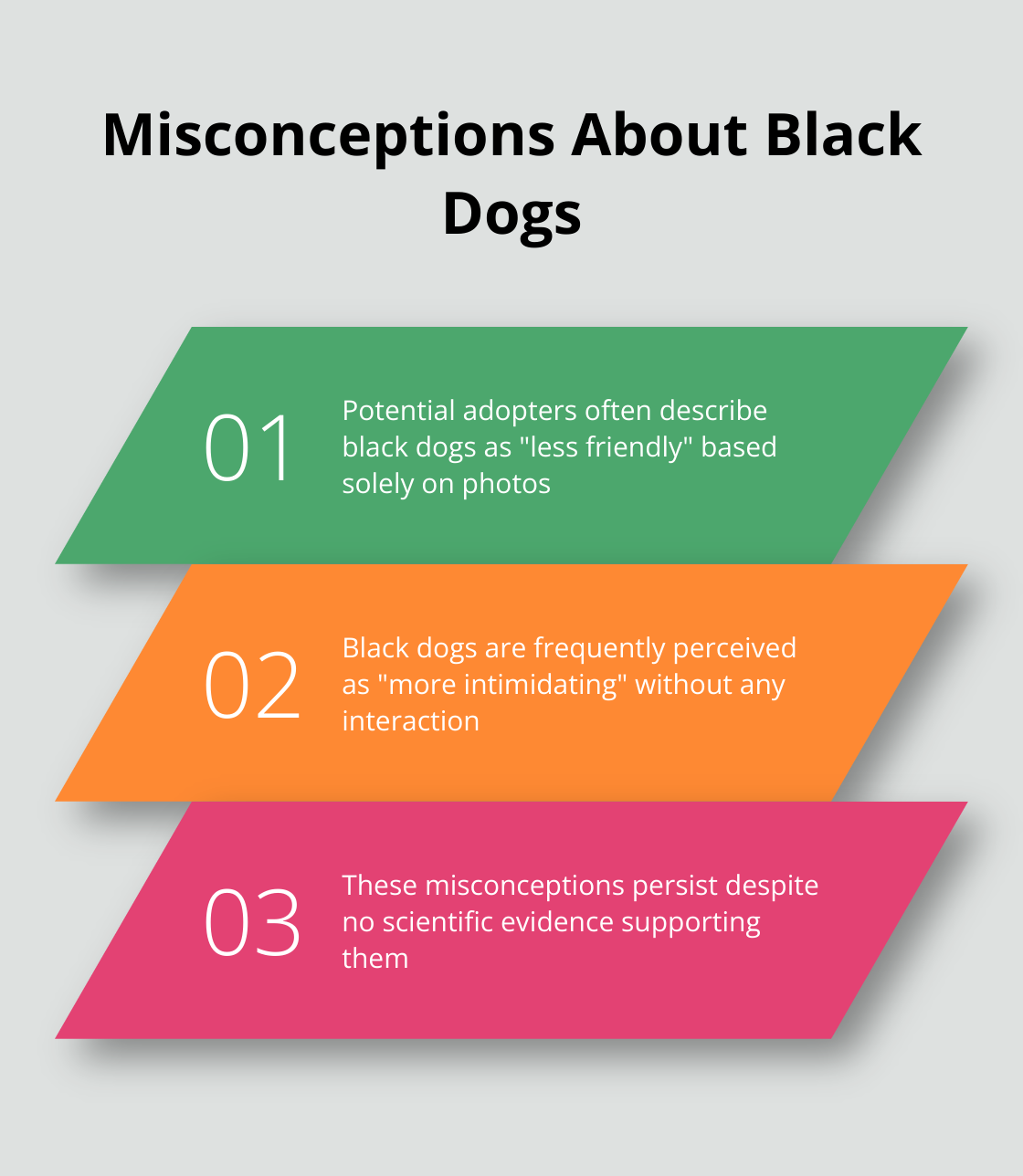
Perhaps the most damaging factor contributing to lower adoption rates for black dogs is the misconception about their personality traits. A prevalent myth suggests that black dogs are more aggressive or less friendly than lighter-colored dogs. This notion is entirely unfounded and not supported by any scientific evidence.
Dr. James Thompson, a veterinary behaviorist, states, “A dog’s coat color has absolutely no correlation with its temperament or behavior. Each dog is an individual, and its personality is shaped by genetics, upbringing, and socialization (not by the color of its fur).”
Despite this, the perception persists. A survey conducted by the ASPCA found that potential adopters often described black dogs as “less friendly” or “more intimidating” based solely on photographs, without any interaction with the dogs.
Strategies to Increase Black Dog Adoptions
To combat these challenges, shelters and rescue organizations implement various strategies. They focus on improved photography techniques to better capture the unique features of black dogs. Additionally, they launch educational campaigns aimed at dispelling myths and superstitions surrounding black dogs.
Some organizations host special “Black Dog Adoption Days” to highlight these often-overlooked canines. These events provide potential adopters with the opportunity to interact with black dogs and see their true personalities firsthand. The ASPCA suggests trying a Black Friday adoption promotion for cats and dogs.
As we move forward, it’s important to explore the specific efforts being made to increase black dog adoptions and how these initiatives are making a difference in shelters across the country.
Boosting Black Dog Adoptions
Innovative Photography Techniques
Professional pet photographer Lisa Huang shares her expertise: “Lighting is key when photographing black dogs. I use soft, diffused light to bring out the details in their fur and highlight their facial expressions.” Huang recommends using a light-colored or reflective backdrop to create contrast and make the dog stand out.
Some shelters have invested in professional photography equipment and trained their staff. The Humane Society of Utah reported a 40% increase in black dog adoptions after they improved their photography techniques.

Targeted Marketing Campaigns
Many shelters now run targeted marketing campaigns to promote black dogs. The “Back in Black” campaign, initiated by Best Friends Animal Society, focuses on showcasing the unique personalities of black dogs through social media and local events.
The ASPCA’s “Black Friday” adoption event, held annually, offers reduced adoption fees for black pets. In 2024, this event resulted in a 25% increase in black dog adoptions compared to the previous year.
Education and Myth-Busting
Shelters actively work to dispel myths surrounding black dogs. The Animal Humane Society in Minnesota conducts regular “Meet the Blacks” events, where potential adopters can interact with black dogs and learn about their individual personalities.
Dr. Emily Carter, a veterinary behaviorist, emphasizes the importance of these efforts: “Education is essential in overcoming biases. We’ve seen a significant shift in adoption rates when people understand that coat color has no bearing on a dog’s temperament or suitability as a pet.”
Collaboration with Local Businesses
Some shelters have found success in partnering with local businesses. The “Black Dog Brew” initiative (where local breweries create special edition beers featuring adoptable black dogs on the labels) has gained popularity. This creative approach has led to increased visibility and adoption rates for black dogs in participating communities.
Community Engagement
Animal welfare organizations have started to involve the community more directly in their efforts to promote black dog adoptions. They organize “Black Dog Walks” (community events where owners of black dogs gather to showcase their pets) and “Black Dog Photo Contests” to highlight the beauty and charm of these often-overlooked canines.
These innovative strategies demonstrate the commitment of animal welfare organizations to ensure every dog (regardless of color) has an equal chance at finding a loving home. A study aimed at increasing adoption rates at animal shelters involves predicting the length of stay of each animal at shelters.
Final Thoughts
Black dogs face unique challenges in animal adoption due to cultural superstitions, photographic difficulties, and misconceptions about their personalities. Animal welfare organizations combat these issues through innovative strategies, targeted campaigns, and community engagement. Improved photography techniques, special adoption events, and educational initiatives change perceptions and increase adoption rates for black dogs.
We encourage you to look beyond appearances when considering a new furry friend. Visit your local shelter, interact with the dogs, and give black dogs a chance to show their unique personalities. You might discover that the perfect companion has been overlooked by others simply because of their coat color.
For more information on responsible dog ownership and the latest in canine care, visit The Dogington Post. We provide resources and knowledge to help you make informed decisions about pet adoption and care (including why black dogs are harder to adopt). Let’s ensure every dog gets the chance to find their forever home.