
“This post contains affiliate links, and I will be compensated if you make a purchase after clicking on my links.”
Should your dog have a constant odor, like a foul fish stench, it’s likely your pet’s anal glands. But what are anal glands, what do they do and how can they be treated? The solution is simple — your dog’s anal glands need expressing by a veterinarian, an experienced dog groomer, or by doing it yourself.
What Are Anal Glands?
Dogs have two little egg-shaped sacs on either side of the anus called anal glands. The function of the glands is to produce a fluid with a characteristic odor (the fishy smell) that is specific to each dog. As your dog poops, the anal glands excrete a fluid with a specific odor to your dog. When another dog stops and smells your dog’s poop, or where your dog’s poop sat before you picked it up to dispose of it, the other dog logs that specific smell in their memory. Dogs usually greet each other by smelling each other’s butts and will remember that smell from before.
What is Anal Gland Expression?
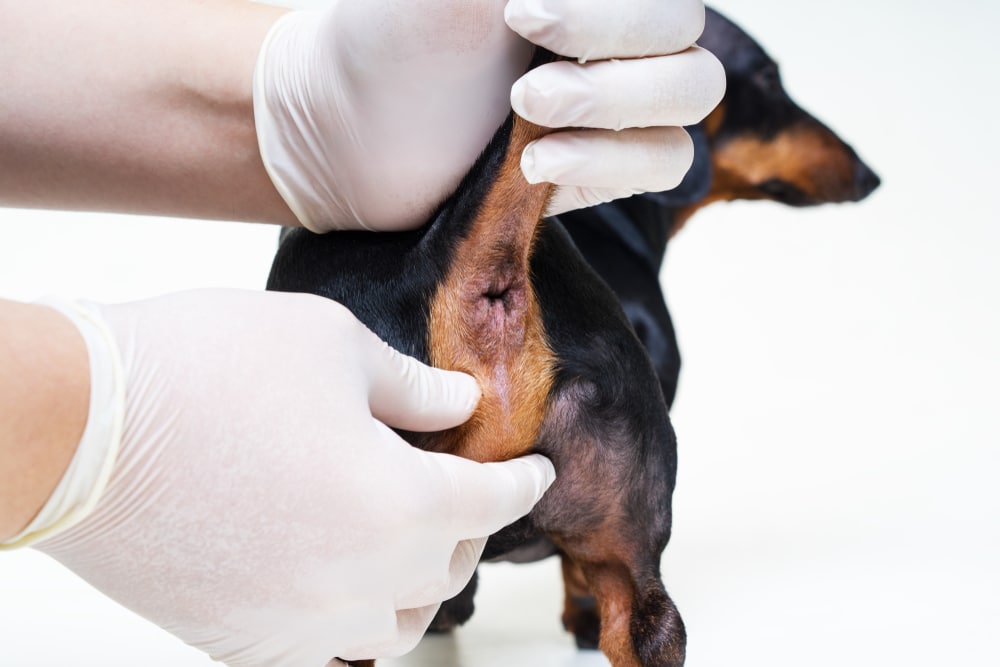
Dogs can’t always fully express their anal glands and may need the assistance of a veterinarian. If dogs have an anal gland problem, they will present symptoms of such. The two most common signs of a dog needing their anal glands expressed are scooting across the ground and constantly licking their anus. You might also smell that fishy smell more often and on your furniture, car seats, etc. This is when manual expression can help. During manual expression, the veterinarian will apply Vaseline to their index finger while wearing latex gloves, then insert the finger into the dog’s anus and feel along the side of the anus for the sac. To avoid a mess, it is gently pressed to force the liquid out, which is captured on a paper towel.
Should Your Dog Be in Pain After Anal Gland Expression?
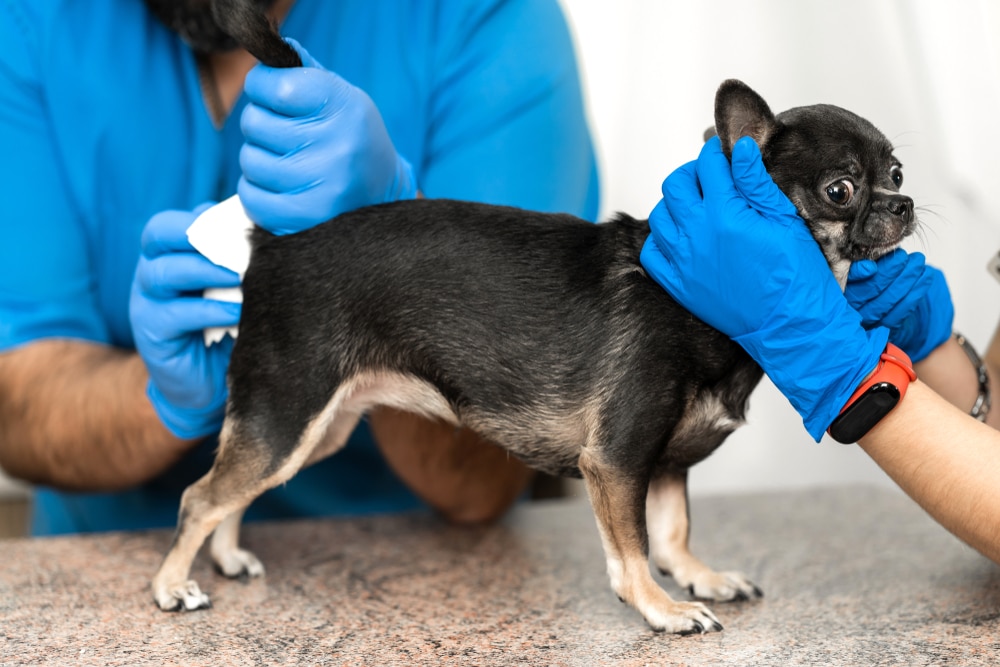
Simple answer: no, your dog should not be in pain after a manual anal gland expression. The process itself may be painful for some dogs and they may be given a sedative during the procedure. But, that pain shouldn’t continue after the procedure.
What Are The Signs Your Dog is in Pain After Their Anal Gland Expression?
If your dog is in pain after their anal gland expression, they may be displaying any of the following symptoms:
- Yelping
- Scooting
- Biting their rear end
- Excessively licking their rear end
- Whining or crying when trying to poop
- Limping
- Hiding
- Snapping
- Reluctance to be touched near their rear end
Why Is Your Dog in Pain After Anal Gland Expression?
Anal Abscess
Anal abscesses, which are a painful infection inside the anal glands, are another reason your dog may be in discomfort following a gland expression. If the gland expression was caused by an abscess, your dog may continue to be suffering from the effects of the infection after your visit to the vet. The abscess builds up pus in the anal sacs which can then burst and result in releasing pus into the anus and rectum. Dogs may even refuse to poop due to this pain. If your dog’s bottom area is red and swollen, you should notify your vet immediately.
Impactation
If a dog has loose stool or diarrhea, the water from this can build up in the anal sacs which then can become filled with inflamed cells. This results in irritation, itching, pain, and even an infection causing impacted anal sacs. When a dog has impacted anal sacs, it can be difficult to tell if the sacs were fully emptied during an expression. They may need a couple more manual expressions to provide relief.
Rectal Tears
It’s possible your dog had a rectal tear or other injuries in that area during the expression which was then aggravated by the manual expression. It’s also possible that the vet who did the procedure caused a tear or injury if they were too rough.
Rectal Polyps or Tumors
Rectal polyps may form after a manual anal gland expression. Rectal polyps are benign growths that appear in the rectal region. It’s possible for them to be malignant if they are large but that is more rare. If your dog is showing signs of pain, scooting, licking their anus, bloody stool, and trouble defecating, they have had rectal polyps.
Anal Sac Abnormalities
Two common anal sac abnormalities are perianal fistulas and folliculitis. Certain breeds like Golden Retrievers are predisposed to perianal fistulas which is when the anal tissue develops sores that smell foul. Folliculitis is when the feces inflame the hair follicles in the anus, which results in a considerable amount of pain in the afflicted dogs. Dogs who suffer from a condition like these may cause them to be in pain and scoot even after an anal gland expression. Your vet should be notified as they may prescribe medication or suggest surgical removal of the anal glands.
Injection Pain
Some dogs may be given an injection medication in the anal sacs if they have impacted or hard stools as that can result in causing difficulty for manual expression. The injection site may continue to hurt for a few days after the expression.
What Should You Do if Your Dog is in Pain After Anal Gland Expression?
When your dog is in pain you want to be able to comfort them. There are a few steps you can take but always consult with your veterinarian before making changes such as to their diet or adding supplements.
Antibiotic Creams
Antibiotic creams can help to keep the anal gland condition your dog is suffering from getting worse.
No products found.
Elizabethan Collar
An Elizabethan collar or similar can keep your dog from licking or biting their inflamed bottom area and prevent the problem from getting worse or causing an infection.
No products found.
Diet Changes
To keep your dog from being constipated and aggravating their anal glands adding extra fiber can make sure their stool is healthy and soft. Foods you can add to their diet include pumpkin, sweet potato, and apples.
Stool Supplements
You can also purchase over-the-counter stool supplements to regulate their stool.
No products found.
Medication
Depending on the cause of your dog being in pain, your vet may recommend pain relief medication. This will usually include pain from razor burns or injections.
No products found.
Warm Compress or Heating Pad
A heating pad can provide necessary relief to the pain your dog may be in. You can purchase either a heating pad meant for pets or just use the one in your closet that has an auto shut-off feature.
No products found.
If your dog is showing any signs of being in pain after their anal gland expression, it’s best to consult with your vet.