
“This post contains affiliate links, and I will be compensated if you make a purchase after clicking on my links.”
Dog bites can be scary, but not all require a trip to the emergency room. At DogingtonPost, we understand the importance of knowing how to handle minor dog bite care.
This guide will walk you through assessing bite severity, providing first aid, and monitoring the healing process. We’ll also share tips to prevent infection and promote quick recovery.
Assessing Dog Bite Severity: Minor vs. Major Injuries
Dog bites can range from minor nips to severe injuries. Understanding how to assess the severity of a bite will help you determine the appropriate course of action.
Identifying Minor Dog Bites
Minor dog bites typically:
- Create small puncture wounds or scratches
- Barely break the skin
- Cause minimal bleeding
- Result in limited pain

If you can clean the wound easily and stop any bleeding with light pressure, you likely have a minor bite on your hands.
Recognizing Major Dog Bites
Major dog bites often involve:
- Deep punctures
- Torn flesh
- Crushing injuries
- Profuse bleeding
- Significant pain
These injuries require immediate medical attention. If you struggle to control the bleeding or notice a gaping wound, seek professional help right away.
Warning Signs of Infection
Even minor bites can become problematic if they get infected. Watch for these signs in the days following a bite:
- Increased redness or swelling around the wound
- Warmth or tenderness in the affected area
- Pus or discharge from the bite site
- Fever or chills
- Swollen lymph nodes
According to the CDC, during 2011–2021, a total of 468 deaths from being bitten or struck by a dog occurred (average = 43 deaths per year).
When to Seek Medical Care
Certain situations warrant a trip to the doctor or emergency room:
- Bites on the face, hands, feet, or genitals
- Deep or gaping wounds
- Bleeding that doesn’t stop after 15 minutes of direct pressure
- You have a weakened immune system
- The dog’s vaccination status is unknown or outdated
- You develop signs of infection
Children face a higher risk of dog bites (especially to the face), according to the American Veterinary Medical Association.
The Importance of Proper Wound Care
Proper assessment and timely action can prevent complications from dog bites. In the next section, we’ll explore essential first aid techniques for minor dog bites, including cleaning, disinfecting, and bandaging the wound effectively.
How to Treat Minor Dog Bites at Home
Clean the Wound Thoroughly
Gently wash the wound with clean water 2 times a day. Do not scrub or soak the wound. Don’t use hydrogen peroxide or alcohol, which can slow healing.

For deeper punctures, you might need to flush the wound. Use a syringe (without the needle) or a clean squeeze bottle filled with water to irrigate the bite. This action removes any debris or bacteria that may have been pushed deep into the tissue.
Apply an Appropriate Antiseptic
After cleaning, apply an antibiotic cream or ointment and cover the bite with a clean bandage.
Some antiseptics may sting (ouch!). If you find them too harsh, dilute the solution with water or opt for a gentler alternative like an antibiotic ointment. Neosporin or a similar triple antibiotic ointment can prevent infection and keep the wound moist, which aids healing.
Bandage the Wound Correctly
Proper bandaging protects the bite from further contamination and helps absorb any drainage. The technique varies depending on the location of the bite:
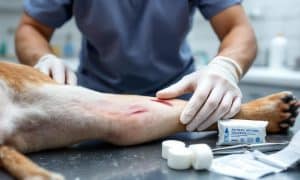
For bites on arms or legs, use a non-stick gauze pad to cover the wound. Secure it with medical tape or a self-adherent wrap. Don’t wrap too tightly, as this can impair circulation.
Bites on hands or feet require special attention. Use butterfly bandages or strips to keep the edges of the wound together if needed. Cover with a sterile gauze pad and secure it in place. For hand bites, consider using a tubular bandage to keep the dressing in place while allowing some finger movement.
Facial bites are trickier to bandage. Use small adhesive bandages or non-stick gauze secured with medical tape. Be careful not to obstruct vision or breathing.
Change the bandage daily or more often if it becomes wet or dirty. This allows you to inspect the wound for signs of infection and keep the area clean.
When to Seek Professional Help
While these steps are effective for minor bites, any dog bite that seems deep, won’t stop bleeding, or shows signs of infection requires professional medical attention. Always prioritize safety when it comes to animal bites.
In the next section, we’ll explore how to monitor the healing process and identify potential complications that may arise during recovery.
How to Monitor Dog Bite Healing
Signs of Normal Healing
A healing dog bite shows steady improvement over time. The area around the wound may appear slightly red and tender for the first few days, but this should gradually subside. You might notice a small scab forming over the bite area – this indicates proper healing. The skin around the wound should remain cool to the touch and maintain a normal color.
Red Flags That Require Attention
While most minor dog bites heal without incident, it’s important to stay alert for signs of complications. Animal bites account for 1% of all emergency department visits in the United States and more than $50 million in health care costs per year. Watch out for:
- Increased redness, swelling, or warmth around the wound
- Pus or unusual discharge from the bite site
- Fever (body temperature above 101°F or 38.3°C)
- Increasing pain or tenderness
- Red streaks extending from the wound
- Swollen lymph nodes near the bite area

If you notice any of these symptoms, contact your healthcare provider immediately. They may prescribe antibiotics or recommend further treatment to prevent more serious complications.
Infection Prevention During Healing
To promote healing and reduce the risk of infection, follow these practical tips:
- Keep the wound clean and dry. Wash the area gently with mild soap and water twice daily.
- Change the bandage daily (or more often if it becomes wet or dirty). This prevents bacteria buildup.
- Apply a thin layer of antibiotic ointment after cleaning. The American Academy of Dermatology recommends petroleum jelly as an alternative if you don’t have antibiotic ointment on hand.
- Avoid picking at scabs or scratching the wound area. This can introduce bacteria and delay healing.
- Protect the wound from further injury. Use a larger bandage or wear protective clothing if the bite is in a vulnerable area.
- Stay up-to-date with tetanus shots. The Centers for Disease Control and Prevention recommends a booster if your last shot was more than 5 years ago.
- Pay attention to your overall health. Proper nutrition and adequate rest can support your body’s healing process.
When to Seek Professional Help
Even if a dog bite seems minor, it’s always better to prioritize caution. If you have any doubts about the healing process or notice any concerning symptoms, don’t hesitate to seek professional medical advice. Your health and safety should always come first when dealing with animal bites.
Final Thoughts
Minor dog bite care is an essential skill for every pet owner. You can manage most minor dog bites at home if you know how to assess bite severity, provide proper first aid, and monitor the healing process. A well-stocked first aid kit and familiarity with basic wound care techniques will prepare you for pet-related injuries.

Dog owners must train and socialize their pets properly to reduce the likelihood of bites. Teach children how to interact safely with dogs and always supervise their interactions. This approach will minimize the risk of dog bites and create happier, healthier relationships with our canine companions.
We at DogingtonPost provide dog owners with knowledge and resources to care for their pets effectively. Our content (ranging from the latest news to practical care tips and expert advice) supports you in every aspect of dog ownership. Stay informed and prepared to ensure the best possible care for your furry friends.