
“This post contains affiliate links, and I will be compensated if you make a purchase after clicking on my links.”
At DogingtonPost, we know that training your furry friend can be both rewarding and challenging.
Our comprehensive guide on dog tricks training tips will help you transform your pup into a well-behaved companion.
From mastering basic commands to tackling advanced behaviors, we’ll walk you through effective techniques that strengthen the bond between you and your dog.
What Are the Basics of Dog Training?
The Power of Positive Reinforcement
Dog training success hinges on positive reinforcement. This method rewards desired behaviors, which encourages repetition. Training methods based on rewards are claimed to be more humane and equally or more effective than aversive approaches. It emphasizes rewarding good behavior instead of punishing bad behavior.
To apply positive reinforcement, offer treats, praise, or toys immediately after your dog performs the desired action. Timing is critical – the reward must come within seconds of the behavior for your dog to make the connection. For instance, when teaching your dog to sit, give the treat the moment their bottom touches the ground.
Setting Realistic Training Goals
Each dog is unique, with varying learning paces. Some breeds (like Border Collies) learn quickly, while others need more time to grasp new concepts. Set realistic expectations and celebrate small victories along the way.
Start with simple commands like “sit” or “stay” before advancing to complex tricks. The American Kennel Club suggests keeping training sessions short – about five minutes each. This prevents boredom or frustration in your dog. As your dog improves, gradually increase the task difficulty and session duration.

Essential Training Tools and Techniques
While treats are popular, they’re not the only training tool. Some dogs respond better to praise or playtime as rewards. Try different options to find what motivates your dog most.
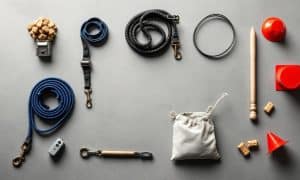
Clicker training can be used successfully as a secondary reinforcer alongside primary reinforcement. The clicker marks the exact moment your dog performs the desired behavior. Pair the click with a treat, and your dog will soon associate the sound with a reward.
Consistency is key in dog training. Use the same commands and hand signals each time. Ensure all family members follow the same approach to avoid confusing your dog.
Training isn’t just about teaching tricks – it builds a strong bond with your furry friend. Keep sessions fun and engaging for mutual enjoyment.
Choosing the Right Training Environment
The environment plays a crucial role in successful dog training. Begin in a quiet, distraction-free area where your dog can focus solely on you and the task at hand. As your dog masters commands in this controlled setting, gradually introduce more challenging environments with increased distractions.
Outdoor training sessions can be particularly beneficial, offering new scents and stimuli for your dog to work through. However, always prioritize safety and start in enclosed areas before moving to open spaces.
With these basics in mind, let’s move on to some popular dog tricks and how to teach them effectively.
How to Teach Popular Dog Tricks
Mastering the Basics: Sit, Stay, Come
The foundation of dog training rests on these three commands. Positive reinforcement is key when teaching these basic commands. Create an optimal training environment and break down the commands into smaller steps. Use verbal corrections and incorporate hand signals to enhance your dog’s understanding. Remember to be consistent and patient throughout the training process.
Shake Hands and High-Five
These tricks impress crowds and are relatively easy to teach. Start with your dog in a sitting position. Take their paw gently, say “shake,” and reward them. Repeat until they offer their paw without prompting. For high-five, hold a treat slightly above your dog’s head. As they reach for it, tap their paw gently and say “high-five.” Reward when their paw touches your hand. With practice, they’ll associate the command with the action.
Roll Over and Play Dead
These tricks require more patience but wow onlookers once mastered. For “roll over,” start with your dog in a down position. Hold a treat near their nose and move it slowly towards their shoulder. As they follow the treat, they’ll roll onto their side naturally. Continue the motion until they complete the roll, then reward them. To teach “play dead”, follow these seven simple steps from professional animal trainer Joel Silverman. This method will guide you from start to finish in teaching your dog this impressive trick.

Incorporating Tricks into Daily Life
Make trick training a part of your daily routine. Ask your dog to “sit” before meals or “shake” before going for a walk. This practice reinforces the commands and makes them more likely to respond in various situations. (It also adds an element of fun to everyday activities!)
Advanced Tricks for Mental Stimulation
Once your dog masters basic tricks, move on to more complex ones. Teach them to “fetch” specific items or “tidy up” their toys. These advanced tricks provide mental stimulation and prevent boredom. (Plus, they’re great party tricks to show off to friends and family!)
As we move forward, we’ll explore advanced training techniques for challenging behaviors. These methods will help you address common issues and create a harmonious relationship with your furry friend.
How to Tackle Challenging Dog Behaviors
Quieting Excessive Barking
Excessive barking can strain relationships with neighbors and disrupt your home life. To address this, first identify the cause. Does your dog bark out of boredom, fear, or territorial instincts?

For boredom-related barking, increase your dog’s physical and mental stimulation. A tired dog barks less. Try puzzle toys, longer walks, or agility training.
If fear triggers the barking, expose your dog gradually to the fear-inducing stimulus in a controlled, positive environment. This process, known as desensitization, can reduce fear-based barking over time. When working with a fearful dog, have the person triggering the fear sit down or face away to decrease their intensity.
For territorial barking, limit your dog’s view of passersby. Close curtains or use window film to obstruct their view. You can also teach a “quiet” command. When your dog barks, say “quiet” and wait for a pause. Immediately reward the silence with a treat. With repetition, your dog will learn to stop barking on command.
Stopping Destructive Chewing
Destructive chewing often stems from boredom, anxiety, or teething in puppies. To curb this behavior, provide appropriate chew toys. Kongs filled with frozen peanut butter or treats can keep dogs occupied for hours.
If your dog chews inappropriate items, interrupt the behavior with a firm “no” and immediately redirect them to an acceptable chew toy. Praise them when they chew the right item.
For puppies, ensure they have access to teething toys. Frozen washcloths can soothe sore gums. Adult dogs might benefit from dental chews that clean teeth while satisfying the urge to chew.
If anxiety causes the chewing, address the root cause. Consider consulting a professional dog trainer or behaviorist for severe cases.
Mastering Leash Training
Leash pulling can make walks unpleasant and potentially dangerous. The key to stopping this behavior is to teach your dog that pulling doesn’t get them where they want to go.
Start with the “stop and go” method. When your dog pulls, stop walking. Only resume when the leash is slack. This teaches your dog that pulling halts progress.
Another effective technique changes direction when your dog pulls. This unpredictability keeps your dog focused on you rather than forging ahead.
Use high-value treats to reward your dog for walking beside you. Gradually increase the distance between treats as your dog improves.
Consider using a front-clip harness or head halter for better control during training. These tools can make walks more manageable while you work on leash manners.
Consistency proves key in addressing these challenging behaviors. All family members should follow the same rules and techniques to avoid confusing your dog. With time and patience, you’ll see significant improvements in your dog’s behavior!
Final Thoughts
Training your dog strengthens your bond and creates a well-behaved companion. We at DogingtonPost have shared various dog tricks training tips to help you succeed. Positive reinforcement, patience, and persistence form the foundation of effective training techniques.
Short, fun sessions and daily practice reinforce learning and provide mental stimulation for your dog. As you progress, increase task difficulty and introduce new environments to challenge your pup. (Your dog will thrive with consistent, engaging training!)
Don’t let setbacks discourage you – training takes time and dedication. We offer a wealth of resources to support your training journey, from expert advice to the latest in dog care. Enjoy the incredible bond that develops through training your furry friend!